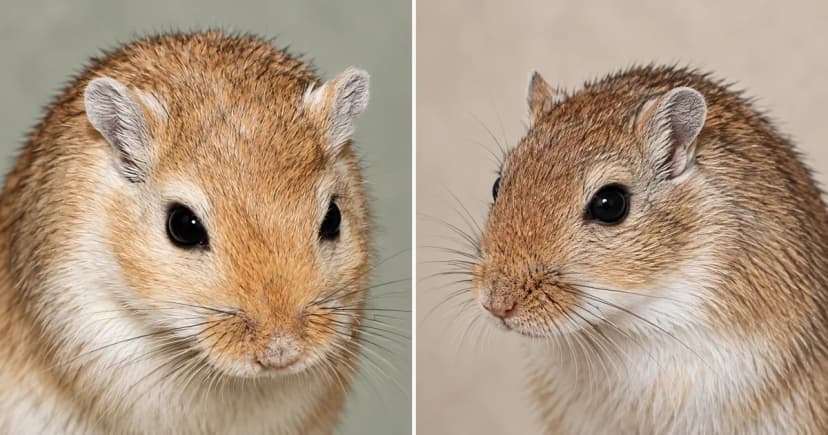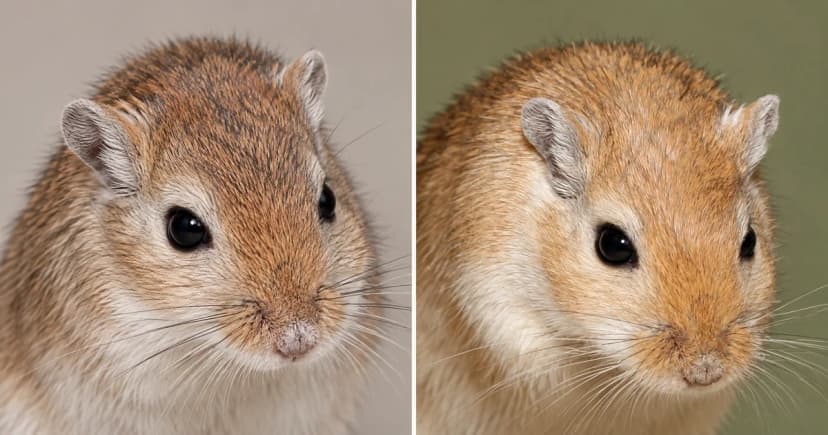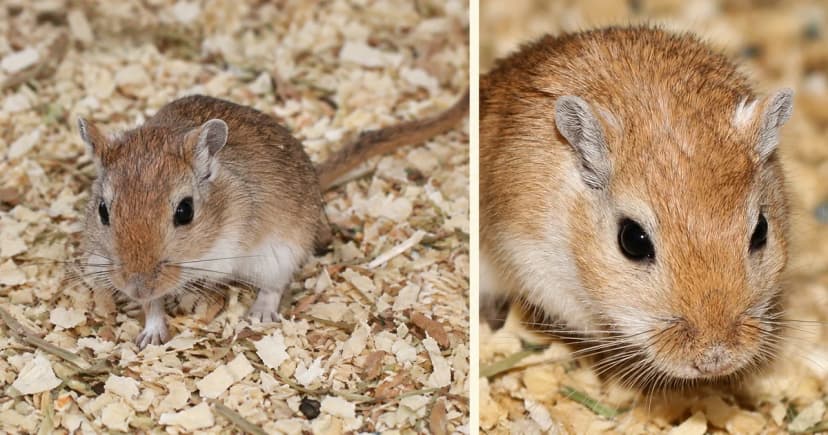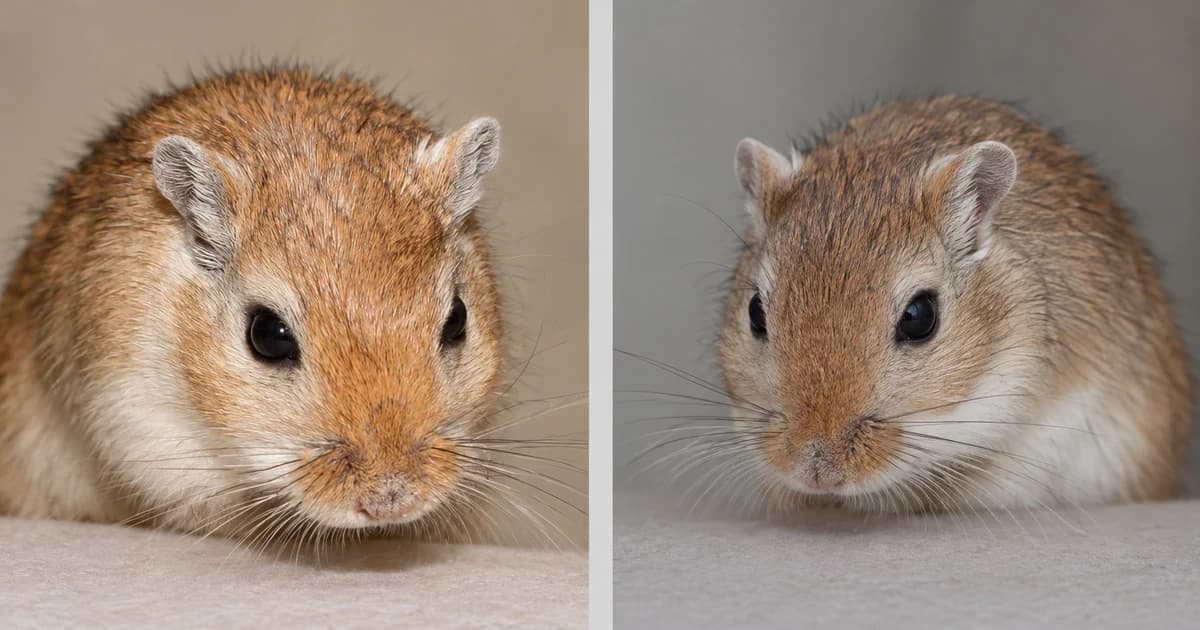
Learning how to hold a gerbil safely starts with voluntary contact inside the enclosure before any lift takes place. When your gerbil steps onto or approaches your hands willingly, form a two-handed cup around its sides, scoop it onto your palms with its whole body supported, keep your hands low above a solid surface or lap, never grab or lift by the tail, and have the return landing spot clear before you lift (RSPCA; Blue Cross; PDSA).
Step-by-step: from first approach to a safe return
Follow these four numbered stages in order, advancing to the next stage only when your gerbil stays relaxed at the current one:
- Start with quiet presence and voice outside the tank (RSPCA): Sit beside the enclosure and talk softly without reaching in. Let your gerbils get used to your movement and scent at their own pace rather than chasing them around the bedding.
- Rest a still hand on the substrate for sniffing and gentle stroking (Blue Cross): Place one open hand palm-up or flat on the tank floor (with a dry food treat on your palm if desired) and wait for the gerbil to walk over, sniff your fingers, or climb onto your hand. Once it investigates comfortably, try a light stroke along its back—stay at this stage if the gerbil prefers not to be lifted.
- Scoop with two cupped hands and support all four feet (PDSA): Bring both hands in calmly from the sides—never swooping down like a predator from directly overhead—and form a loose, secure cup with your palms underneath the gerbil's chest and hindquarters. Keep the gerbil close to your body and low over a flat surface, table, or seated lap so it cannot fall from height if it jumps. Never pick up a gerbil by its tail or scruff: tail lifting is painful and can strip the skin from the tail bone (tail slip).
- Lower both hands to the floor before letting the gerbil step off: Before you even begin a lift, make sure the tank door or carrier opening is unobstructed. To end handling, bring your cupped hands all the way down to the bedding or solid floor first, then open your fingers so the gerbil walks off onto level ground rather than leaping from mid-air.
Match your gerbil's behavior to the right hand position and fallback step
Because individual gerbils build confidence at different rates, use what you observe during each session to decide whether to continue or step back:
| What you observe | Hand position & immediate action | Which stage to return to |
|---|---|---|
| Gerbil approaches, sniffs fingers, or steps onto your open palm | Keep your palm resting flat on the substrate; bring your second hand alongside slowly only if you plan a low two-hand scoop. | Ready for Stage 2 stroking or a brief Stage 3 low lift above the bedding. |
| Gerbil backs away, freezes, thumps its hind feet, or darts into a burrow when a hand enters | Stop moving your hand forward; do not follow the gerbil into its tunnel or lift away its hideout roof to corner it. | Step back to Stage 1 (quiet voice outside the tank) or rest a motionless hand near the front corner during a later session. |
| Gerbil squirms, tries to leap from your palms, or climbs rapidly toward your wrist while held | Close your second hand gently over the top to form a protective tunnel without squeezing, and immediately lower both hands to the substrate or lap. | Complete Stage 4 (let the gerbil walk off onto the bedding) and return to in-tank Stage 2 sessions next time. |
| You need to move an untamed gerbil for an urgent cage clean or vet visit | Place a small tunnel, cardboard tube, or carrier box on the substrate, let the gerbil walk inside, and block both ends gently with your hands to lift the container. | Use container transfer rather than forcing a bare-handed grab; resume Stage 1–2 hand taming on a separate day. |
Supervise children and separate handling from habitat chores
PDSA advises that young children should not pick up gerbils and that older children must always be supervised by an adult, a rule echoed by Blue Cross. Have everyone sit on the floor during supervised sessions, and let an adult perform the actual two-handed scoop and return while younger children watch or offer a treat on a flat palm inside the tank.
Keep social handling separate from enclosure maintenance. For setting up deep burrowing substrate and tank toppers, see our gerbil enclosure setup guide; when stripping and replacing bedding, follow our gerbil cage cleaning guide.