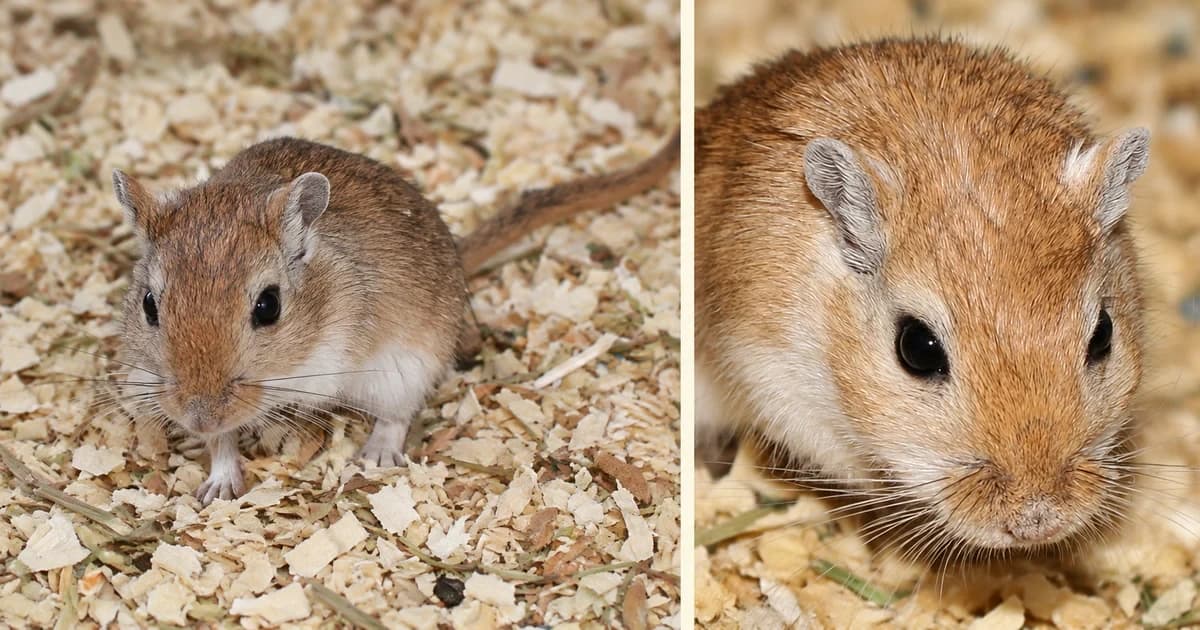
A safe gerbil enclosure setup centers on four connected checks: a solid-walled glass tank large enough for a compatible pair or group, a deep 20–30 cm burrowing layer that holds tunnels without collapsing, enough vertical clearance above the bedding for gerbils to stand upright and drink comfortably, and separate zones for shared sleeping and individual hiding (Blue Cross; RSPCA housing guide).
Compare source dimensions and calculate usable vertical clearance
Blue Cross and the RSPCA publish separate housing figures rather than a single combined formula. When planning how to set up a gerbil enclosure, check how substrate depth subtracts from total tank height so your gerbils still have upright standing room and unobstructed bottle access:
| Welfare source & scope | Stated enclosure structure & outer minimum | Digging substrate depth & materials | Vertical clearance & layout check (illustrative) |
|---|---|---|---|
| Blue Cross (for a compatible group of 2 to 4 gerbils) | Minimum 100 cm long × 40 cm wide × 40 cm tall (approx. 39 × 16 × 16 in); standard plastic/wire hamster cages are unsuitable. | Deep burrowing layer placed in a quiet indoor room away from drafts, radiators, and direct sunlight. | In a 40 cm tall tank, filling 20–25 cm of substrate leaves only 15–20 cm of top clearance—check that wheel mounts, hide roofs, and water spouts are not buried. |
| RSPCA housing guide | Solid glass walls, solid floor, and a secure chew-proof wire-mesh lid; describes around 50 cm (20 in) of total height. | 20–30 cm (8–12 in) of digging bedding using rough-grained woodchips mixed with hay to hold tunnels; strictly excludes dusty sawdust and fluffy cotton-like nesting fibers. | In a 50 cm tall tank, a 20–30 cm substrate bed leaves 20–30 cm of upper headroom so gerbils can emerge from burrows and stand upright on their hind legs. |
Keep these two source descriptions attributed rather than merging them into an invented standard. Measure the actual interior floor and height of your glass tank (below the mesh lid lip) before buying tall wheels or multi-chamber hides.
Build a stable burrowing layer without blocking equipment
Gerbils spend much of their active time digging tunnel networks. Following the RSPCA's substrate recipe, layer rough-grained, dust-extracted woodchips mixed with clean hay to reach the 20–30 cm digging depth so burrows keep their shape. A thin scattering of chips across the glass floor does not meet a gerbil's behavioral need to tunnel. Never add fine carpentry sawdust (which irritates eyes and airways) or fluffy “kapok/cotton” bedding (which can tangle limbs or cause gut blockages).
Separate the shared sleeping nest from extra hiding refuges
A compatible gerbil pair or group sleeps together in one core nest, yet still needs multiple bolt-holes when startled. Combine both welfare rules in your layout:
- One shared dark nest box (Blue Cross & RSPCA): Choose a chew-safe wooden or ceramic nest box large enough for the whole group to curl up together, ideally with at least two entry/exit holes so no gerbil can be trapped inside.
- N + 1 additional hiding places (RSPCA): Provide other hides, cork tunnels, or cardboard tubes numbering at least one more than the number of gerbils in the tank (for example, at least three separate hiding spots for two gerbils). Rest heavy hides on the tank floor or a stable platform so burrowing underneath cannot drop a heavy roof onto a digging gerbil.
Pre-move-in resource and safety checklist
Before placing your gerbils into the finished habitat, verify each item on this setup checklist:
- Continuous water in a metal-sipper bottle (RSPCA diet guide): Mount a chew-resistant bottle with a metal spout at a height reachable from a solid platform above the deep bedding, so substrate cannot wick water out of the tube. Complete our bottle-checking guide to confirm smooth ball-valve flow and zero leaks, and repeat that check daily.
- Sand bath, gnawing wood, and plastic-free toys (Blue Cross): Place a stable dish of chinchilla/gerbil bathing sand on a flat platform for coat care, add untreated chew wood or plain cardboard tubes, and leave hard plastic toys out of the tank so chewed shards are not swallowed.
- Secure wire-mesh lid and draft-free room position: Confirm that the mesh top latches down tightly with no gaps around bottle hangers, and that the tank sits out of direct window sun and cold floor drafts.
Once your gerbils are settled, preserve their tunnel structure and scent markers during routine maintenance by following our gerbil-enclosure cleaning guide.