If your winter route is too slippery for you to walk steadily, or you cannot keep away from frozen water and concealed hazards, change or postpone the walk. A temperature reading does not clear those obstacles. The three welfare guides used here discuss individual dogs and winter precautions; they do not establish one temperature or walking duration that suits every dog.
Start with the route you actually intend to use, then consider your dog and whether you can change the plan. The decision may be a different path, a later outing or an indoor activity. Putting a coat on the dog does not settle it.
Check your own footing before committing to the route
Look beyond the doorstep. Consider the approach to the path, slopes, crossings and the way home. If you would need to negotiate an icy stretch to reach otherwise clear ground, that stretch is still part of the outing. Being able to stand outside the house does not establish usable footing along the whole route.
Blue Cross's winter guide specifically says not to go out when slippery conditions put the person at risk. It also discusses differences between individual dogs, advises avoiding frozen ponds and lakes, and offers indoor games when weather is too cold or dangerous for an outing. Its page lists a review on 20 January 2023 and a next-review date of 20 January 2026; those dates are retained here, rather than described as a fresh clinical review.
Choose another route or postpone if you cannot identify a manageable alternative. Do not treat boots, a shorter leash or the dog's enthusiasm as proof that an icy surface is usable. A plan that depends on not slipping needs reconsideration before you have the dog alongside you.
Look for what snow and darkness hide
Dogs Trust's cold-weather advice warns that snow can conceal holes and other hazards, recommends keeping dogs on a lead in snow and says not to let them walk on frozen ponds. It also addresses the handler's footwear, visibility and checking walking equipment, with clips fastened indoors before cold fingers make that harder. Its advice includes changing routes and playing indoors when conditions limit outdoor activity.
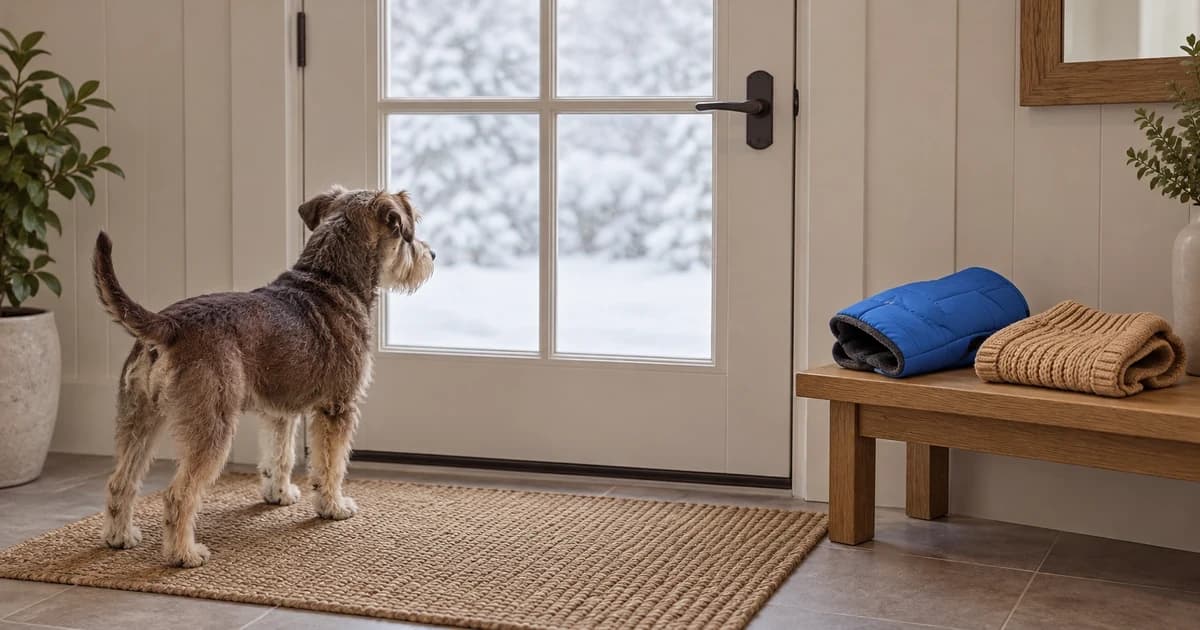
A familiar path can look different under snow. Knowing where you normally walk does not reveal a covered hole or confirm the edge of a water feature. Choose a route where you can identify the walking surface and avoid frozen water. A leash helps you manage the dog's position; it does not establish that concealed ground or ice will support either of you.
For a dark outing, consider whether you can see the surface and nearby hazards, as well as whether others can see you and your dog. These are different questions. Reflective equipment cannot illuminate an unseen patch of ground by itself or compensate for an unsuitable route. If usable visibility is unresolved, change the time or route.
Compare actual routes, not just forecast numbers
Imagine two possible outings under the same forecast. One uses a lit residential path with no pond access and several opportunities to turn back. The other descends an icy slope toward a snow-covered waterside path. The forecast number is unchanged, but the route questions are different.
| Route feature | What still needs checking | Reason to change the plan |
|---|---|---|
| Lit path near home | Actual footing on the approach and return, current visibility and the dog's response | Lighting or proximity does not approve icy ground or an unsuitable outing for this dog. |
| Icy slope and frozen-water edge | Whether a different route avoids those features completely | Do not make reaching the usual destination depend on crossing ice or guessing where a covered edge lies. |
The first route is a candidate to assess, not an approved winter walk. If its approach is also icy, or it does not suit your dog today, postpone or choose an indoor alternative. This example organizes observations; it does not calculate a safe temperature, distance or duration.
Consider the dog after checking the route
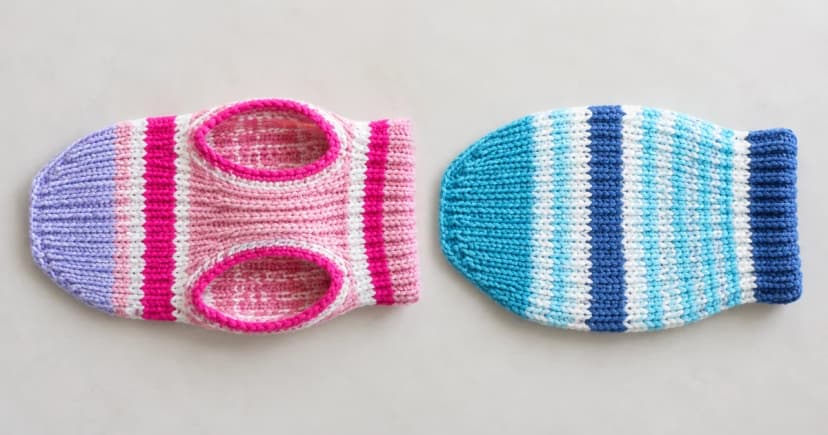
In its winter advice published on 13 December 2022, PDSA warns that icy surfaces can be slippery for pets as well as people and recommends a lead around frozen water. It notes that some dogs need more help with warmth and discusses visibility and indoor enrichment. Those points support planning for the individual dog; a garment photograph or breed label does not supply a temperature clearance.
Consider changes in your dog's usual needs or movement, and ask your veterinarian about individual concerns. A previous outing or another dog's routine is not a guarantee for this one. For the separate question of clothing purpose, acceptance and fit, use our winter-coat guide. Buying or wearing a coat does not remove an icy approach or a frozen-water hazard.
Keep a return option and an indoor alternative
Before leaving, decide where you can turn back without adding the very obstacle you planned to avoid. Tell anyone else walking the dog that completing the usual circuit is optional. Reassess if visibility changes, the ground becomes harder to judge or the dog is no longer moving as usual.
Paw lifting, whining or stopping is a reason to stop and reconsider the outing, not diagnose the cause or force the dog onward. Seek veterinary advice about a concerning or persistent change. This article does not provide a cold-injury diagnosis, first-aid procedure or an ice-rescue plan.
If you stay in, choose an appropriate familiar indoor game rather than trying to make up an outdoor distance target. Dogs Trust suggests activities such as finding a hidden toy. The point is to retain suitable engagement while changing the plan, not claim that a fixed number of indoor minutes replaces every dog's exercise needs.
These are UK welfare sources, applied here without importing regional road or identification rules. The route comparison is editorial planning, not a clinical assessment or weather calculator. See our editorial policy.