When asking how does an automatic cat feeder work, the answer depends on which of three mechanical jobs the unit performs: moving dry food from a storage hopper into a bowl at scheduled times, rotating a pre-filled compartment tray into position, or opening a protective lid when a recognized pet approaches. Before comparing any automatic cat feeder, identify what triggers the device, which part physically moves, and where the food sits.
A digital timer, a bulk hopper, and an RFID or microchip sensor solve completely different household problems: a timed hopper release does not restrict which cat eats the dispensed kibble, while an identity-controlled lid guards a dish without measuring or dropping new portions from a container.
Trace the trigger, moving part, and food location
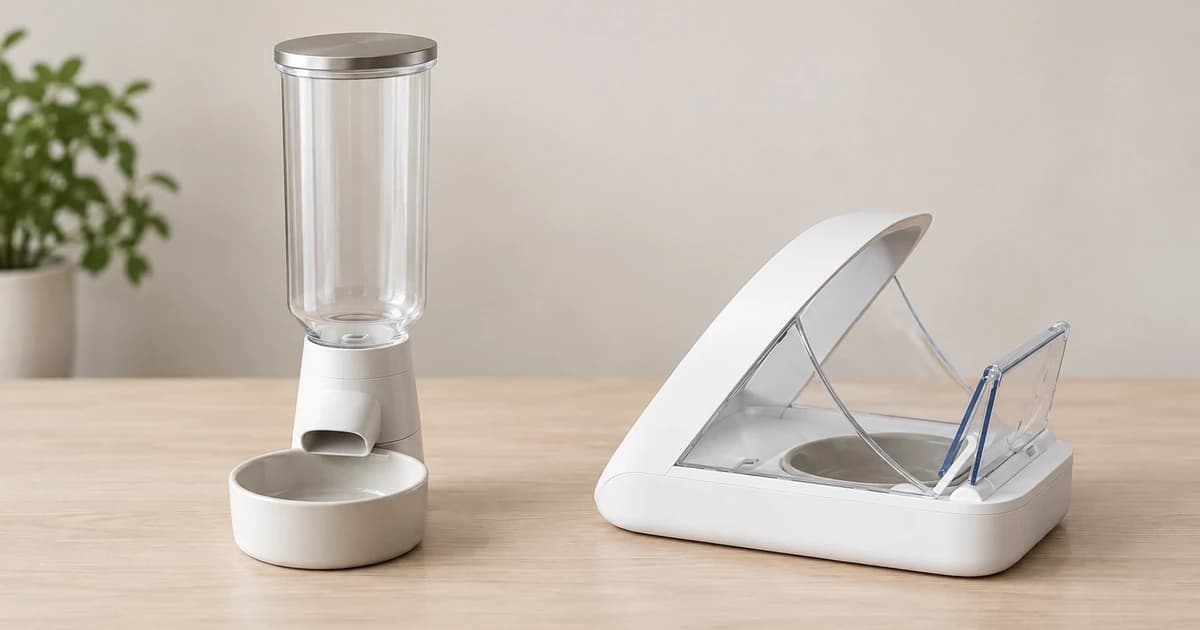
Check the exact model number and trace the food path from loading to eating. The three named products below illustrate the three core designs:
| Named device and trigger | What physically moves | Where the owner loads food |
|---|---|---|
PetSafe Healthy Pet Simply Feed (PFD00-14574): scheduled meal time | An internal conveyor carries dry food from the bulk storage hopper down the chute into the bowl. | Owner fills the bulk hopper; the external bowl catches each scheduled drop. |
PetSafe 5 Meal Pet Feeder (PFD11-13707): scheduled timer event | The carousel tray rotates one slot forward to expose the next compartment under the lid opening. | Owner pre-measures food into five individual tray sections ahead of time. |
| SureFeed Microchip Pet Feeder (non-Connect): enrolled pet approaches sensor | The motorized lid retracts over the single dish and closes after the recognized pet steps away. | Owner places the prepared meal directly into the dish sitting beneath the lid. |
Use this three-part question—does it dispense from bulk storage, rotate a pre-filled tray, or unlock a lid?—before looking at smartphone app features. Wi-Fi connectivity is an interface layer, not a feeding mechanism.
1. A hopper feeder releases portions from bulk storage
PetSafe's Healthy Pet Simply Feed (PFD00-14574) uses an internal conveyor mechanism to move kibble from its storage hopper to the stainless bowl. Its support page lists a 24-cup hopper storage capacity alongside programmable meal sizes. Keep those two figures distinct: 24 cups describes total container volume, not a recommended meal portion or a number of days a cat may be left unattended.
The PFD00-14574 support page also documents model-specific operating modes including Feed Now, Pause Feed, and Slow Feed. Treat those modes as controls for that specific conveyor model rather than assuming every gravity or auger hopper works the same way.
2. A rotating tray exposes pre-measured compartments on a timer
PetSafe's 5 Meal Pet Feeder (PFD11-13707) has no bulk hopper. Instead, you fill five individual compartments in a removable carousel tray: one compartment sits open immediately when loaded, and the remaining four rotate into the feeding window at scheduled times.
Because each slot already holds the exact meal you placed in it, rotation changes which compartment is uncovered rather than metering food from a central bin. The PFD11-13707 support page specifies dry or semi-moist food and lists 1 cup capacity per compartment—a physical volume limit that does not establish refrigeration, wet-food spoilage protection, or a veterinary portion recommendation.
3. An identity-controlled lid restricts access to a single bowl
The standard non-Connect SureFeed Microchip Pet Feeder stores a pet's implanted microchip number (or RFID collar tag) and opens its lid when that registered animal places its head inside the sensor hoop. Its mechanism controls who can reach the dish rather than when food is dropped.
Never assume from the word “microchip” that an access feeder also dispenses timed meals, weighs portions, or connects to a phone app. Compatibility and enrollment still require their own dedicated setup sequence: the public product page includes a microchip compatibility checker and an overview of gradual lid training, but that overview is not a full button-by-button setup manual. Follow our dedicated guide to register an identity on the matching feeder before introducing your cat to the moving lid.
Read capacity and schedule fields as hardware limits, not care guarantees
| Published Specification | Hardware Question It Answers | What It Does Not Establish |
|---|---|---|
| Hopper volume (e.g., 24 cups on PFD00-14574) | How much dry kibble fits inside the storage bin. | How much your cat should eat or how long a pet can stay home alone. |
| Tray slot volume (e.g., 1 cup on PFD11-13707) | Maximum space inside one pre-loaded carousel compartment. | Food freshness duration, cooling performance, or ideal calorie intake. |
| Scheduled timer entry | When the conveyor runs or the tray advances one slot. | That food actually dropped unjammed or that the intended cat ate it. |
| Registered microchip / RFID identity | Which pet ID triggers the lid motor to open. | Scheduled portion dispensing or guaranteed exclusion if two pets crowd the arch together. |
Compare automatic pet feeders with this mechanism checklist beside you. For non-electric puzzle dishes that slow down fast eaters, see our slow-feeder bowl guide; for fish tanks, see our aquarium feeder setup guide. Read our editorial policy on how we use published equipment documentation.