For many long-haired cats, daily brushing is a useful starting point. For a short-haired cat, start with a regular weekly check and brushing routine, then adjust to the coat you actually find. Short-coat guidance varies: Blue Cross suggests around once a week, while PDSA recommends a few times a week for short- and medium-haired cats. Those schedules give you places to start; they do not set an identical timetable for every cat.
The practical question is whether your routine keeps loose hair and developing tangles manageable without making your cat uncomfortable. A brief, comfortable session can be more workable than saving everything for one long session. This guide concerns brushing the coat, rather than tooth brushing, bathing or a technique for removing mats.
Choose a starting schedule from the coat
RSPCA cat grooming guidance describes daily grooming for many long-haired cats and at least weekly grooming for shorter coats. Blue Cross also distinguishes a daily long-coat routine from an approximately weekly short-coat routine. Neither distinction tells you exactly how many minutes your own cat will tolerate.
| Coat or situation | Starting approach | What to observe |
|---|---|---|
| Long coat | Plan a short daily opportunity to check and brush. | Areas that begin to tangle, loose hair and the cat's response. |
| Short coat | Use regular weekly brushing as one starting option; some guidance recommends several sessions a week. | Whether loose hair or tangles accumulate between sessions. |
| Medium coat | PDSA groups this with short coats for brushing a few times a week. | The actual density, length and condition of the coat. |
| New discomfort or coat change | Pause and seek individual advice rather than simply brushing longer. | Skin changes, reduced self-grooming, resistance or a mat. |
A coat description is only the first step. Two cats described as short-haired can still present different amounts of loose hair and different tolerance for handling. You can record a starting schedule in a calendar, but let observations determine whether it remains useful.
Adjust the routine from your own observations
PDSA's grooming advice explains that grooming needs can change with age, difficulty reaching parts of the body and seasonal coat changes. Its short- and medium-coat recommendation is more frequent than Blue Cross's short-coat starting point. Keep that difference visible rather than treating either number as a universal requirement.
After a comfortable session, make a simple note: what the coat looked like, whether a tangle was beginning and how your cat responded. At the next session, compare those observations. If loose hair or small tangles repeatedly build up before the next planned session, discuss a more frequent routine and appropriate tools with your veterinarian or groomer.
If the coat seems manageable, avoid extending a session just to meet a time target. Frequency and duration answer different questions. A daily opportunity does not mean your cat must accept a long daily brushing session.
Build acceptance before extending a session
Blue Cross recommends introducing grooming gradually while the cat is relaxed. Begin with the handling and short contact your cat accepts, and stop before the experience becomes uncomfortable. Returning another time is more useful than trying to finish an imagined quota.
Watch your cat throughout the session. Tail movement, ears moving back, withdrawal, growling or an attempt to leave are reasons to stop and reassess. These observations do not diagnose why brushing is difficult. If resistance is new, persistent or accompanied by another change, ask your veterinarian for advice.
For a cat that currently accepts only a small amount of brushing, keep a distinction between offering a routine and completing the whole coat. A professional can help you plan care that suits the coat and the cat's comfort. Holding the cat through distress does not solve a scheduling problem.
Choose tools separately from frequency
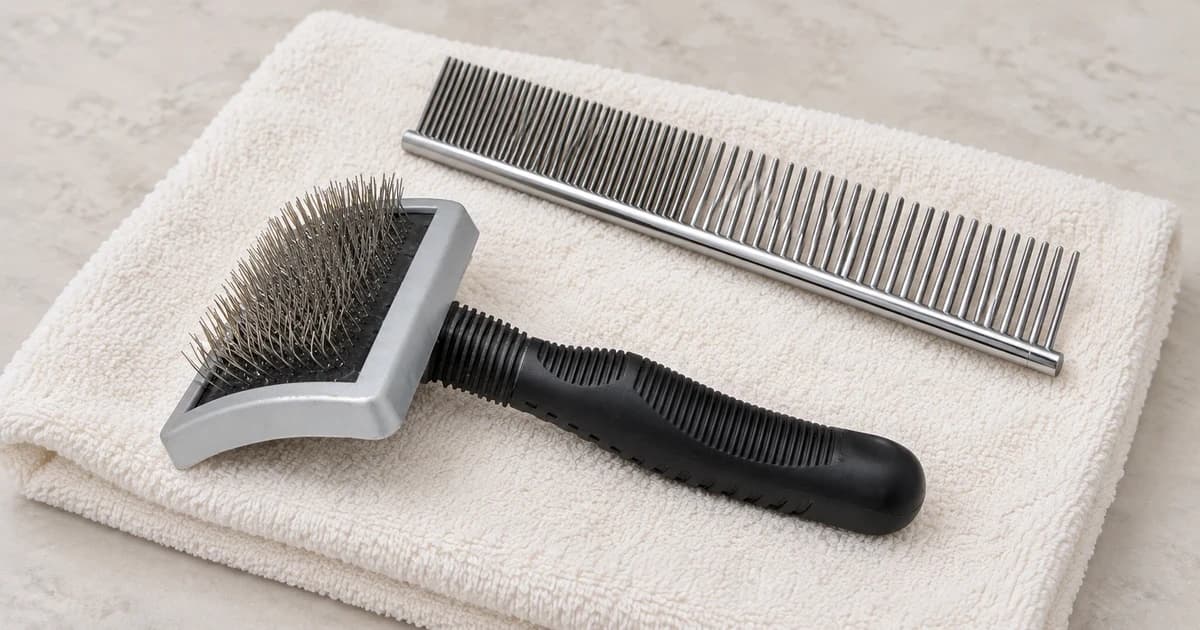
The same timetable can require different tools for different coats. A photograph or product title cannot establish that a tool suits your particular cat.
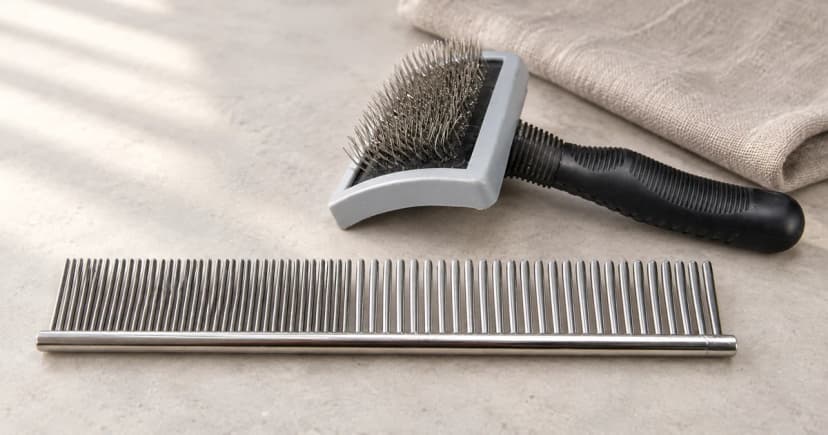
Browse the grooming categories to compare the available types. Bristle and rubber brushes and combs and dematting tools are shopping destinations, rather than instructions to use every listed tool. A tool marketed for dematting does not make an existing mat a suitable home brushing job.
Know when the schedule is no longer the main issue
A mat, sore-looking skin, a marked change in the coat or reduced self-grooming calls for advice appropriate to the individual cat. PDSA recommends professional help with mats. Avoid pulling through a mat, increasing force or trying a cutting procedure because a regular brushing session seems overdue.
Keep the working routine simple: choose a coat-based starting frequency, offer short comfortable sessions and notice what changes between them. Review that routine when the coat, self-grooming or tolerance changes. The useful schedule is the one you can adjust from real observations while getting help for problems that ordinary brushing cannot resolve.