To brush a long-haired cat, start with a calm, willing cat and a coat that is free of tight mats. Work gently in the direction the hair grows, using a suitable wide-toothed comb to check small areas. Stop when the tool catches, the skin looks sore or your cat becomes uncomfortable. Finishing the whole coat is less important than avoiding a painful struggle.
Check the coat before reaching for a brush
Look over the coat and visible skin first. Notice tangled patches, unusual hair loss, redness, wounds or a change in how much your cat grooms. The RSPCA's cat grooming guidance recommends veterinary advice about skin problems, matting and changes in coat condition. A tool cannot tell you what caused a new problem.
Separate routine care of loose, untangled hair from dealing with a mat. A compact lump, a patch pulling at the skin or resistance you cannot comfortably comb through is a reason to pause. PDSA advises owners against tackling mats at home. Ask your vet or a suitable professional groomer how to proceed. Do not pull harder, cut beside the skin or improvise with a razor.
Choose tools for this cat's coat
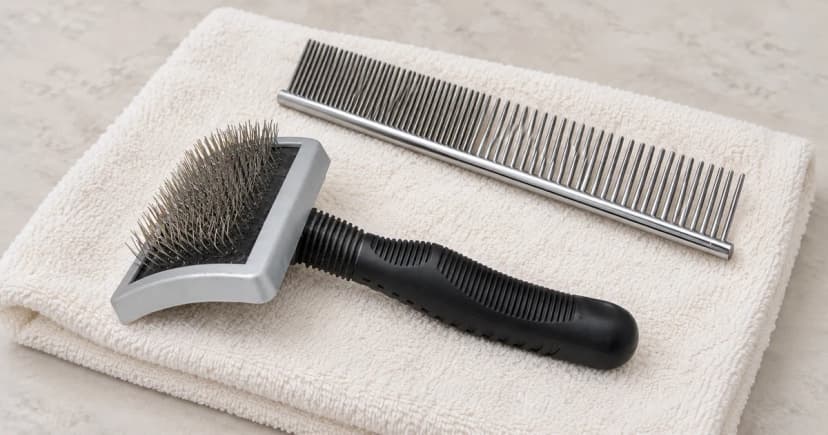
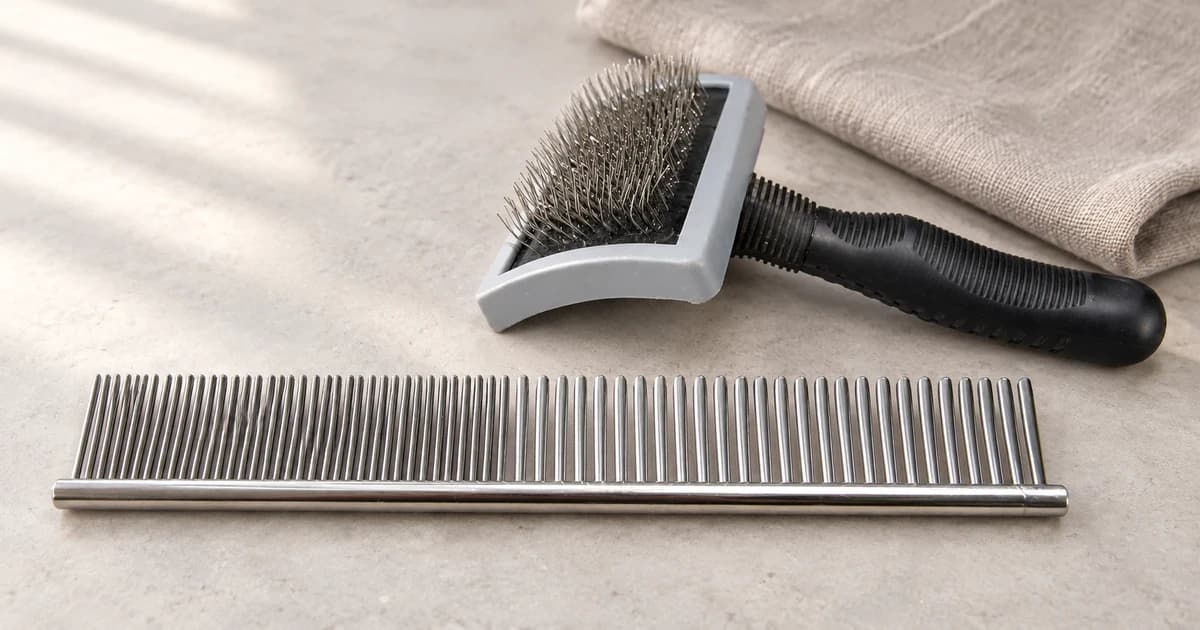
A brush and a comb do different jobs. A brush can collect loose hair, while a comb lets you check whether a section passes freely between the teeth. The RSPCA recommends a wide-toothed metal comb for long-haired cats. That recommendation does not make every metal comb or wire brush suitable for every cat.
Consider the coat, the tool's condition and your cat's response. Cats Protection's grooming advice emphasizes individual preferences and choosing equipment for coat length. A finer section of a comb is not an instruction to force it through a tangle.
Compare tool types in Pawlivy's grooming category and combs category. A category label, including "dematting," does not replace individual advice about a matted coat.
Make the first contact easy to accept
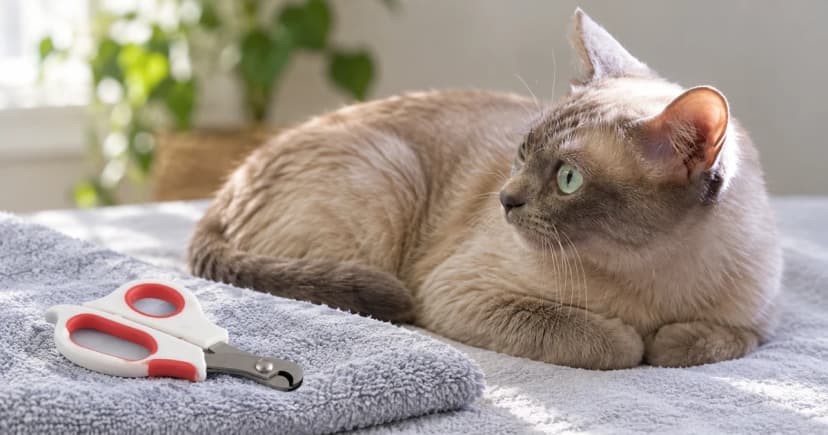
Pick a quiet moment when your cat is relaxed. Let them investigate the equipment, then introduce brief contact in an area they already tolerate being touched. Keep restraint minimal and pair a comfortable interaction with praise or an appropriate reward. Cats Protection recommends gradual introduction rather than trying to groom everything at once.
If your cat already dislikes grooming, begin with the stage they can tolerate. That may be having a tool nearby rather than using it. Do not hold them down to complete the job. A history of difficult grooming may need help from a qualified behavior professional, alongside checking for discomfort with your vet.
Work through one comfortable section at a time
- Follow the hair. Comb gently from the head toward the tail in the direction of growth. Keep the movement light rather than using the teeth to scrape the skin.
- Check what the comb tells you. Move to another small section only while it passes without tugging and your cat remains comfortable. If it catches, stop that pass and inspect the area.
- Include easily missed areas gradually. Long hair can tangle around the chest, abdomen, behind the ears, back legs and armpits. Check these only as your cat allows; sensitive or inaccessible areas are not a reason to force a new position.
- Finish before tolerance runs out. Leave another area for a later comfortable session instead of repeatedly going over the same patch.
Blue Cross describes gentle, head-to-tail combing for long-haired cats, with attention to areas where hair tangles. Some care pages discuss teasing out knots. This guide uses PDSA's more cautious boundary: routine combing stops at a suspected mat rather than becoming a home mat-removal procedure.
Recognize when to stop
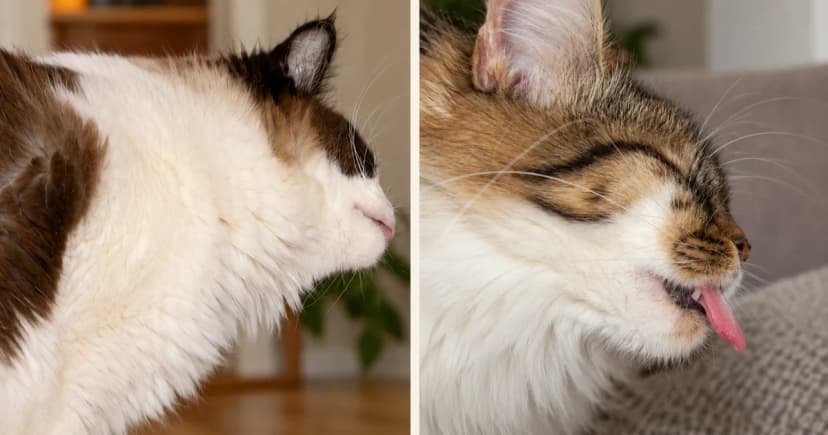
Watch your cat as closely as the coat. Blue Cross lists tail twitching, ears turning back, dilated pupils and moving away among possible discomfort signals. The RSPCA also advises ending grooming when a cat becomes unhappy, including tail swishing, growling or hissing. Respond early rather than waiting for scratching or biting.
Record where the session became difficult: a particular body area, a catching tool or contact your cat resisted. Next time, end earlier or seek advice about that specific problem. This observation is useful information, not a diagnosis of pain or behavior.
For the separate question of how frequently to groom, use coat condition and individual advice to set a routine. Here the goal is a gentle technique: a comfortable section checked without pulling, and a clear stopping point when the coat or the cat needs help.