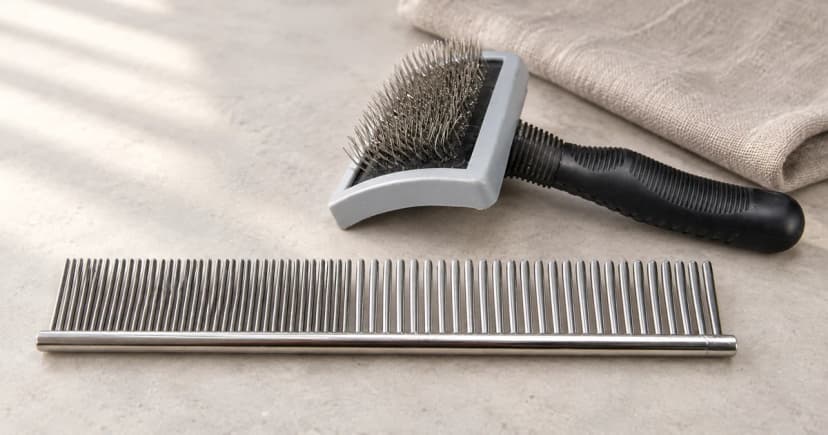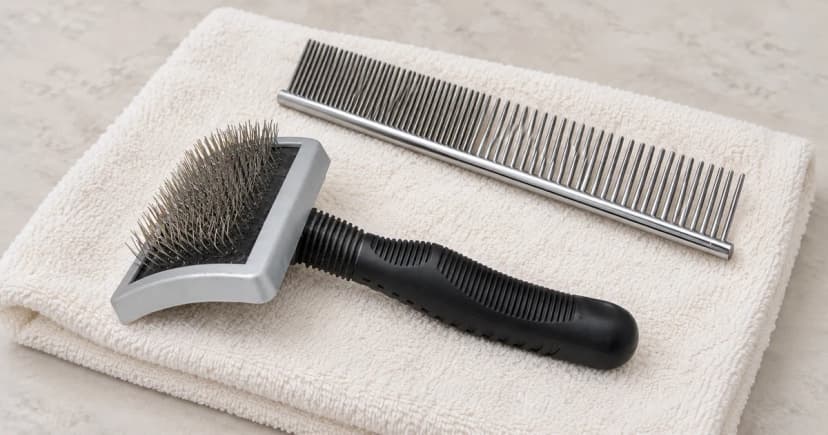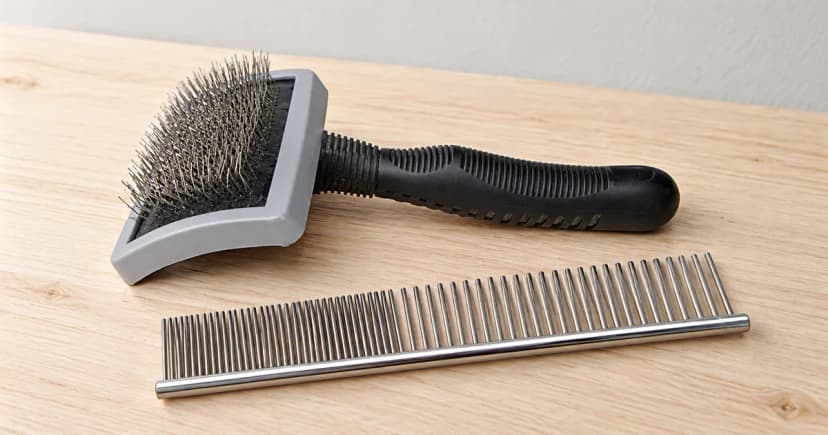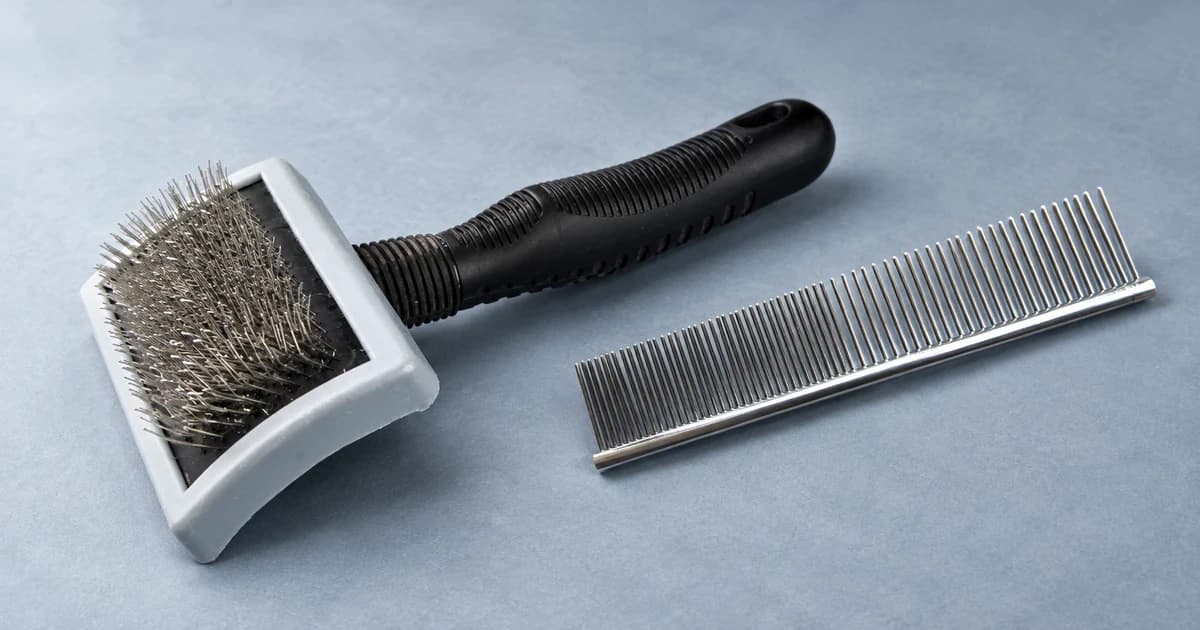
Use a slicker brush on your dog with light, gentle strokes through a small area of coat, following the hair's direction and your brush's instructions. Check the brush and skin first, pause if the pins catch or your dog becomes uncomfortable, and get help with tight mats. More pressure is not a substitute for the right tool or technique.
Confirm that a slicker is the right tool
A slicker typically has a flat head with fine, angled pins. It differs from a larger rounded-pin brush, a bristle brush and a cutting-style deshedding tool. The American Kennel Club's home grooming guidance recommends asking a vet or groomer which tools suit your dog's coat before buying supplies.
A curly coat, a long coat and a smooth coat do not automatically need the same brush or approach. Pawlivy's slicker and pin brush category groups tool options; the category name alone does not establish suitability for an individual dog.
Inspect the brush, then the coat
Look for pins sticking out at an unusual angle before use. Blue Cross's slicker brush advice warns against excessive pressure and highlights misplaced pins. If the brush looks damaged, pause and follow the maker's replacement guidance rather than bending it back into shape beside your dog.
Check for sore patches, cuts, irritation and compact tangles. FURminator's Slicker Brush Large directions call for checking the animal before grooming and seeking veterinary care for sores, bruises or skin conditions. The coat can hide a problem, so do not assume a reluctant dog simply needs firmer handling.
PDSA advises against tackling mats at home. A tight lump or a brush that cannot pass without pulling belongs outside routine brushing. Stop and ask a reputable groomer or vet how to handle it; do not use scissors or increase the force.
Introduce contact before trying to finish the coat
Choose a quiet place where your dog is comfortable. Let them become familiar with the brush being nearby, then try a brief, gentle contact in an area they accept being touched. Pair a comfortable interaction with praise or an appropriate reward. PDSA recommends going slowly and stopping if a pet becomes worried or stressed.
If your dog is afraid of grooming, a wire slicker need not be the first tool you introduce. Blue Cross describes stepping back to having brushes nearby and gradually reintroducing gentle contact with a soft brush. Seek advice about persistent difficulties rather than holding your dog still to complete the task.
How to use a slicker brush: light strokes and section checks
- Begin with a small, comfortable area. Make a gentle pass through freely brushable hair. Avoid pressing the pins down to scrape the skin.
- Follow the coat and the tool's directions. Work with the hair's growth rather than using an unfamiliar motion from another brush's tutorial.
- Pause when there is resistance. Look at the patch that caught before repeating the stroke. A mat, damaged pin or uncomfortable area is a reason to stop, not to pull harder.
- Move on only while your dog is comfortable. Work through separate areas instead of repeatedly brushing one patch to collect more hair. Leave sensitive or difficult areas for individual advice.
The AKC advises gentle strokes that address the coat rather than only its surface. That does not mean driving fine pins into the skin. FURminator also asks owners to be especially gentle around sensitive areas. If you cannot reach a section comfortably, a groomer can show a suitable approach instead of you forcing the position.
Keep brand-specific instructions with that brush
Slickers differ in pin length, head construction and number of sides. FURminator's cited Large model has curved-pin and straight-pin sides with different steps. Those instructions, including a motion specified for one side, do not establish a universal technique for every slicker.
A manufacturer's claim about scratch-free pins is not a reason to ignore pressure, tool damage or your dog's response. This guide does not promise that a particular brush cannot irritate skin.
Judge the session by comfort, not collected hair
Stop when your dog moves away, resists contact or seems worried, or when you notice a skin or coat change. PDSA recommends veterinary advice about changes and ending a stressful grooming interaction. Note which area or movement caused difficulty so you can explain it when seeking help.
A useful session can be just one comfortable section. You do not need a pile of removed hair, a fixed number of minutes or a finished whole-body groom to prove the brush was used well. The next step is gentle, repeatable care of a coat you can brush without tugging.