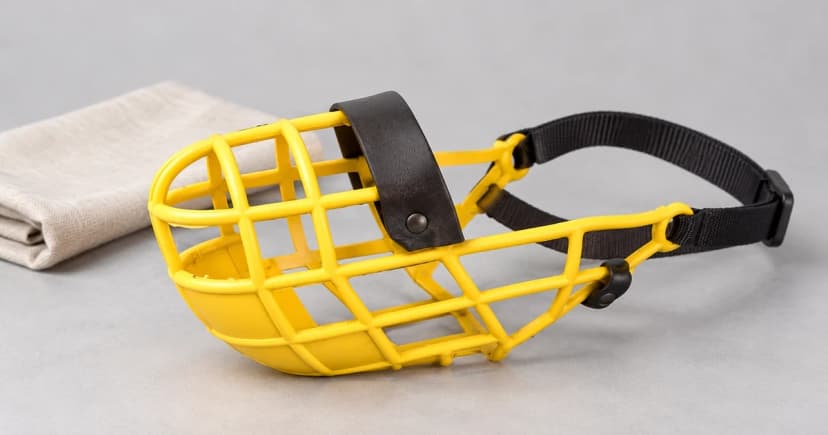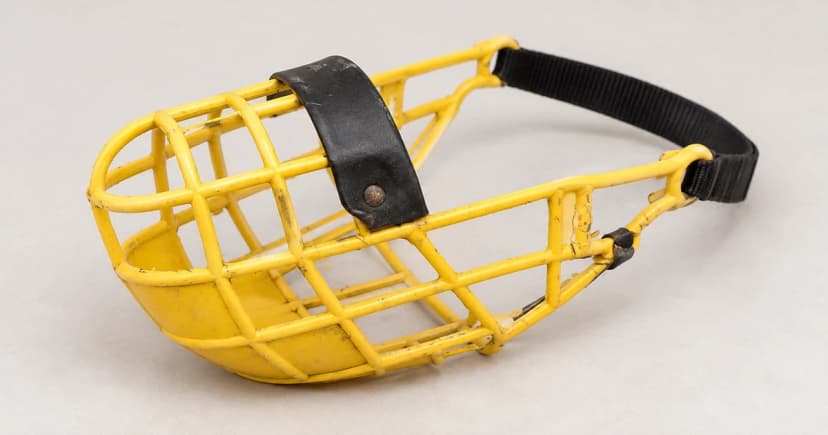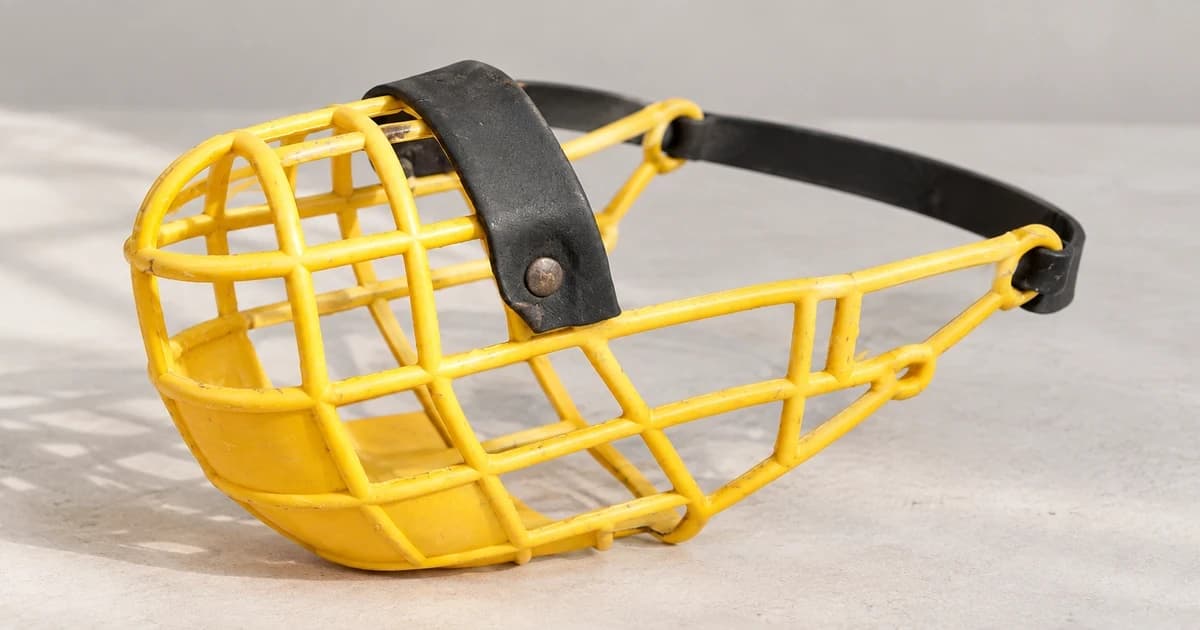
A basket muzzle should stay securely in the position intended by its maker while giving the individual dog room to pant, drink and take suitable rewards. The basket and straps should not rub, obstruct the eyes or restrict normal mouth movement. A dog willingly putting their nose inside is useful for checking, but willingness alone does not establish a good fit.
Check the exact model, its sizing instructions and the dog together. Breed labels, a photograph of another dog and a familiar size number cannot replace that comparison.
Start with the correct mechanism and model
This guide concerns basket muzzles intended to allow panting and drinking. A fabric muzzle that closes the mouth is a different mechanism. Blue Cross explains why this distinction matters and advises checking for rubbing, interference with the eyes and enough room to pant fully.
Identify the model before measuring or adjusting anything. Keep its current sizing chart and fastening instructions available. Different basket shapes, nose pieces and retention arrangements can require different checks. Our basket-muzzle category is a place to explore equipment; it does not establish a particular dog's size or confirm an individual product's fit.
Measure according to that model's chart
Use the measurement locations and posture specified by the manufacturer, then compare the measurements with that model's chart. Record the values and the chart you used so that a seller or professional can understand the question if you need help. Do not substitute another model's size number or a breed example for those measurements.
For example, Company of Animals' Baskerville Ultra measuring guide describes nose circumference at the widest part, usually below the eyes, and length from the nose tip to its base below the eyes. It also describes a nose-tip gap of around one centimetre. These are that maker's published instructions; the measurement points and clearance are not a universal specification for every muzzle.
Tightening straps cannot settle a question about an unsuitable basket shape. This guide does not authorize heating, reshaping, cutting or adding padding to unfamiliar equipment.
Check the basket on a comfortable, participating dog
Give the dog time to become comfortable with the equipment before attempting a detailed fit check. Do not force the basket onto a worried dog to finish measuring. Battersea's introduction guidance builds voluntary nose placement before strap handling and fastening. That preparation makes checking possible; it does not certify the result.
With the equipment positioned as its instructions describe, check whether the basket contacts the nose, rubs the face or gets in the way of the eyes. Then check the space the individual dog needs to open their mouth and pant, rather than judging only the appearance of a closed mouth. A basket that looks spacious in an empty illustration may still be unsuitable for a particular face.
Dogs Trust's guidance calls for comfortable equipment that does not obscure vision, dig into the face or restrict mouth movement, and that allows eating, drinking and panting. Those functions need attention alongside retention.
Assess straps without trading comfort for retention
Follow the exact fastening and adjustment instructions for the model. Company of Animals describes applicable neck and head straps as snug without being tight. Avoid treating a generic finger-width rule as a complete fitting test: the sources used here give different finger-width advice in their own guidance, and a finger count does not answer whether this basket has the right shape or panting room.
If the equipment shifts, slips or seems to require pressure on the face to remain in position, pause and seek model-specific advice.
Use problems to guide the next decision
| What you notice | What needs another check |
|---|---|
| Contact near the eyes or rubbing at the nose | Basket shape, position and the maker's fit instructions. |
| Restricted mouth movement or inadequate room to pant | Individual clearance and equipment suitability, rather than a tighter strap. |
| Slipping or uncertain retention | The intended fastening arrangement and whether the model suits the dog. |
| Repeated rubbing, sore skin or difficulty behaving normally | Professional advice before continuing wear or practice. |
Dogs Trust advises speaking to a vet when irritation, sore skin or difficulty behaving normally suggests that the size, shape or material is unsuitable. Worry about head handling, food guarding or a history of biting also calls for qualified support; a home fitting exercise is not a substitute for that help.
Stay with the dog during any check. Cornell's basket-muzzle guidance warns against unattended wear and distinguishes comfort with nose entry from comfort with the rear strap. A successful fit check does not remove supervision needs or guarantee bite prevention. Keep notes on the actual equipment and the dog's response so that your next decision addresses the problem you observed.