Clean a basket muzzle using the instructions for the exact equipment you own. Identify the basket, straps, bridge or padding and hardware before choosing a cleaner or wash method. Similar-looking baskets can have different care instructions, and permission to clean one component does not automatically cover the complete assembly.
The maker examples below differ on a basic decision: whether to add a cleaning agent. Keep those instructions separate, preserve the adjustment information you need, and leave an unresolved care question open rather than filling it with another brand's recipe.
Make an equipment record before starting
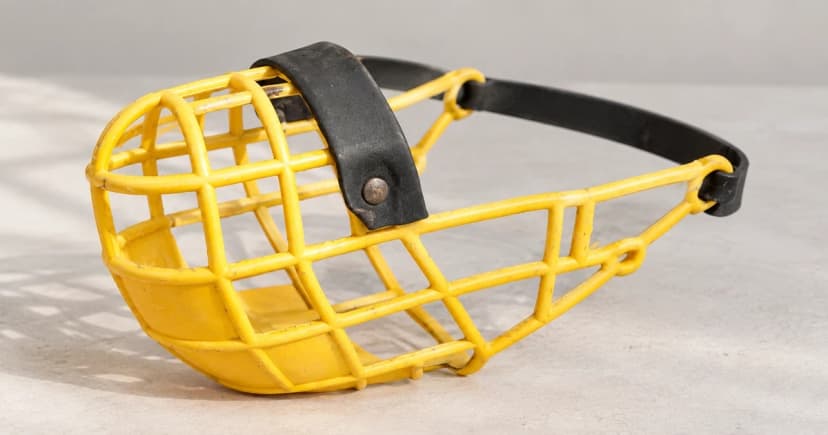
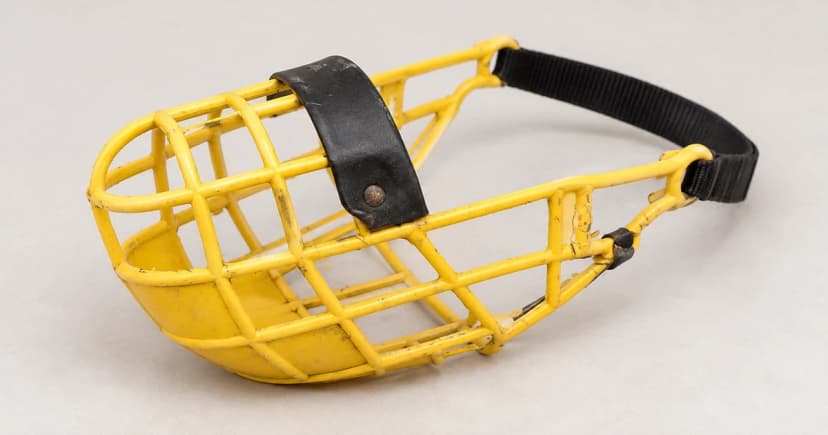
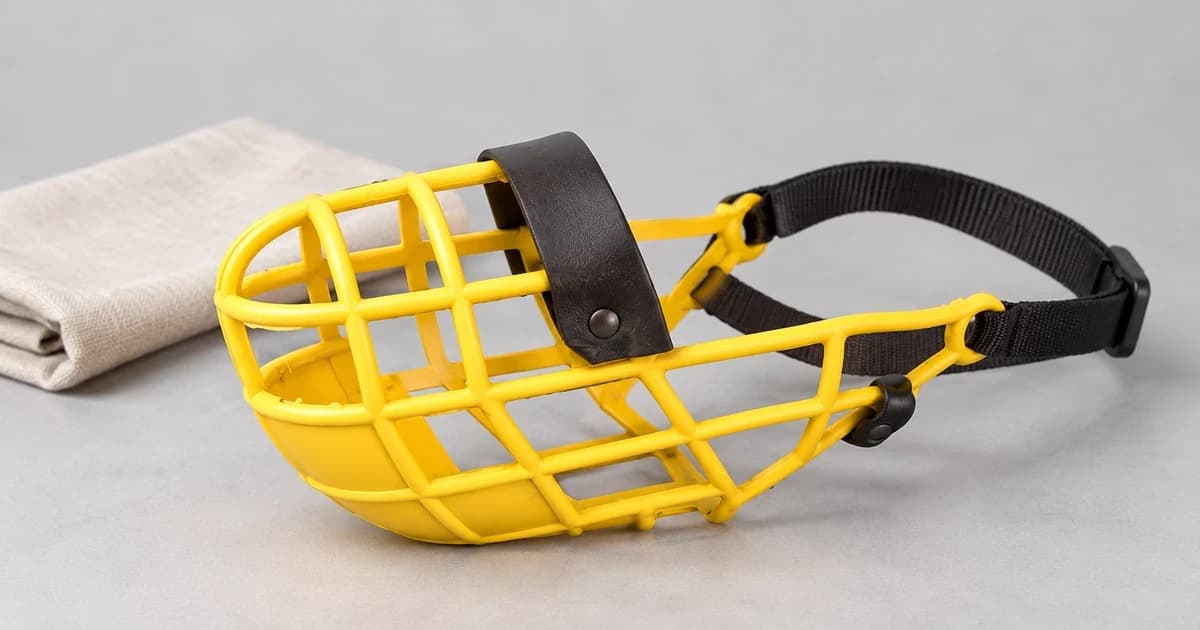
Work with the muzzle off the dog. Find the model name, care label and matching manufacturer instructions. Record any different materials or attached parts the maker identifies. A yellow lattice, dark bridge or black band in a photograph does not identify a brand, material or permitted cleaning method.
Note the current adjustment positions and take a clear photograph of the actual strap arrangement before handling it. This is a reference for questions or the maker's reassembly instructions; it does not establish that the original fit was correct. Keep care separate from the detailed checks in our guide to how a dog muzzle should fit.
Look over the reachable basket surfaces, strap edges, bridge, padding and fasteners. Note visible dirt or damage and the areas you cannot reach. Do not release rivets, cut a strap or detach a permanently connected part to make access easier.
Compare the maker's actual care permission
| Source and equipment scope | Published cleaning direction | Limit to keep with it |
|---|---|---|
| BUMAS: Material and care | Rinse the BUMAS muzzle under running water. For stubborn dirt, soak it in water and clean with a toothbrush or nail brush. The page explicitly says not to use cleaning agents; its odor section describes warm water and a brush. | This is the maker's instruction for its own products, not every basket muzzle or every product described as BioThane. |
| Trust Your Dog: Care Instructions | For its BioThane gear, wipe with a wet wipe or cloth; for bigger messes, soak the leash or muzzle with a little dish soap, wipe down, rinse and dry. The page permits dishwasher cleaning of BioThane while excluding sanitizing and high-heat cycles. | the page also mentions vinyl products, but its care paragraph specifically discusses BioThane. It does not supply a universal method for vinyl, another maker or an unidentified complete assembly. |
These are alternative manufacturer instructions, not consecutive steps. Adding TYD's dish soap to the BUMAS method would contradict BUMAS's stated direction. Likewise, a machine permission in TYD's BioThane paragraph does not establish that an unknown muzzle, every attached component or another manufacturer's product belongs in a dishwasher.
The TYD page also calls for rinsing metal parts with clean water and allowing them to dry after saltwater or gritty sand exposure. Keep that statement with its own gear. It is not permission to soak unidentified padding, lubricate hardware or release a rivet.
Keep cleaning and disinfecting as separate questions
The CDC's pet-supply guidance distinguishes removing dirt through cleaning from disinfecting and says to follow cleaning instructions supplied with pet items. That manufacturer-first step matters when the equipment's own directions exclude a product or process.
This guide does not turn the CDC's broader household methods into a disinfectant recipe for an unknown basket muzzle. The source includes methods for other items and circumstances; they do not settle compatibility with your basket, straps, bridge or padding. If an illness or contamination situation calls for disinfection, get directions appropriate to the situation and the actual equipment instead of combining household recipes.
Keep the dog away from the cleaning area, consistent with the CDC's advice to keep pets away from cleaning and disinfecting work. Do not apply a cleaner while the muzzle is on an animal. A washed-looking surface or lack of visible dirt does not establish a clinical hygiene result.
Resolve drying and inaccessible areas explicitly
Follow the exact maker's drying directions as part of the same task. TYD's care paragraph includes rinsing and drying; its metal-parts instruction also specifies allowing them to dry.
Observe accessible strap folds, bridge contact surfaces, padding if present and hardware separately from the open basket. Write down which areas remain wet, retain visible material or cannot be assessed. Do not assume that seeing through the lattice means every concealed contact surface has been addressed.
Adding heat, reshaping the basket or replacing a fastener is a different operation from cleaning. A short care article does not authorize those changes. Keep equipment with unresolved damage or assembly questions out of the next wear session while you obtain applicable advice; a completed wash does not answer those questions.
Close the care record without certifying fit or performance
| Record item | What closes the question |
|---|---|
| Equipment identity | Actual model/version and applicable care source, including any separately identified components. |
| Cleaning permission | The maker's method used for that equipment; unresolved cleaner or machine permission remains a question. |
| Adjustment reference | Actual pre-care photograph or notes, followed by the maker's applicable fastening/reassembly instructions. |
| Drying and condition | Accessible surfaces recorded separately; concealed areas, damage and uncertain assembly referred for further guidance. |
Once the care task is resolved, fitting and the dog's participation still need their own attention. Our guide to introducing muzzle wear voluntarily covers that separate process. Cleaning is not a reason to force a dog to wear unfamiliar equipment, nor does it demonstrate bite prevention or reliable retention.
Pawlivy's basket muzzles category is a browsing route. Its product names do not establish that the manufacturer examples here apply to a particular listing. Our editorial policy explains how documented instructions, observations and illustrations are kept distinct.