Train a dog to wear a muzzle by making the equipment predict good things and building voluntary participation before fastening it. Start with an unfastened, suitable basket muzzle, let your dog approach and withdraw, and reward comfortable nose placement. Add strap handling and brief wear only after the earlier parts are familiar.
The useful question is not how many days have passed. It is whether your dog is choosing to take part without becoming worried. Training and equipment suitability need separate attention: a dog accepting a muzzle does not prove that it fits or that it will prevent every bite.
Prepare the equipment and the situation
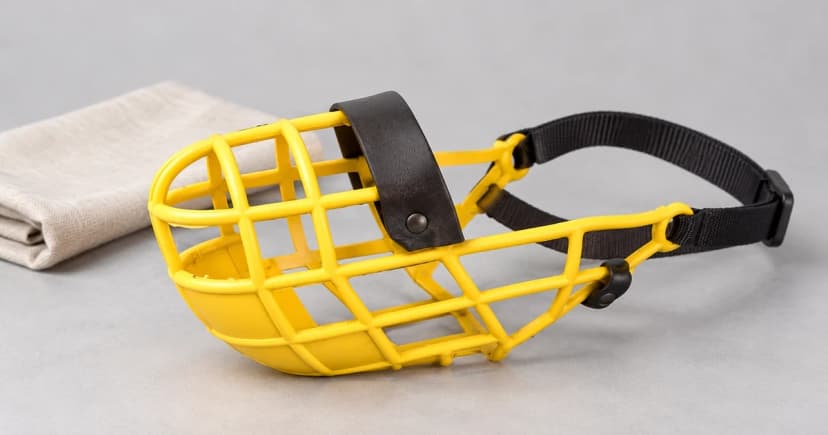
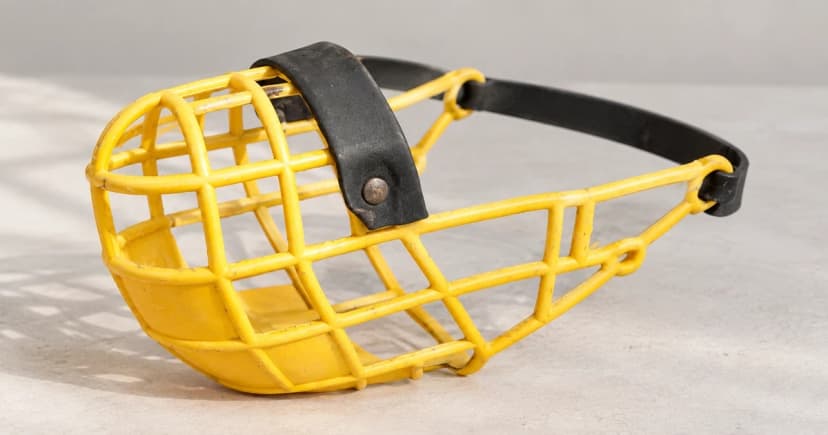
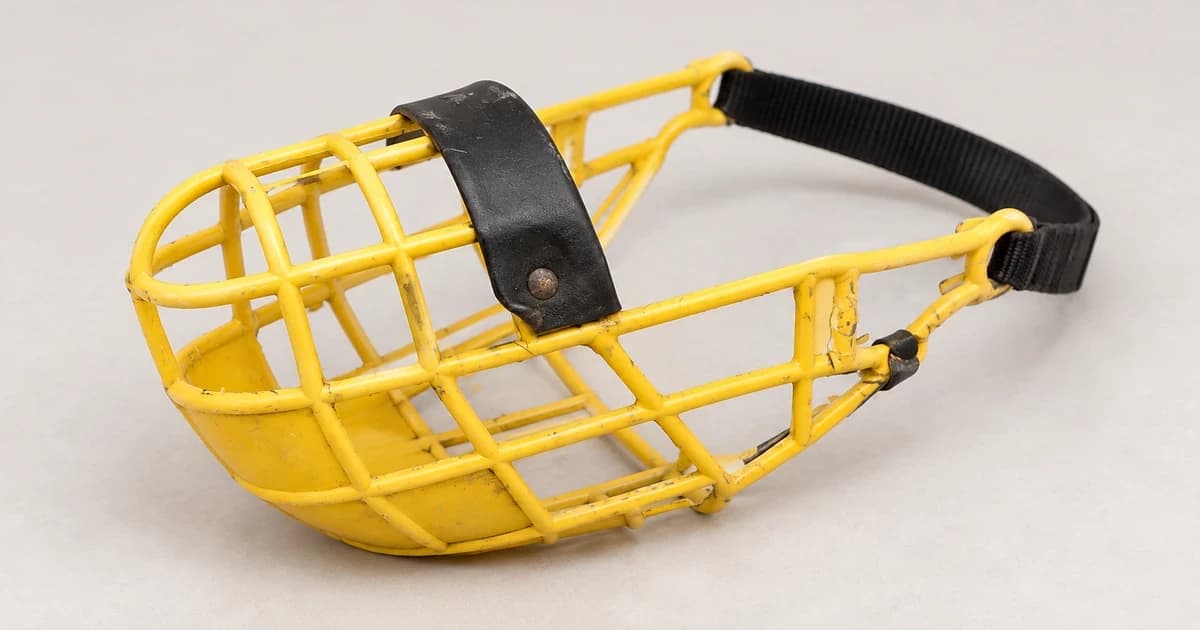
This guide concerns a correctly selected basket muzzle that permits the individual dog to pant, drink and receive rewards. A fabric muzzle that holds the mouth closed is a different mechanism; do not substitute it for this basket-training task. Blue Cross explains the basket design and panting distinction.
Check the actual maker's sizing, fit and fastening instructions for your equipment. There is no universal strap route or finger-width rule here. Rubbing or interference with the eyes needs attention, rather than more repetitions. Our basket-muzzle category is an equipment starting point; a photograph or category label does not establish the right fit for your dog.
Work in a quiet, familiar place while your dog is relaxed. Choose rewards already suitable for that dog. If food guarding makes approaching with treats unsafe, or touching the face or head is difficult, seek qualified support before trying this food-based method. These are specific boundaries in Dogs Trust's training guidance.
Start with looking and approaching
Show the muzzle at a comfortable distance and reward your dog for noticing it. Keep the interaction brief and allow them to move away. If holding it is worrying, begin with rewards near the resting muzzle rather than bringing it toward the face. The first useful observation is a dog willing to approach, not a muzzle successfully placed over the nose.
Dogs Trust keeps choice central to the introduction. For your session notes, record what your dog actually does: approaches, stays nearby, or backs away. Progress from that response instead of advancing simply because you have repeated the exercise.
Reward voluntary nose placement, with straps open
Hold the muzzle steady and offer a suitable reward at the entrance. Let your dog reach for it. Move the reward farther inside gradually as your dog becomes comfortable; keep the straps unfastened so they can withdraw. Blue Cross emphasizes bringing the dog toward the muzzle, rather than pushing the muzzle onto the dog.
Once entry is familiar, present the empty muzzle and reward nose placement through its openings. If your dog does not choose to enter, return to the easier reward-at-the-entrance step. Cornell's basket-muzzle guide separates comfort with nose entry from comfort with the rear strap. Successful entry alone is not a reason to fasten it immediately.
Add duration and strap handling separately
Reward short periods of comfortable nose placement before expecting longer ones. Then introduce the strap sensation without fastening. Treat this as another small task, rather than changing entry, duration and fastening all at once.
Battersea's sequence introduces unfastened straps before brief fastening. When your dog is comfortable with that handling, fasten according to the actual equipment instructions, reward promptly, and remove it calmly. If they panic or try to remove it, step back in the training rather than increasing the duration.
Build comfortable wear and movement
After brief fastening is familiar, increase wear gradually and include simple activities your dog already enjoys. Keep rewarding participation. Battersea recommends maintaining positive practice, so the muzzle does not appear only when something difficult is about to happen.
Stay with your dog throughout practice. Cornell advises against leaving a muzzled dog unattended and recommends qualified help for a history of biting or handling sensitivity. Training this equipment is not permission to expose a dog to situations they cannot cope with.
Use your observations to choose the next session
| What you observe | What to do next |
|---|---|
| Voluntary entry, but uncertainty around straps | Keep working on the separate handling step; do not treat entry as readiness for longer wear. |
| Backing away, panic or repeated attempts to remove it | Return to a comfortable earlier stage and reconsider whether the task advanced too quickly. |
| Rubbing, sore skin or difficulty behaving normally | Reassess equipment suitability with professional advice before adding practice. |
Dogs Trust distinguishes wearing a muzzle from changing feelings about a frightening situation. Keep that distinction in your plan. If your dog needs urgent handling before training is ready, discuss the situation with the veterinary team instead of compressing the whole introduction into one session. The goal of practice is a more comfortable equipment routine; it is not a guarantee of fit, acceptance by a deadline or safety in every setting.