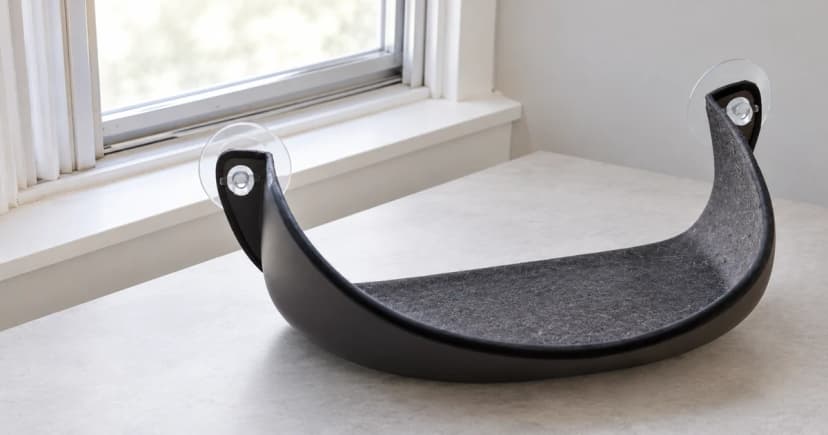
To install a suction-cup cat window perch, first identify the exact model, confirm that its complete mounting footprint fits the intended glass, and follow its own preparation and assembly instructions. Check every attachment afterward and keep the manufacturer's inspection and cleaning schedule. A cup that appears attached today is not proof that it will remain attached indefinitely.
The useful first question is not "How hard should I press?" It is "Do these instructions apply to this perch and this window?" Similar-looking window beds can require different glass dimensions and different hardware. This guide helps you make those checks; it does not certify a window, test a perch's strength, or replace the supplied manual.
Measure the mounting space, not just the sleeping area
Find the model name and version on the packaging or order record. Then distinguish the dimensions of the bed from the clear space needed for all its attachment points. Measuring only the fabric platform can leave the upper cups outside the usable pane.
| Named product | Published glass requirement | What to compare |
|---|---|---|
| K&H EZ Mount Window Bed | A solid glass pane at least 27 inches wide and 11 inches high | The clear pane available for this half-pod design, rather than the overall window frame |
| K&H EZ Mount Window Kitty Sill Single Level | A minimum window size of 24 inches wide and 19 inches high | The complete mounting space, not its separately listed 23-by-12-inch sleeping area |
These are specifications for the Window Bed and Single Level Kitty Sill, respectively. They are not interchangeable requirements for every K&H version or for the products in Pawlivy's window-perch category. Compare the exact item's diagram, surface requirements, dimensions and stated total load limit before choosing a mounting position.
Record the usable width and height of the intended pane. Check where each cup would sit, rather than treating the space occupied by a divider, frame or latch as available glass. If the window has a coating, film or other feature whose compatibility is unclear, ask the perch and window manufacturers before proceeding. A furniture listing cannot establish that an unknown window is suitable.
Match the instructions to the actual hardware
Lay out the unmounted components beside the correct diagram. Count the required cups, supports, fasteners and end caps, and identify which connection belongs in each position. Missing or damaged parts are a reason to stop, not an invitation to omit an attachment or substitute an almost-matching piece.
The Kitty Cot instructions give different rear-cup connections for the Original and Deluxe versions. The K&H Single Level instructions distinguish ordinary push cups from push-and-turn cups on the support straps. An instruction for one mechanism does not explain how to operate the other.
Use the directions for the matching mechanism
The K&H Single Level webpage and its linked Care & Instructions PDF describe the same push-and-turn procedure: loosen the knob counterclockwise, seat the cup and press out air, then tighten clockwise. That sequence belongs to the mechanism they describe; it is not an instruction to twist an ordinary push cup or every other window-bed fitting.
Compare the supplied manual and diagram with the hardware in front of you. Do not force a knob or substitute the turning instructions for a different product.
Prepare and assemble with the cat elsewhere
Keep the cat away from the work area while you identify parts and mount the empty perch. Choose a position you can reach and inspect without making the installation itself precarious. Kitty Cot cautions against faulty or cracked glass, excessive mounting height, and locations over sharp or breakable objects. Its warning is a useful reason to reconsider a location even when the bed physically fits.
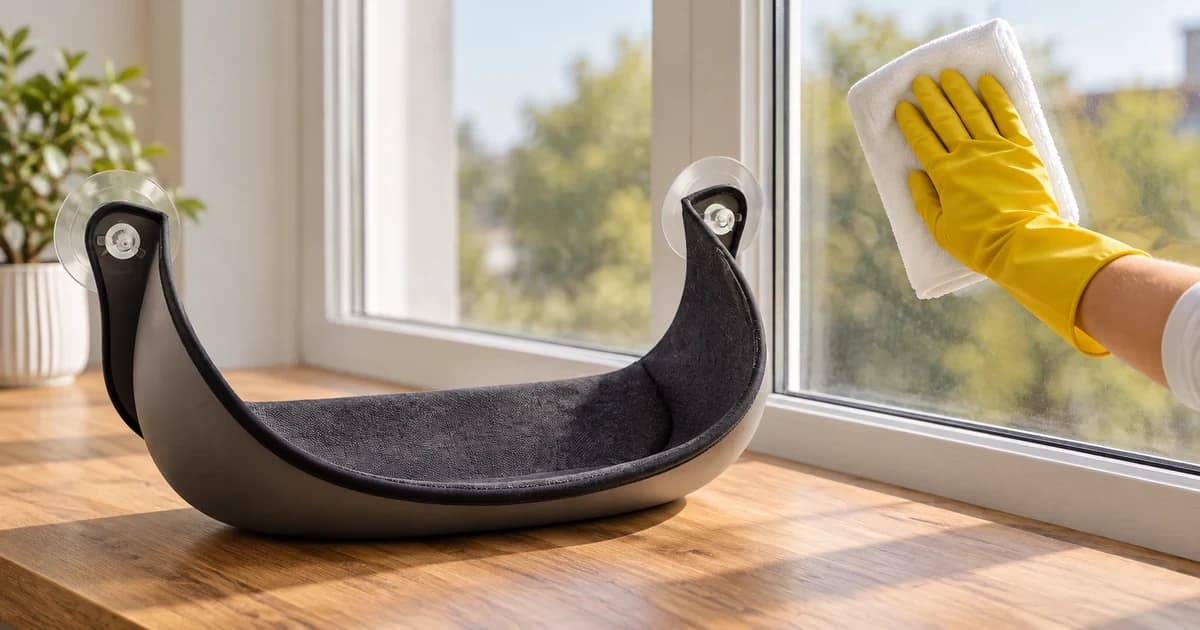
- Use the specified cleaning method. For the K&H Window Bed, the maker says to clean the glass thoroughly, leave it dry and free of residue, and wash the cups with mild detergent, rinse them, and dry them completely. Apply those directions to that model; check your own product before selecting a cleaner.
- Follow the assembly sequence. Fit every connection specified for the model. Keep the platform supported while positioning it, rather than allowing an incompletely mounted bed to hang from one connection.
- Follow the model's seating instructions. The K&H Single Level directions call for a level platform, removal of remaining air from the cups and similar tension in the two support straps. Turn-operated hardware still requires its own confirmed procedure.
- Check the complete assembly. Compare the result with the diagram: attachment positions, connections, platform alignment and the specified hardware. Perform only the checks the manufacturer authorizes. Do not use the cat as a load test, hang improvised weights from the bed, or stand on it.
A quoted capacity does not verify your glass or compensate for an incomplete assembly. Nor should you multiply an individual cup's advertised capacity to invent a capacity for the whole perch.
Separate routine checks from cleaning and reinstallation
An inspection asks whether the installed assembly remains in the required condition. Cleaning removes contamination; reinstallation rebuilds the attachment following the correct sequence. These are different jobs.
Kitty Cot specifically recommends checking the cups daily and replacing extensively worn cups. It acknowledges that suction cups can occasionally disengage. The K&H Window Bed recommends monthly cleaning of its glass and cups; the Single Level PDF recommends removing, cleaning and reinstalling its cups at least monthly. A monthly maintenance entry therefore does not replace a separate condition check.
Use the schedule for your model and keep a short record:
- Installation: model, manual or clarification used, location and date.
- Condition check: all specified contacts attached; any movement, damage or change noted.
- Maintenance: glass and cup cleaning, reinstallation, and any approved replacement parts.
- Stop condition: what must be resolved before the perch is used again.
Do not combine cleaning suggestions from unrelated products. For example, Kitty Cot mentions a suction-cup rim additive, while K&H's Window Bed directs the owner to use clean, completely dry cups. That difference does not authorize adding oil or petroleum jelly to an unspecified perch.
If a cup loosens, resolve the cause before reuse
Take the perch out of use while you check the exact model's instructions and the affected connection. Note which cup moved, whether another connection changed, and whether the frame or supporting parts show damage. Repeatedly pressing a troublesome cup back against the glass does not establish that the original problem has been resolved.
Choose another arrangement when the mounting conditions cannot be confirmed. Kitty Cot itself recommends a perch that does not attach to a window if the owner has concerns, including window-warranty concerns. You can compare other cat-furniture arrangements without assuming that any alternative suits every home. A resting perch also serves a different task from a scratching outlet selected for your cat's posture and reach.
Before use, you should be able to name the exact product, explain why the mounting space fits, identify every required connection, and state the cleaning and inspection instructions you will follow. If any of those answers is missing, it is a specific question to resolve before installation, rather than a gap to fill with a generic mounting tip.
This is a source-based equipment guide. Manufacturer examples are not hands-on tests or claims that Pawlivy sells the same models. Our editorial policy explains how we use sources and handle corrections.