Plan waste removal, component care and a dry reset for the chinchilla cage.
Separate the smaller and larger jobs
PDSA's housing guide lists daily wet-bedding/food removal and container care; weekly bedding changes and platform dusting; monthly stripping and scrubbing with unscented pet-safe cleaner.
Check the actual enclosure's instructions and condition. Identify affected components before starting.
Clean during active evening hours, as PDSA advises.
Prepare the temporary space first
The RSPCA behaviour guide calls for quiet, gentle contact and handling close to the ground.
Prepare suitable temporary accommodation and the route back before dismantling the home. Resolve its closures and access arrangements before moving the animals. A general welfare page does not approve an unidentified carrier or its assembly.
Match each component to its care directions
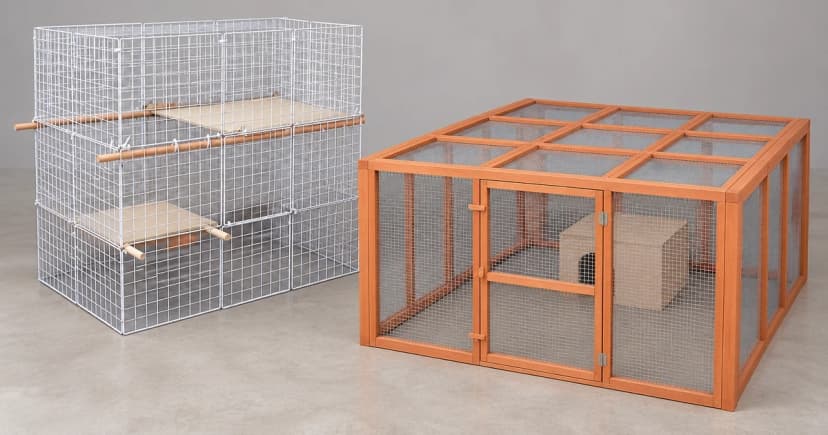
List the cage base, removable trays, platforms, nest boxes and food or water equipment separately. Check the actual material and permitted cleaning method for each. A metal tray's care directions do not establish how to clean a wooden platform.
Read the cleaner's label together with those item instructions. Resolve product suitability, dilution, contact time and any rinsing requirements before use.
Retain a handful of still-clean used bedding, as PDSA advises.
Separate suitable retained material from waste and cleaners; discard wet or dirty material.
For the dust bath, the RSPCA housing guide says to remove it or sieve it clean after use.
Care of the tray and review of its contents are separate decisions. Follow the tray's own washing permissions rather than treating bath material as a direction for its container.
Restore the whole arrangement
PDSA requires a completely dry home before the animals return.
Finish each item's required rinse and drying stages, refit permitted components and restore suitable bedding and resources. Check the closure and actual water equipment; our bottle flow and leak guide covers that equipment check.
Restore access to food, water, resting and hiding places. The RSPCA advises expert help for changed behaviour or recurring stress or fear.