To clean a dog collar, remove it from your dog, identify the complete collar’s care instructions and use the method permitted for that model. Some fabric collars allow machine washing; others list hand washing. Leather, coated surfaces, padded linings and attached electronics need separate attention. The collar’s appearance alone cannot tell you which cleaner, wash cycle or drying method to use.
Start with the side that touches your dog’s neck, then check the folds around the buckle and adjustment hardware. A clean-looking outer strap can leave those areas overlooked.
Identify what you are actually cleaning
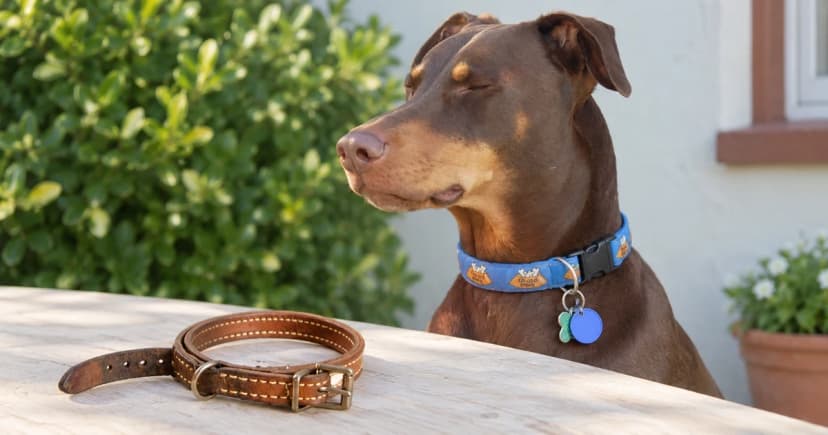
Find the maker, model and care label before preparing a sink or laundry load. Look at the collar as a complete assembly: outer strap, inner lining, stitching, printed or reflective details, buckle, leash ring and any decoration. “Nylon” describes a material, not a permission to wash everything attached to it.
For example, LupinePet Basic Solids combines woven nylon with a buckle and steel D-ring. Ruffwear’s Front Range Collar lists polyester webbing, a side-release buckle, an aluminum V-ring and a silicone tag silencer. Their care permissions differ even though both are everyday fabric collars.
Set removable tags, lights, trackers and decorative pieces aside only when their instructions allow removal. Note where each belongs, especially when the collar has separate tag and leash attachment points. An accessory’s water-resistance description does not establish a laundry permission for the assembled collar. Ask its maker when the permitted cleaning method is unclear.
Keep an unidentified collar out of a wash cycle or soak while you confirm those details.
Use named care permissions, not a universal collar recipe
| Identified item | Its maker’s cleaning direction | What that means for your decision |
|---|---|---|
| Ruffwear Front Range Collar | Hand wash with mild detergent; air dry. | Its care list does not grant machine washing. Do not add a machine cycle because another fabric collar allows one. |
| LupinePet Basic Solids collar | The product permits hand or machine washing. Lupine’s care guidance specifies warm, not hot, water and mild soap; no bleach, brighteners or whiteners. Air dry only. | For a machine wash, the maker recommends a mesh bag or a load with sturdy clothing. Keep the drying restriction attached to that permission. |
| The Dogs Company leather collar | Its leather guide describes a soft dry cloth for routine wiping and a damp, rather than soaked, cloth for its deeper clean. It excludes soaking, machine washing and tumble drying. | Use the instructions for the particular leather finish and any lining. This brand’s soap or conditioner advice is not permission for every leather-looking collar. |
| LupinePet Splash BioThane collection | Lupine’s guidance separately calls for a damp-cloth wipe and air drying. | This collection-specific instruction should not become a wash recipe for every coated or “waterproof” collar. |
The Lupine entries follow its Care + Washing guidance; the leather entry follows The Dogs Company’s leather maintenance guide. Check your item’s current instructions if its model, construction or finish differs.
Reach the inner face and folded areas
Lay the collar on a clear surface after removing it. Before washing, gently lift off loose hair and surface debris with a soft cloth. Unfasten an ordinary buckle as intended, but do not cut stitching or dismantle permanent fittings to reach dirt.
For a permitted hand wash, follow the maker’s water and cleaner directions. Work along both faces and pay attention to the inner surface, strap edges and the places where the strap passes through an adjustment slider. Avoid turning a brief instruction into an invented soak time, detergent dose or aggressive scrubbing procedure.
When adjustment folds hide part of the strap, note the original setting before moving it through its normal adjustment range. Clean the accessible surfaces, then follow the instructions for removing cleaner residue.
If the identified collar permits machine washing, prepare it exactly as directed, including any bag and accessory restrictions. A machine-washable leash or harness from the same household does not establish permission for this collar. Check those items separately; our dog harness care guide explains that separate decision.
Keep leather and coated finishes on their own care path
A brown surface may be leather, synthetic leather or a coating over another material. Stitching and a metal buckle do not settle that question. Read the finished item’s material and care information before choosing leather soap, oil or conditioner.
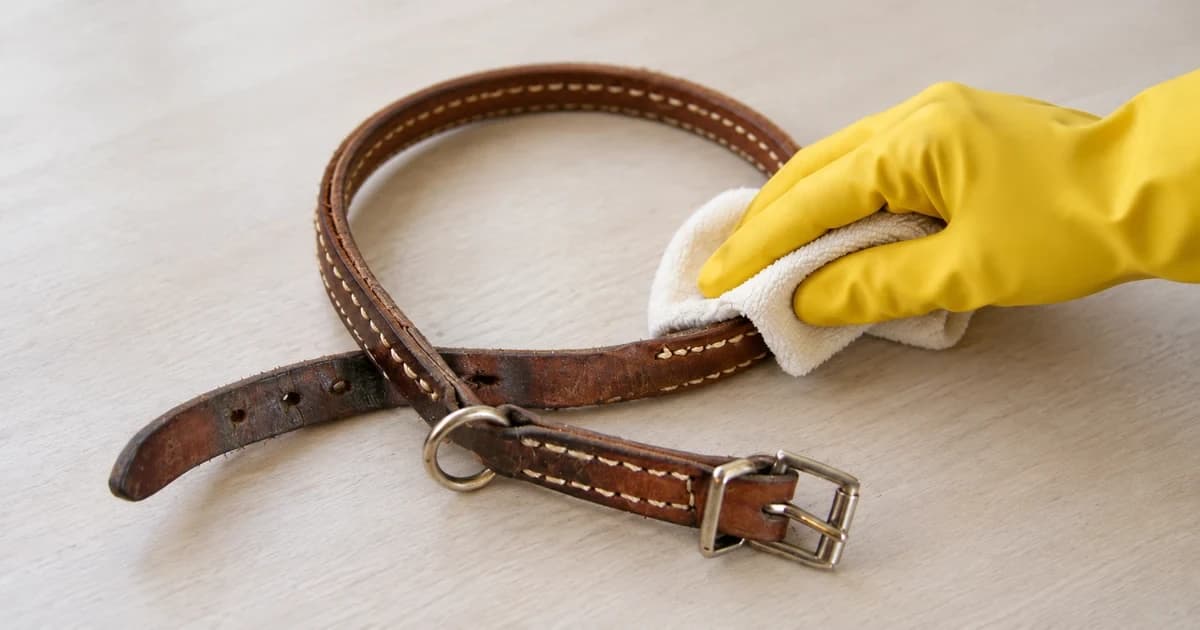
The Dogs Company’s routine includes wiping around the buckle and adjustment holes. Its deeper cleaning instructions call for removing soap residue, patting the collar dry and allowing it to air dry completely. It also advises against using a radiator or hairdryer. Those are useful examples of why a leather guide differs from a fabric laundry instruction.
Check conditioner compatibility with the collar’s finish and inner face before applying anything. Do not treat conditioner as a repair for cracked material, torn stitching or damaged hardware.
Dry first, then check the collar before reassembly
Use the stated drying method and leave the collar off your dog until it is fully dry. Inspect the inner lining and overlapping strap sections, not just the visible outer face. A dry-looking surface does not tell you that an inaccessible padded area has finished drying. There is no universal waiting time for every collar construction.
Once dry, look at the strap edges, stitching, adjustment holes and hardware. Set the collar aside if you find torn material, separating layers, a cracked buckle, sharp damage or a closure that no longer operates normally. This is a practical stop check, not a load test or a guarantee that every unseen defect will be found.
Reattach each approved accessory in its intended position. Restore the adjustment setting, then check the fit using the collar’s own directions before use; the old setting alone is not a fit assessment. Check that the closure operates normally without attaching a leash or trying to prove its strength by pulling.
Make the next clean easier to plan
Keep a short care note with the model name, instruction link, permitted cleaner, wash method, drying restriction and removable attachments.
When comparing everyday dog collars, look for clear care information covering the lining, finish and hardware alongside the outer material. For other walking equipment, verify each item’s instructions independently. Our editorial policy explains how we distinguish manufacturer guidance from hands-on testing.