A dog may move away from something frightening, head toward an interesting animal or person, or take an available route outside. Watching the movement alone does not establish why it happened. To understand an incident, separate two questions: what was happening around your dog, and what opportunity let your dog leave? An open door identifies an access problem; it does not, by itself, identify your dog's motivation.
If your dog is already missing, use our lost-dog search and reporting guide. The decisions below concern understanding an incident and preparing for the next ordinary doorway, garden visit or walk.
Consider possible triggers without choosing a diagnosis
Dogs Trust's escaping guidance describes several possible contexts, including frightening noises, chasing something, and wanting to greet people or dogs. These are possibilities to investigate, not a checklist that identifies an individual dog's cause. The guidance also separates situations such as leaving through a door, escaping a garden and running away on a walk.
For outside doors, Dogs Trust advises keeping the dog separated from the door before opening it. Its equipment guidance includes checking fit, condition and secure fastening. Those checks address an opportunity to leave; they do not establish why a particular dog wanted to move.
Use ordinary descriptions first. “A delivery arrived; the door opened; the dog moved toward the visitor” tells another household member more than “he is an escape artist.” If nobody saw the departure, write “not observed” rather than filling the gap with a presumed trigger.
Record the context and the available route separately
Make a short record after an incident or a near miss. This is a practical household note, not a behavior test. Keep observations separate from interpretations so a later conversation does not turn an early guess into a fact.
| Record | A useful entry | What remains unknown |
|---|---|---|
| Immediately before | Who was present, what changed, and any sound or movement you actually noticed | Whether that event motivated the dog |
| Available route | The particular door, gate, opening or equipment connection involved | Any unseen part of the departure |
| Visible response | Where the dog moved, what the dog approached or moved away from, and what you could see | The dog's emotional state or diagnosis |
| Next household action | Who will handle that access point differently on the next occasion | Whether that change alone resolves the concern |
For example: “The outer door was opened for a parcel while the dog was in the entrance hall. The dog passed through the doorway toward the person outside. No earlier sound was noticed.” That record supports changing the parcel-door routine. It does not establish friendliness, fear, boredom or a failure of training.
Keep separate records for different situations. A garden departure while nobody watched and a movement toward another dog during a walk may need different questions. Do not make the second event explain the first merely because both involved moving away.
Change the known opportunity before testing your explanation
Turn the record into an action assigned to a person and an occasion. For the parcel example, agree who will keep the dog in a separate room before anyone opens the outside door. Tell visitors and other household members about that routine. Avoid setting up another open-door incident to see whether your explanation was right.
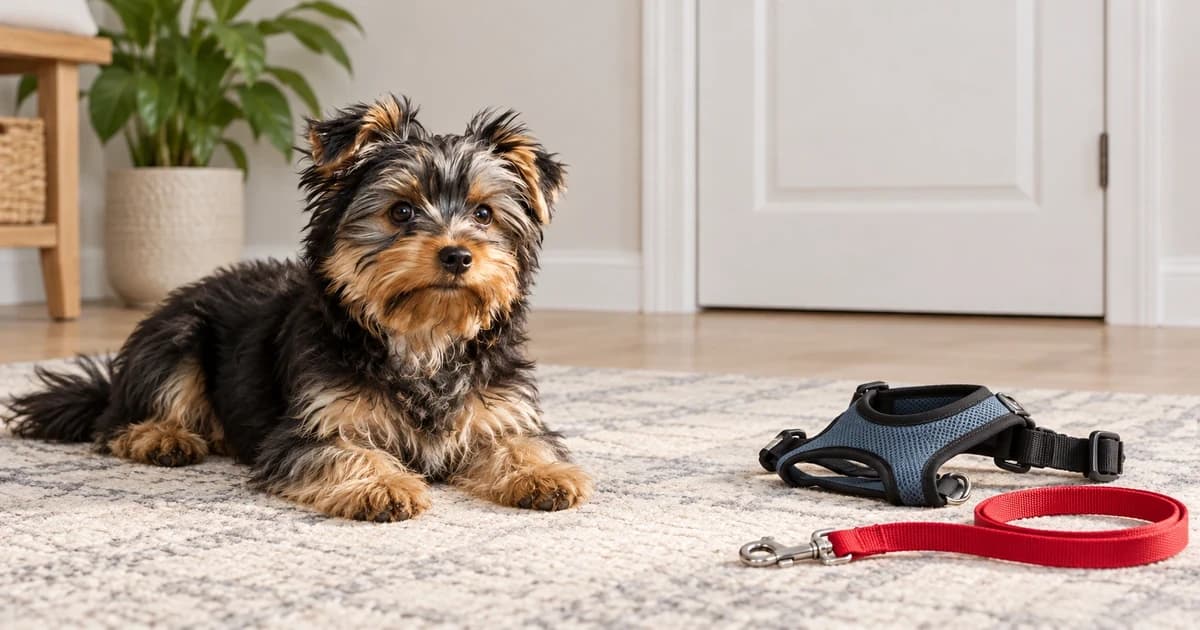
If the route involved walking equipment, identify the actual component and check its manufacturer's instructions. Browse ordinary collars, harnesses or leashes by their stated features and fit information. A product category or a photograph cannot establish that an item prevents escape. Unclear fit, damage or an unidentified fastening calls for clarification, not an improvised attachment arrangement.
Look beyond the opening without blaming the dog
RSPCA Australia's advice asks owners to investigate the individual circumstances and consider the dog's needs, including company and suitable daily opportunities. It also states that general guidance may not suit every situation and recommends individual expert advice. A barrier question and a question about the dog's daily circumstances can therefore both deserve attention; an escape does not establish a particular unmet need.
Bring your observations, including the unknowns, to a veterinarian or an appropriately qualified behavior professional when the change is sudden, the concern persists, or you cannot interpret what you are seeing.
Keep recall practice as a separate task
Blue Cross's recall guide recommends making practice easier when a dog struggles to return at the first cue, rather than continually repeating it. It also advises against punishment when the dog returns. A missed cue can inform the next training session; it does not explain every departure or identify its cause.
Use our recall preparation and release-decision guide for that progression. Keep the access routine in place while working on the separate skill.