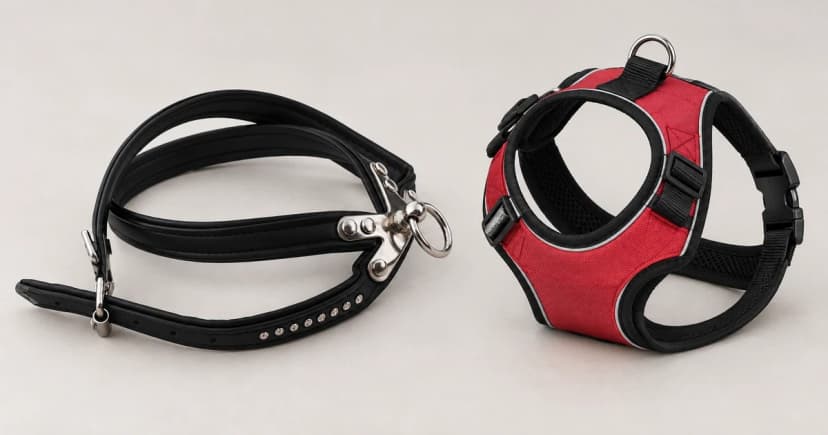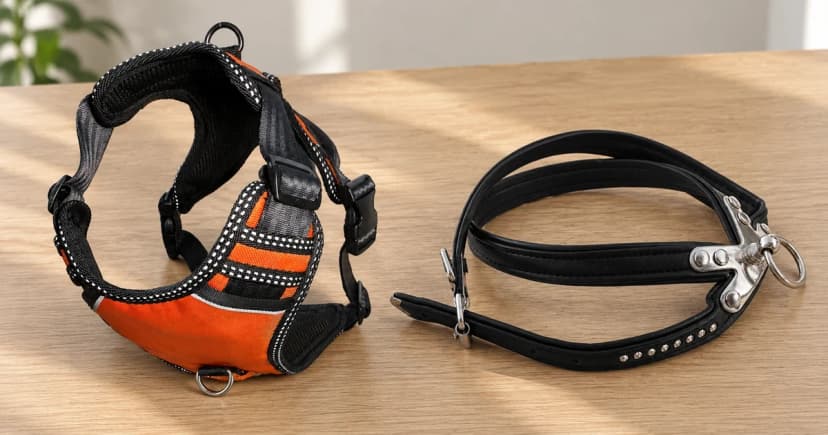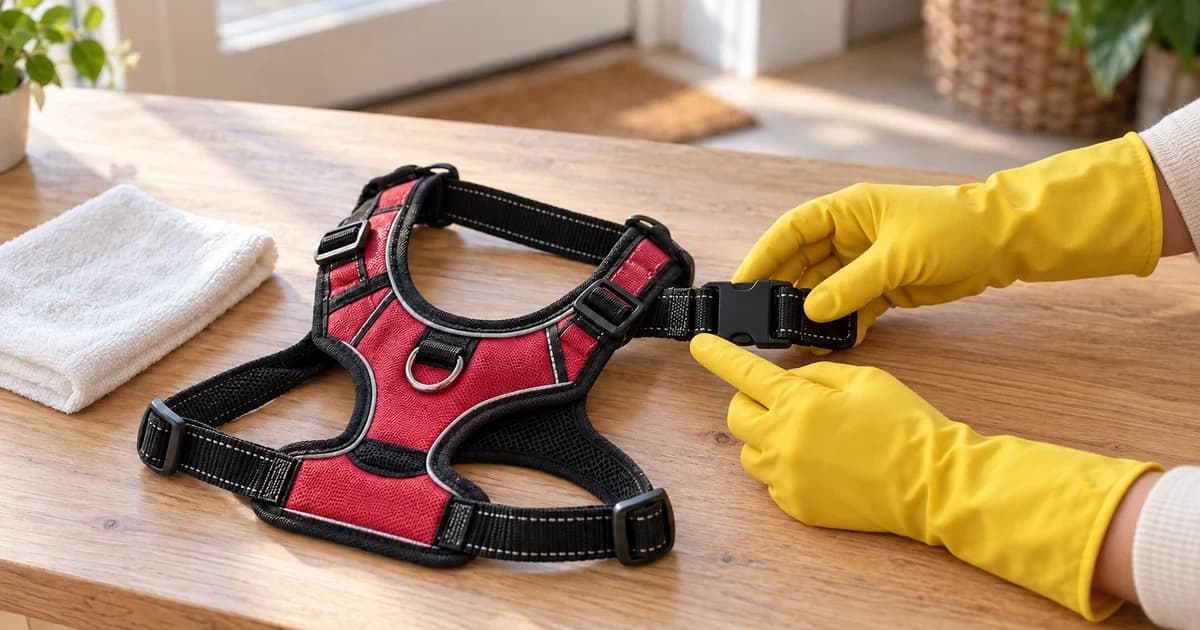
Clean a dog harness using the instructions for the exact model, then let it dry as directed and inspect the straps, stitching and hardware before reuse. Do not choose a washing-machine setting just because the harness looks like nylon. A complete harness may combine fabric, padding, coatings, plastic closures and metal attachment points with different care restrictions.
If the care label is missing, identify the product and ask its manufacturer before soaking it or putting it in a machine. A damp wipe is not automatically suitable for every unknown construction either. The goal is a clean harness in usable condition, rather than a successful wash cycle followed by an assumption that everything still works.
The complete assembly determines the method
A material description is only part of the answer. For example, Ruffwear lists a polyester shell, foam padding, mesh lining, webbing and different attachment components for its Front Range Harness. Its care directions still specify hand washing. One visible panel does not tell you how the rest of the assembly should be treated.
| Specific source | Published cleaning guidance | Permission to keep separate |
|---|---|---|
| Ruffwear Front Range Harness | Hand washing with mild detergent; air drying | These directions do not authorize a machine cycle for this model |
| Kurgo Tru-Fit Smart Dog Walking Harness | Gentle machine washing or spot cleaning; air drying | This is the quick-release walking model's instruction, not a rule for every Kurgo harness |
| Julius-K9 washing and storage guide | Hand washing; machine washing is prohibited. The guide also excludes bleach and tumble drying | Check the label and instructions supplied with your particular product |
| LupinePet care FAQ | Warm, not hot, water and mild soap; hand or machine washing and air drying. Its Splash BioThane collection has a separate damp-wipe instruction |
These examples explain why neither "all harnesses are machine washable" nor "no harness can go in a machine" is a useful rule. They also do not establish the cleaning method for an item in Pawlivy's dog-harness category. Match the instructions to the product you actually own.
Inspect before washing: dirt and damage are different problems
Remove the harness from the dog and look over the whole assembly in good light. Identify the closure, adjustment sliders, leash attachment points, stitched joins and any removable accessories. Take a simple reference photo of the original strap routing if that will help you notice a twist later.
Check for visible fraying, separated stitching, damaged closure parts or corroded hardware. EzyDog's harness-care guide specifically advises checking frayed stitching and rusted buckles and replacing components or gear as needed. Cleaning does not repair those conditions.
Do not cover a questionable seam with an improvised patch or tie a damaged buckle closed. A care guide cannot tell you that a home repair restores the original function. Similarly, a remaining cosmetic mark is not by itself a diagnosis of structural damage; describe the actual condition when requesting help.
Surface or spot cleaning
Use this option when the exact product allows it. Apply the maker's specified method to the affected area instead of treating spot-clean permission as permission to immerse the whole harness. Note whether a coating, padded panel, leather part or attached accessory has separate instructions.
Take off an accessory only when it is intended to be removable and you can follow its own care directions. Do not undo a sewn connection or dismantle a buckle merely to make cleaning easier. Remove loose debris gently where the instructions allow; avoid pulling trapped material through stitching or a moving closure by force.
Hand washing
Use the prescribed water temperature and cleaning product. Work on permitted washable areas without adding an unapproved soaking step or scrubbing method. Follow the maker's rinsing instructions and give attention to folds and padding where cleaner can remain. The appropriate cleaning agent and its amount come from the care instructions and product directions, not the harness's color or a generic recipe.
Do not add bleach, a stain treatment, solvent, vinegar mixture or deodorizer unless the exact harness instructions permit that use. A cleaning suggestion for one manufacturer's product is not evidence that it is compatible with another product's coating, adhesive or hardware.
Machine washing
First confirm explicit machine-wash permission. Then use the specified cycle, temperature and any required protective bag or preparation. If the instructions do not explain a necessary detail, ask rather than substituting the settings for a different model.
Keep washing permission and drying permission separate. The Kurgo walking-harness example allows a gentle machine wash but still says to air dry. A successful machine wash therefore does not authorize tumble drying, ironing or another heated finishing step.
Dry, check the closures, then revisit fit
Follow the product's drying and storage instructions, allowing the whole assembly to dry before it is worn or stored. Do not infer a drying time from the outside panel alone. Julius-K9's guide specifies dry storage away from direct sunlight; use the conditions required for your own harness rather than a universal sun-drying shortcut.
Once dry, inspect it again off the dog:
- Straps: compare routing with the diagram or your reference photo; identify twists, changed adjustment positions and visible damage.
- Stitching and panels: look again at joins that dirt previously obscured. Set aside an item with an unresolved damaged connection.
- Closures: operate them normally, following the manual. A closure that does not engage or release as it should needs attention before reuse.
- Attachment hardware: check the designated leash points and their connections. Do not move the leash to an unidentified loop to bypass a problem.
This is a condition check, not a strength certification. Do not invent a proof test by hanging weights from the harness or yanking it against the dog.
Cleaning and handling may leave the adjustment positions different from your reference. When the harness is ready to be worn again, check the actual fit using our harness measurement and fit guide and the model's instructions. This article does not repeat the measuring procedure or assume that the old buckle positions still give the correct fit.
Keep one care record for each harness
A short record prevents instructions for different pieces of dog-walking gear from becoming mixed together. Write down the model, care-label or manual location, allowed method, drying restrictions and date cleaned.
Clean according to the manufacturer's guidance and the actual condition of the item. This guide does not prescribe a universal weekly interval, soaking duration or disinfecting routine. Repeated washing is not evidence that a contamination problem has been resolved or that damaged equipment is ready to use.
The final decision is specific: instructions followed, whole harness dry, strap routing understood, closures functioning as directed, and no unresolved damaged connections. If one item is uncertain, record it and resolve it before reuse. These manufacturer examples are source-based comparisons, not Pawlivy product tests or a promise of renewed strength. See our editorial policy for sourcing and corrections.