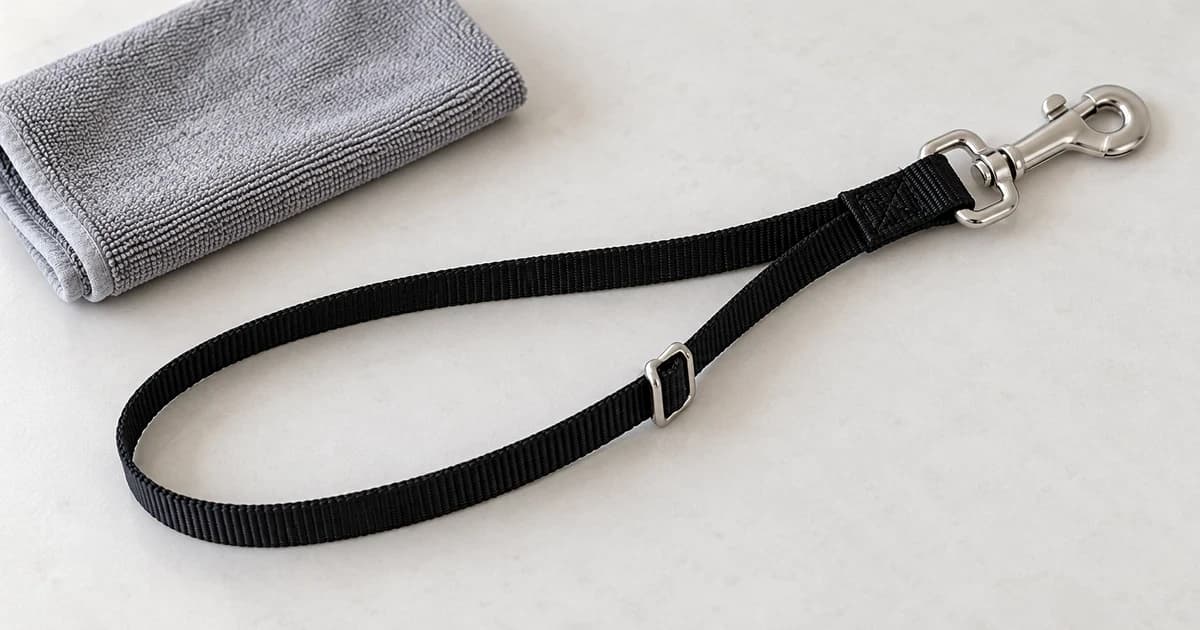
Clean a dog grooming loop only with the method specified for that exact loop and its hardware. Once the equipment is out of use, identify the strap material, fasteners and care instructions, clean within those limits, and complete the prescribed drying step. Inspect the strap and metal parts before putting the loop back with the grooming equipment.
A loop that looks clean has not thereby passed a strength, disinfection or restraint-safety test. It does not explain how to position a loop on an animal or attach it under load.
Identify the whole assembly before adding water
Keep the maker, model and original instructions together. A loop supplied with a grooming table may have different care directions from the tabletop, arm or clamp. A replacement strap can also differ from the one originally supplied.
Write down what the manufacturer actually identifies: woven webbing, coated webbing, a buckle, a slider, a snap, rings, rivets or sewn joints. Record the metal or finish only when it is documented. A shiny clip does not establish stainless steel, and a smooth strap does not establish BioThane.
For an unlabeled loop, photograph the whole item, its attachment points and any remaining label. Do not transfer a coated-loop recipe to unidentified sewn webbing or assume that the entire table can be washed because one removable part can.
When comparing grooming tables and related equipment, check whether separate instructions cover the supplied loop.
Use named care examples without mixing their permissions
Three manufacturer pages illustrate different levels of detail. These are documented examples, not a universal recipe for every grooming loop.
| Named loop | Published care direction | Boundary to keep |
|---|---|---|
| Vivid Canine BioThane Grooming Loop | Hand wash with mild soap and water, then dry with a soft cloth. Clean the hardware separately and dry it thoroughly. | This maker identifies coated webbing and stainless-steel or solid-brass hardware; the method does not identify your unknown strap. |
| Groom Loop LLC Pink Taffy loop | Hand wash and air dry. | The brief direction does not specify detergent, water temperature, soaking time or a machine cycle. |
| Backwoods Dog Waterproof BioThane Grooming Loop | The product description says to wipe down or rinse after use and links a separate hardware guide. | Read the hardware branch that belongs to the documented metal; a strap instruction does not replace that branch. |
Read Vivid Canine's actual loop page before using its method. Its drying instruction is part of the process, not an optional finishing detail. The same page says its products are not rated to particular pull or load thresholds; a clean appearance cannot supply a missing rating.
The Pink Taffy product page also distinguishes its metal slider from a locking device. Do not write “lock checked” on a maintenance record merely because the assembly has a slider. Ask what each component is meant to do before describing its condition.
Separate visible dirt from a damaged part
Lay the unused loop where you can see both sides, the strap edges and the points where material meets hardware. Record dirt and damage separately. A dark mark can be a cleaning question; a loose joint, bent ring or cracked buckle is a condition question. Scrubbing harder does not answer the second question.
Backwoods Dog's hardware guide lists defects including bent pieces, cracks, sharp edges, loose rivets, corrosion and weakened springs. It directs replacement of damaged hardware and discontinuing use when its condition is uncertain. Its notes about ordinary cosmetic wear should not be read as clearance for a bent or malfunctioning component.
The coated-loop pages above do not supply a repair method for those constructions. Keep the item apart from ready-to-use equipment while the question remains unresolved.
Clean the strap and hardware within the same permission set
Gather only the materials called for by the matching instructions. A waterproof description alone does not authorize bleach, alcohol, machine washing or heat drying of the complete assembly.
Work through the accessible surfaces without dismantling rivets, springs or other retained parts. Keep the strap instructions and hardware instructions side by side so that treating one part does not expose the other to an unapproved method. Do not use cleaning as a reason to change the loop's construction.
For the named Backwoods loop, the linked metal-care guide adds routine wiping, its permitted soap-and-water treatment and complete drying. Its branches distinguish metal and surface finishes. Those branches belong to documented Backwoods hardware; they are not permission to polish, strip a coating or treat corrosion on an unidentified snap.
Washing and disinfecting are separate claims. This guide does not supply a disinfectant recipe or declare that a washed loop is sanitized. Do not combine chemicals or extend contact times yourself.
Finish drying and check the parts again
Complete the maker's drying method before storage. Keep the distinction in the comparison table: cloth drying for the cited Vivid Canine method and air drying for the cited Pink Taffy method. Neither instruction gives a universal drying time for every strap or joint.
Inspect the cleaned item under good light. Look at the areas that were obscured by dirt, particularly folds and strap-to-hardware connections. Check the assembly against its documented original form. Do not remove a slider, exchange a ring or add a new fastener merely to make the setup look neater.
Do not oil an unknown spring, bend a clip back, tighten a rivet or use an improvised pull test to clear it. A visual check can reveal a problem; it cannot certify load capacity or internal condition.
Store the item as instructed, separately from damp or questionable equipment. Backwoods' hardware guide calls for dry storage. Keep unresolved items visibly separate so they are not mistaken for equipment whose routine care has been completed.
Keep a short instruction and inspection record
Use this checklist for each loop rather than one shared recipe for the whole kit:
- Identity: maker, model, source of the instructions and date checked.
- Construction: documented strap material, hardware metal or finish, joints and component names.
- Care permission: allowed cleaning materials, handling limits and drying method.
- Before cleaning: visible dirt, wear and any part needing clarification.
- After care: drying completed, newly visible defects and questions sent to the maker.
Write the observation, such as “clip does not close fully,” rather than a broad label such as “safe.” Keep separate instructions for other grooming equipment and for cleaning a dog harness; similar straps do not establish the same care permission. Our editorial policy explains how this researched guide differs from a product test.