To decide how to clean a dog grooming table, match the care instructions to the part you are cleaning. The tabletop, frame and lifting mechanism need separate decisions. Start with an empty table, then work through cleaning, drying, inspection and the correct storage position.
Identify the table before choosing a cleaner
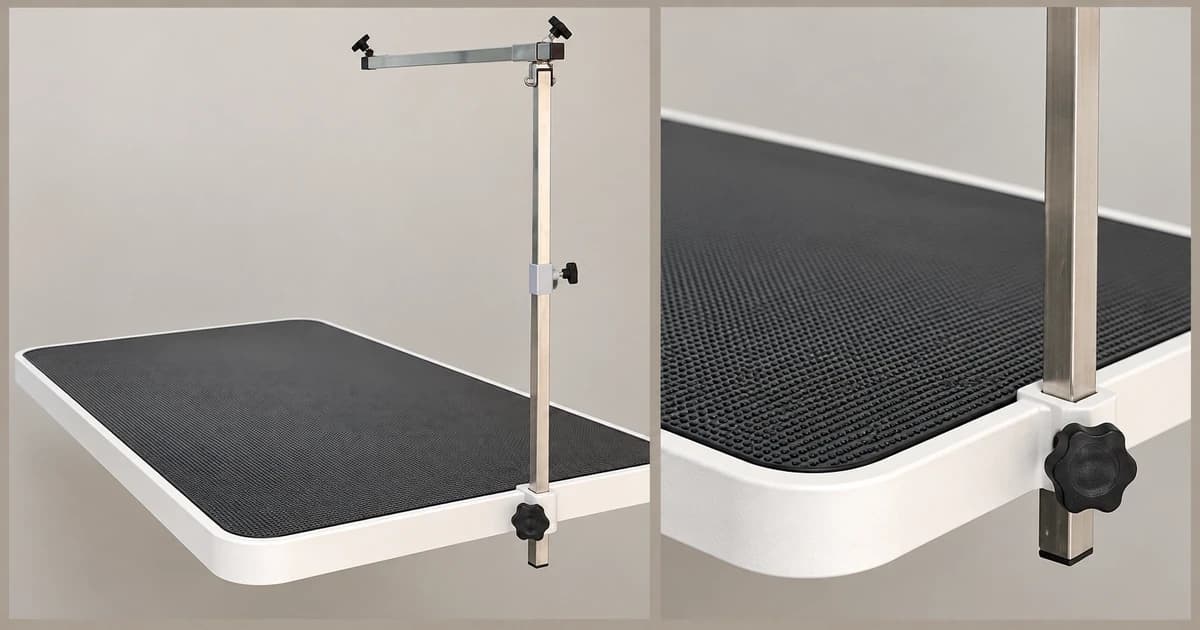
Find the model name and its instructions. Master Equipment's Z-Lift II TP8640, for example, has a rubber-vinyl tabletop and a powder-coated steel base. Those descriptions identify different parts; they do not provide a cleaning recipe for either one.
Keep the relevant care page beside the table. Check which surface each instruction names, what it permits you to use and how the table should be left afterward. If a removable mat has its own instructions, keep that decision separate.
If you are replacing an unsuitable table, the grooming-table selection guide covers configuration and care-document questions. The grooming tables and supports category is a starting point for equipment options.
Prepare an empty work area
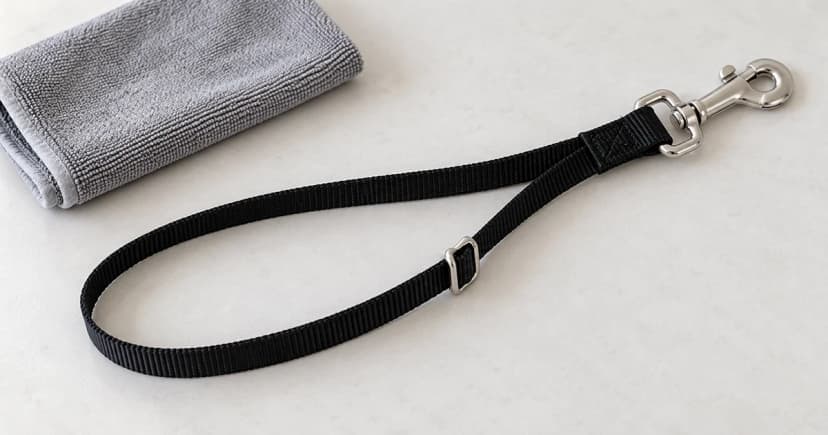
Move the dog elsewhere before beginning. Clear loose tools and supplies so you can see what needs attention. Deal with a removable loop separately using the grooming-loop care guide. Remove or reposition fitted accessories only when their instructions allow it; cleaning is not a reason to dismantle an unfamiliar clamp or mechanism.
Use the route that actually matches the surface
For the tabletops covered by its electric and hydraulic table care instructions, PetLift describes cleaning with a soft-bristled brush and equal parts vinegar and water. Its next step, after cleaning and debris removal, is household furniture polish. Check that these instructions cover your particular top before following that sequence; an unspecified polish is not permission to choose any product for another table.
Tilley's two-page grooming-table document gives a different example: its low outdoor aluminum platform has painted or powder-coated surfaces, for which it specifies warm soapy water. That permission belongs to the surfaces described in that document. It does not establish a method for an unidentified rubber-vinyl tabletop or a lifting mechanism.
Choose one applicable route, rather than combining the examples into a homemade cleaning system. If your top is different, the next useful step is to obtain its own care instruction. Stop there instead of testing another maker's mixture on it.
Finish drying before checking and storing
PetLift instructs owners to keep its electric table's frame and components clean and free of moisture. Keep the tabletop cleaning route separate from those parts. Complete the applicable drying step before treating the job as finished; washing the top does not authorize wetting the drive or controls.
Once the surfaces can be checked, look over the accessible top, edges, frame and attachment points. Note any area you could not clean or inspect, rather than marking the whole table ready because the visible top looks better.
For the Z-Lift II, PetEdge says to stop using a damaged or malfunctioning table and contact the company. It also limits attachments to those the manufacturer recommends. Leave an unresolved defect for that support decision instead of attempting a repair during cleaning.
For non-use, PetLift specifies fully lowering and unplugging its electric motor tables. Follow that model's operating instructions for the transition; this is not a storage procedure for every hydraulic or folding table.
Master Equipment specifies storing its Z-Lift II at the lowest height and protecting it from weather or animal damage. Use the storage instruction that belongs to your table, then put away the cleaning materials and keep any unresolved issue attached to the next-use decision.