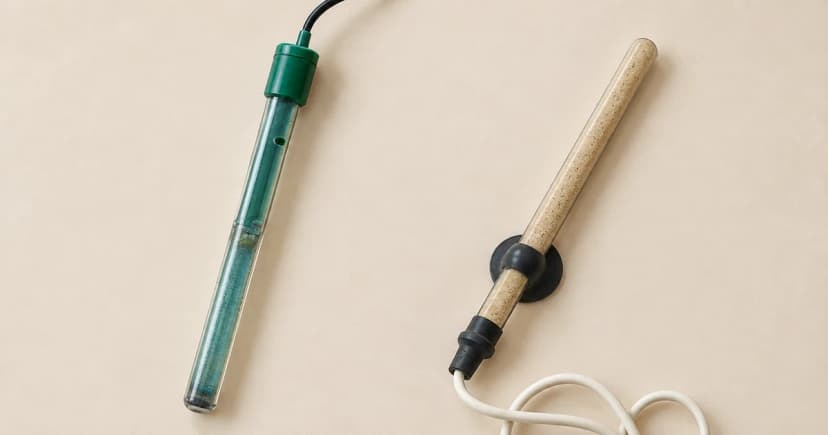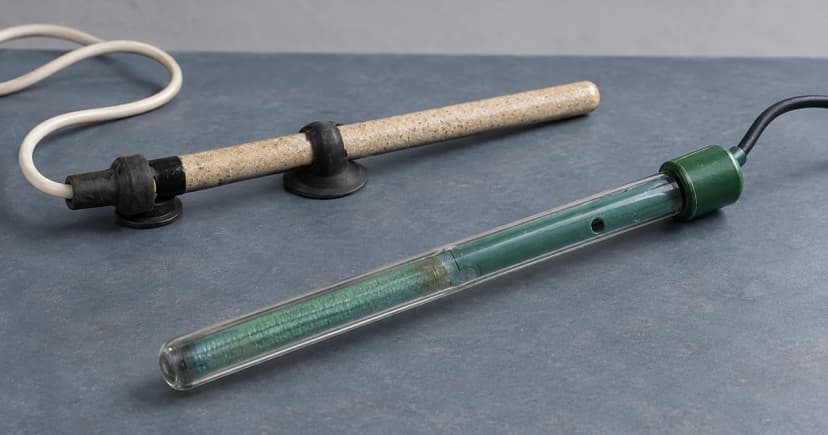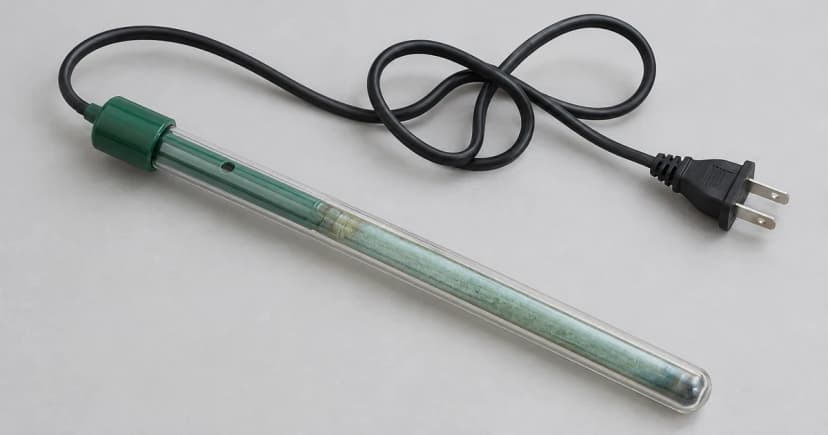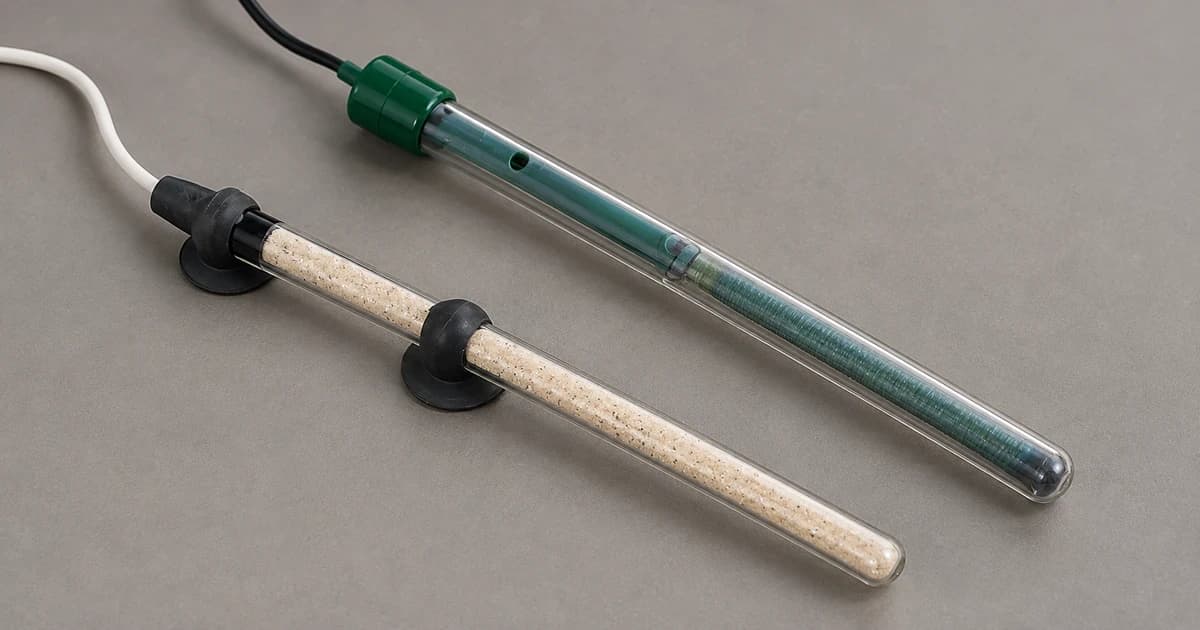
To work out how to clean an aquarium heater, match its model and regional manual, then follow that document from removal through return to use. A method chosen for a different heater does not resolve missing instructions for yours. Decide what is permitted before starting.
Identify the heater and the instructions it needs
Use the model information on your own unit and its supplied instructions. Match the model range, electrical region and document version; a similar product name or appearance is insufficient. Keep the manual available for the whole job, including its safety and installation sections, rather than saving only a cleaning paragraph.
Locate the directions for stopping, cooling, removal, external cleaning and installation. These are different questions from choosing heater capacity or comparing heater controls and housings.
Separate ordinary care from a fault
Disconnect aquarium appliances before hands enter water or maintenance begins. Damaged glass, cords or plugs, leakage or a wet electrical connection end this routine: follow the maker's fault instructions and seek appropriate help. Never power a heater out of water or attempt internal repairs.
A fault is not a reason to try a stronger cleaner or an improvised test. Keep the ordinary cleaning job paused while you resolve it. Do not handle a wet plug to perform the normal shutdown sequence.
Use the cleaning method for the identified model
The following manuals illustrate why a single recipe is inadequate. Use an example only when it matches your actual heater and instructions.
Aqueon AP50W–AP250W: preserve the missing instructions
The 2011 AP manual mentions removing scale after unplugging, but supplies neither a removal-cooling interval nor a detailed cleaning method. Its 30-minute immersion instruction concerns starting before power, not cooling for removal. This document does not establish instructions for a current Pro 300.
EHEIM thermocontrol e: running water
The thermocontrol e manual specifies disconnecting, cooling in aquarium water for at least 30 minutes, removing, then cleaning under running water. It excludes hard objects, aggressive cleaners and dishwashers. It grants no vinegar method. For restoration, use its original holder, keep it clear of the heating zone and control light, install vertically in flow, and observe the marked minimum water level and maximum immersion depth before power. Do not substitute instructions for the older thermocontrol range.
Fluval T, North American manual: a limited vinegar instruction
The T-series NA manual specifies unplugging and at least 30 minutes of cooling before removal. It excludes chemical cleaners. Restore its bracket and suction cups, clear surrounding obstructions, meet its immersion limits and wait 30 minutes in aquarium water before connecting power. This manual restricts use to freshwater.
Inspect, then complete the return instructions
After the permitted external care, check the unit and its fittings against the manual's condition requirements. A remaining deposit does not authorize escalation to an undocumented method.
Return to the installation section you identified at the start. Confirm the specified holder, mounting position, water conditions and any waiting period before reconnecting. Finish that sequence rather than treating rinsing as the endpoint. For the separate location decision, use the heater placement guide alongside your exact manual.
Finish with a clear decision
Ready for the manual's return sequence: the permitted care is complete, inspection raises no unresolved issue, and you can meet every restoration instruction. Continue with that document's operating and observation directions; appearance alone does not demonstrate performance.
Kept out: a stop-use finding remains. Follow the manufacturer's service or replacement route. Unresolved: the model, method or return conditions are unclear. Keep the unit out of use while obtaining an answer.
If replacement is needed, compare the actual model information in the aquarium heater category with your requirements before choosing. Cleaning this unit and selecting another are separate decisions.