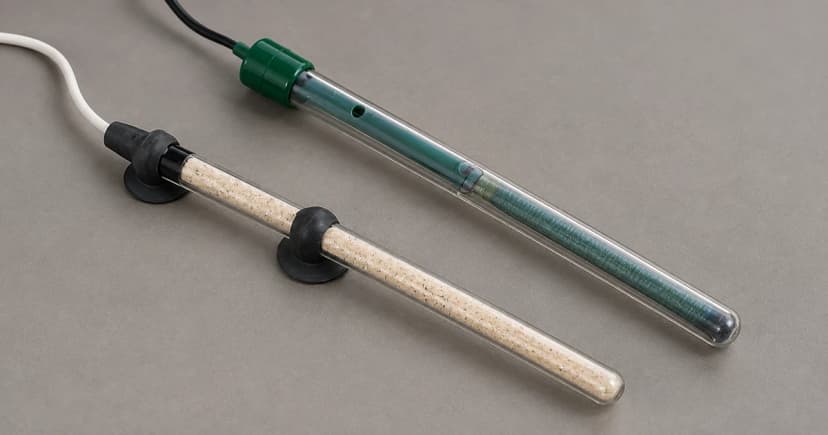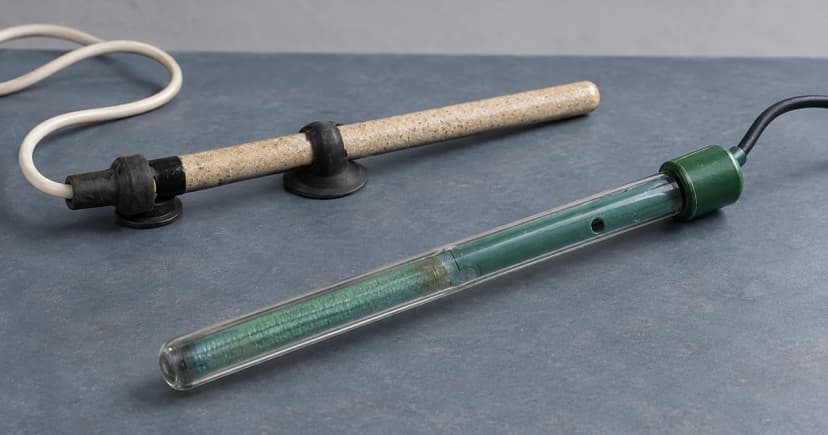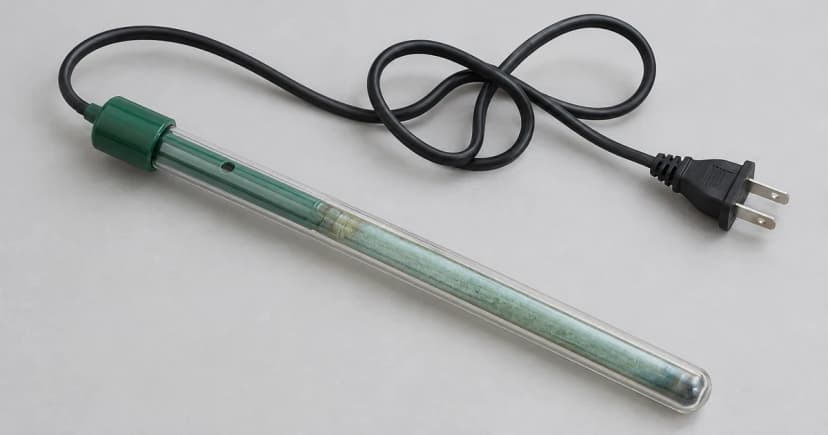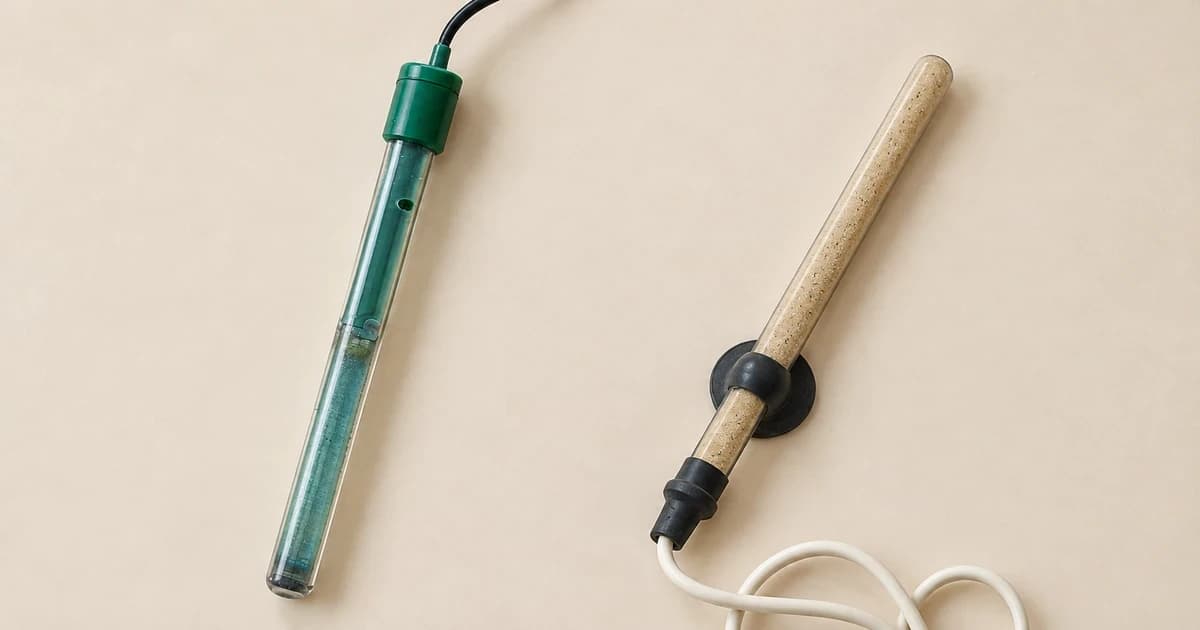
Decide where to put an aquarium heater by combining its exact orientation and water-level instructions with the tank's circulation, furnishings and access. Start with a plan on paper, with the heater unpowered. A convenient empty patch of glass is not enough if the chosen position conflicts with the model's minimum water mark or allowed angle.
This guide helps you choose and document a proposed location. Use the complete matching manual for physical mounting, electrical requirements, handling and starting the equipment; a location sketch does not replace those instructions.
Match the manual before choosing an angle
Record the full model, wattage, regional version and instruction revision. Compare the actual label with the manual's covered models. Similar-looking tubes, a shared brand or the words “fully submersible” do not establish a common installation method.
| Documented example | Orientation and water-level condition | Limit on applying it |
|---|---|---|
| Aqueon AP instruction manual, printed November 17, 2011 | Vertical installation requires water above the minimum mark. Horizontal installation requires the heater to remain fully submerged at all times. | The document lists AP50W through AP250W, 120V/60Hz. Its permissions are not proof that it covers a current Pro 300W model. |
| EHEIM thermocontrol 25–300 manual, USA/English sections | Vertical position only, taking account of the minimum water mark and maximum 0.5 m immersion depth. | Keep the exact covered type and regional instructions matched to the item; do not borrow another model's horizontal permission. |
| Fluval T300 product information | The product page describes vertical or horizontal placement and a fully submersible design. | This is a product-page statement, not a complete mounting manual. |
Resolve a missing or contradictory instruction before marking a position as suitable. The EHEIM vertical-only condition and the other examples' permissions should remain separate; averaging them into “any angle works” would lose the important information.
Map circulation and furnishings together
Aqueon's cold-weather article suggests a position near a filter inlet, outlet or circulation pump and keeping decorations away so water can move around the heater. Treat those as location-planning points, subject to the exact model's orientation and submersion requirements.
The thermocontrol manual also specifies an area with strong flow. It identifies a heating zone and control light that its suction-device holder must not cover. Those named component restrictions belong with that manual, not a universal clamp location for every heater.
Draw the filter intake, return and any circulation pump on a simple tank outline. Mark the intended heater position and the space occupied by rocks, wood, plants and other equipment.
No fixed clearance can be inferred from these examples. If the proposed location crowds an inlet, return or furnishing, revise the layout and check the equipment directions instead of inventing a universal gap in inches.
Check the water line and future access
Mark the planned water line beside the heater's actual minimum mark and any specified maximum immersion. Consider the lowest intended operating water level as well as the usual fill line. A location that meets a marking only when the aquarium is freshly filled leaves an unresolved operating condition.
Keep maintenance access in the sketch. Can the specified holder be reached without shifting unrelated equipment? Can the water mark and relevant status indication be inspected? Record an obstructed control, hidden marking or uncertain attachment as a planning problem. Do not improvise a bracket, bend a holder or pull on a cord to make a cramped location work.
Any later change to the actual setup must follow the matched equipment's disconnection, cooling, mounting and handling directions. Do not use powered touching or a trial run outside water to assess a candidate location.
Plan a separate temperature observation
Aqueon distinguishes the heater setting from a separate thermometer reading and suggests the opposite end of the tank for the thermometer if possible. Use that as an attributed observation-location example, not proof that every tank will have uniform temperature or that a particular thermometer technology is best.
Write down where you will read the temperature independently and whether that location can be viewed during normal care. Keep the model's stated indicator meaning separate from a measured water reading.
Keep one location record with the equipment
- Exact heater model, regional version and matching manual.
- Permitted orientation, minimum mark and any maximum immersion.
- Nearby circulation equipment, furnishings and unresolved obstructions.
- Specified holder position, access and separate observation location.
- Questions still awaiting a model-specific answer.
Capacity is a separate decision covered by our heater sizing guide. For purchasing differences, see the heater controls and housing comparison.