You can wash many dog toys, but the right method depends on the specific toy's care instructions and every material built into it. A rubber shell does not make an attached rope, squeaker, fabric cover, or electronic part dishwasher safe. Start by checking for damage, then choose the least aggressive cleaning method the maker permits. Dry the toy completely before returning it to play or storage.
Choosing a pet-safe detergent for dog toys is a model-specific cleaning question, rather than a safety promise attached to a product name. Read the toy’s own cleaner, water-temperature and rinse instructions together. The manufacturer examples below give different permissions for rubber, fabric and mixed assemblies; none establishes that one detergent, disinfectant or appliance cycle suits every toy.
This guide covers routine cleaning of non-edible toys. Washing away dirt and residue is not the same as verified disinfection. If a toy has been contaminated during an illness, ask your veterinarian what needs to be cleaned, disinfected, or discarded; do not assume a household wash cycle makes it suitable to share again.
Sort the toy before you turn on an appliance
Look for the product name, packaging, a sewn-in tag, or the maker's current care page. Photograph the instructions if the tag is likely to fade. Record the permitted water temperature, wash method, and drying method separately: permission to use a dishwasher does not automatically include its heated drying cycle.
| Toy construction | What to check first | Cleaning decision |
|---|---|---|
| Single-material rubber or molded toy | The exact model's dishwasher permission, hollow openings, cracks, and missing pieces | Use its approved hand-wash method; use an appliance only when expressly permitted. |
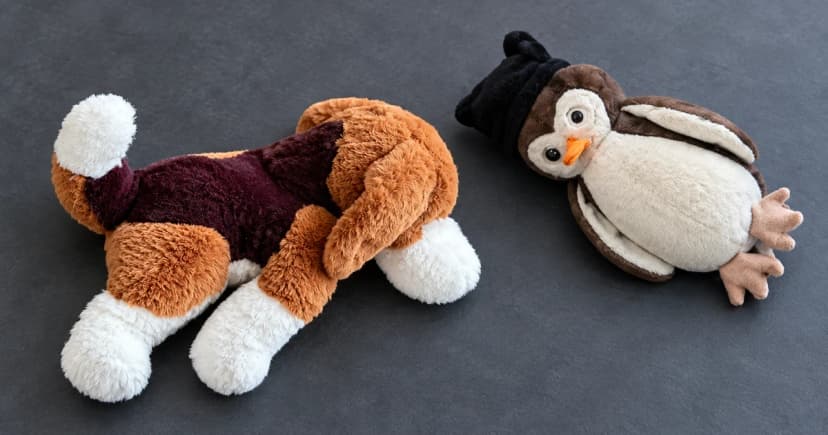
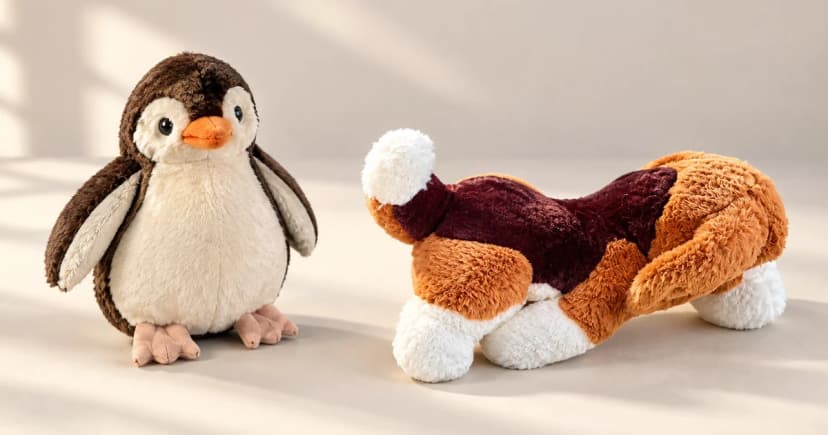
| Plush or fabric toy | Care tag, seams, stuffing, squeaker, and drying instructions | Spot-clean or machine-wash only as directed. Do not infer dryer permission from washer permission. |
| Rope, rubber-and-rope, or fabric-and-rubber toy | Instructions for the complete assembly, not just one component | Follow the assembled toy's directions. An attached second material can change the method. |
| Puzzle with removable parts | Which pieces detach and whether each component is washable | Separate only the parts designed to come apart and clean them by their individual instructions. |
| Battery-powered or electronic toy | Power removal and the maker's surface-cleaning instructions | Keep electrical parts out of the sink or washer unless the manufacturer explicitly specifies otherwise. |
If you cannot identify the toy or find its directions, do not guess at heat tolerance or chemical compatibility from its appearance. If safe cleaning cannot be established, set the toy aside rather than experimenting with boiling water, bleach, or a microwave.
Can dog toys go in the dishwasher? Start with the exact rubber toy
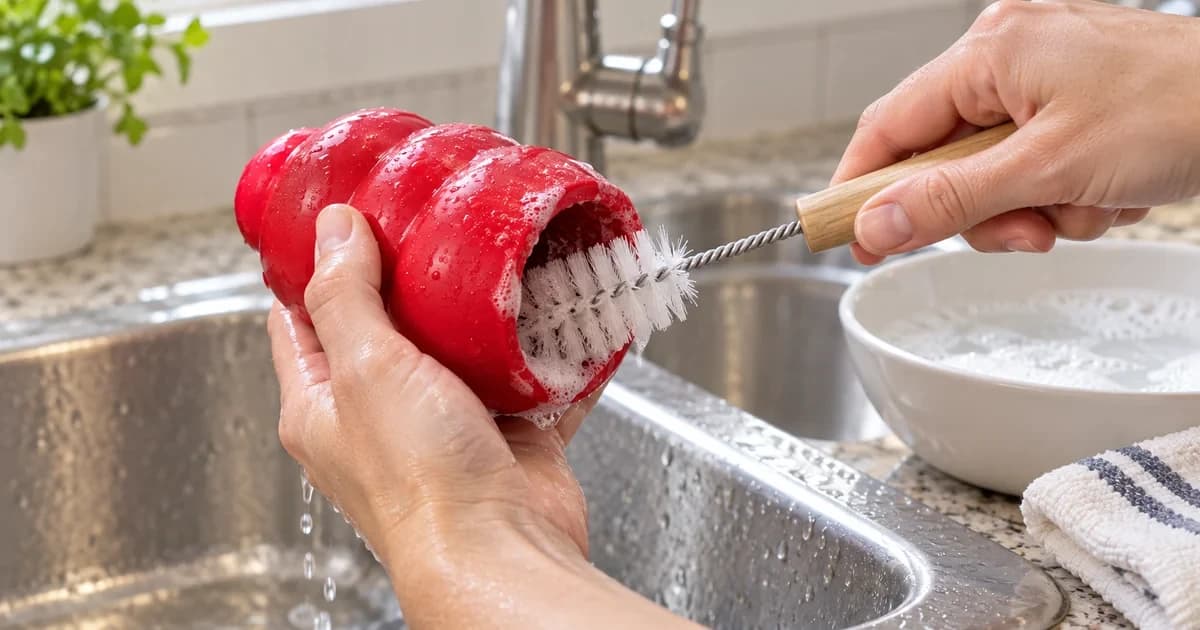
A toy can look clean outside while holding residue in its cavity. KONG's rubber-toy cleaning guide recommends warm water and dish soap, soaking stubborn leftovers, brushing the interior, and rinsing thoroughly. Those directions describe KONG rubber products; they are a useful worked example, not a care label for every toy in our dog chew-toy category.
- Inspect before soaking. Check the opening and surrounding material for cracks, missing chunks, or substantial wear. Remove a compromised toy from play instead of trying to make damage disappear through cleaning.
- Empty the cavity. Remove loose residue without forcing a sharp implement through the toy. Keep detachable parts together so you can account for them afterward.
- Wash by the approved instructions. For the KONG example, warm soapy water loosens remaining material. Use a bottle brush or toothbrush to reach inside rather than cleaning only the outer surface.
- Rinse the openings and cavity. Inspect the interior under good light. If residue remains, repeat the permitted cleaning process; fragrance or a clean-looking exterior does not establish that the cavity is clean.
- Let the toy dry fully. Leave its openings unobstructed in an appropriate drying spot. Check inside before storing it in a closed container.
KONG's current care FAQ says most of its rubber toys can go on the dishwasher's top rack, while toys with added rope or fabric may require hand washing. It also warns that heated drying can degrade its rubber and advises against bleach or other chemicals for its natural-rubber toys. Read the specific product's instructions even within this brand.
West Paw makes a different, product-specific statement: its help center permits top-rack dishwashing for Zogoflex and Seaflex toys and advises complete drying. It warns about high heat and notes that it has not tested microwaving. Do not infer microwave permission from dishwasher permission. This permission cannot be transferred to an unidentified plastic toy merely because the two look similar.
Can dog toys go in the washing machine? Check the plush toy’s instructions
Inspect seams and any route to the stuffing or squeaker before washing. A fresh wash will not repair a torn seam or make an accessible internal part safe to leave in play. If the maker calls for spot cleaning, follow that instruction rather than putting the toy through a full cycle.
KONG's FAQ recommends surface spot cleaning for its plush toys and describes cold water, a delicate cycle, and skipping the dryer for its fabric toys. West Paw's household cleaning guide discusses damp-cloth and washing-machine cleaning for intact stuffed toys and cautions about drying toys that contain plastic parts. These are brand examples with limitations, not universal permissions for all plush dog toys.
After an approved wash, check that the filling and seams have dried, not just the outer fabric. Follow the prescribed drying method and keep the toy away from your dog until it is ready. There is no single drying time that fits every filling, toy size, room, and wash method.
Mixed materials: follow the whole product's instructions
A rubber toy with a knotted rope is a mixed-material product. So is a plush toy containing a plastic squeaker. Before cleaning rope and tug toys, check whether the maker allows immersion or machine washing and whether any components are intended to detach. Do not dismantle stitched or bonded parts to force them into a preferred cleaning method.
The same reasoning applies to dog puzzle toys: a washable tray does not establish that its sliders, cups, wood components, or electronics tolerate the same treatment. Photograph the assembled toy if that helps you put its permitted removable parts back correctly. Check for loose or missing pieces before reuse.
How often should you wash dog toys? Use condition and the care instructions
Check toys when you put them away and before you offer them again. Clean visible dirt or leftover contents by the approved method, and keep a second suitable toy available while a washed one dries. A muddy outdoor toy, a cavity holding residue, and a clean indoor plush toy do not necessarily need the same cleaning interval.
Use a simple storage check: clean enough to inspect, fully dry, intact, and complete. If any one of those is uncertain, leave the toy out of the active rotation. KONG advises removing and discarding damaged toys; it also directs owners to contact a veterinarian if they think their pet swallowed a fragment. Cleaning is maintenance, not a substitute for inspection or veterinary advice.
Our examples come from linked manufacturer instructions. Pawlivy has not tested these wash methods or verified that they apply to an unspecified toy. See our editorial policy for how we separate source-based guidance from hands-on testing.