
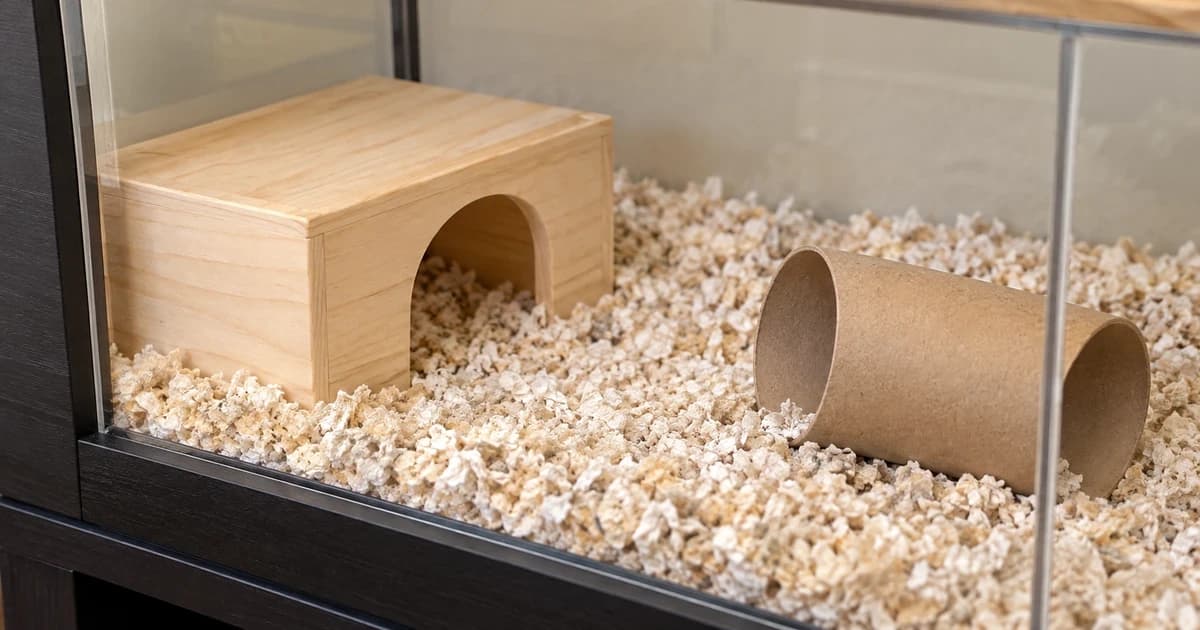
To keep a hamster entertained, provide suitable opportunities to explore, burrow and hide while the animal is naturally awake. Start with an accessible choice and a clear route back to a retreat. More objects do not automatically make a habitat more useful, and a toy label does not show whether your hamster can use the item.
This guide focuses on non-edible equipment and voluntary exploration. It does not prescribe treats, a feeding game or a health result. Your useful observation is what the hamster actually chooses to do, rather than whether a product is advertised as a boredom buster.
Choose an opportunity before choosing an object
PDSA's hamster guide describes space, deep bedding and items such as boxes and tunnels. Blue Cross discusses exploring, nesting and tunnelling, with wide tunnels and low wooden objects among its examples.
Use those ideas to identify the action you want to make available. An object can support one opportunity while obstructing another if its placement fills the route through the habitat.
| Opportunity | Item or arrangement | Questions about the actual equipment |
|---|---|---|
| Retreat and nesting | An appropriate enclosed low hide or documented suitable box | Can the hamster enter and leave readily? Is there suitable resting room and an accessible route that remains open? |
| Exploring a route | A broad ground-level tunnel or a low object to investigate | Are both ends accessible? Does the opening suit this hamster, and can the item remain stable in its intended position? |
| Burrowing | The intended bedding area or a suitable digging box | What material and depth does the chosen housing guidance call for? Does the container and its placement suit the enclosure? |
The table is a selection aid, not a tested toy ranking. A tunnel's outside diameter does not supply its usable opening, and a photograph of a hamster beside a box does not establish fit or material suitability.
Keep a retreat and usable movement space
The RSPCA's hamster-environment page describes a suitable nest, thick bedding and a solid floor. Resting space remains part of the arrangement when you add opportunities to explore. Do not block the existing hide's access or fill every open patch with an accessory.
Look at the intended route before adding an item. A tunnel can be individually accessible yet lead into a tight corner once a wheel, nest and dish are in place. Check the whole arrangement rather than approving each object in isolation.
A wheel is one form of activity equipment, not a substitute for every other opportunity. Its diameter and voluntary running observation are a separate task in our hamster-wheel guide. This page does not supply another species size table.
Check materials and openings before offering an item
For a purchased hide or tunnel, find its exact material, intended species and use instructions. Keep any missing fact unresolved. “Natural,” “small animal” or “healthy enrichment” in a title does not certify an item's treatment, ingredients, openings or effect.
A simple cardboard object also needs an inspection. Packaging can include attachments, tape, coatings or glue that its broad material name does not explain. Choose a documented suitable option rather than treating every discarded tube as equivalent. Do not add strings or raise an ordinary ground-level object to make it more challenging.
Blue Cross's low wooden examples do not approve unidentified branches or every wood-named product. This guide does not give a branch-washing or baking recipe. Follow reliable item-specific material and preparation information instead of inventing a treatment for unknown wood.
Our small-pet digging-box category offers equipment to investigate, but a listing still needs its actual size, access, material and intended use checked. A mixed-species tag is not an individual suitability assessment.
Introduce a manageable choice while the hamster is awake
Wait for ordinary waking activity. Blue Cross advises against waking a hamster for playpen time and calls for supervision outside its usual accommodation. Apply that distinction when planning interaction: your timetable should not require the animal to perform.
Place a suitable new object where the hamster can approach or leave it without losing access to the familiar retreat. Begin with a manageable change and observe at a distance. Avoid repeatedly moving the animal into a tunnel or blocking an exit to create a demonstration.
A hamster may investigate immediately, return later or ignore the item. Describe the response without declaring a preference test or diagnosing boredom. A single unused toy does not prove that the habitat needs a different purchase.
Observe the route and recheck the item
Keep a short record of the opportunity offered, exact item and position, when the hamster was naturally awake, and the response you saw. Useful descriptions include approaching an opening, entering and leaving, returning to the hide or avoiding the route.
If a new placement obstructs access, correct the arrangement according to the equipment's instructions. If the object develops loose parts, damage or a condition you cannot assess, remove it and resolve that issue before offering it again. A manufacturer's durable claim does not establish the current condition of a used item.
Change one ordinary feature when reviewing the setup so you can describe what changed. Keep essential resting provision available. Concerns about a new change in the hamster itself belong with your veterinarian, rather than being treated as a problem that another toy will cure.
PDSA's source is dated December 2024; Blue Cross shows a March 2023 review with a March 2026 next-review date, which does not confirm a completed newer review. These sources support equipment choices, not measured entertainment or health outcomes.
Browse Pawlivy's hamster-habitat category. Our editorial policy explains source-based guidance.