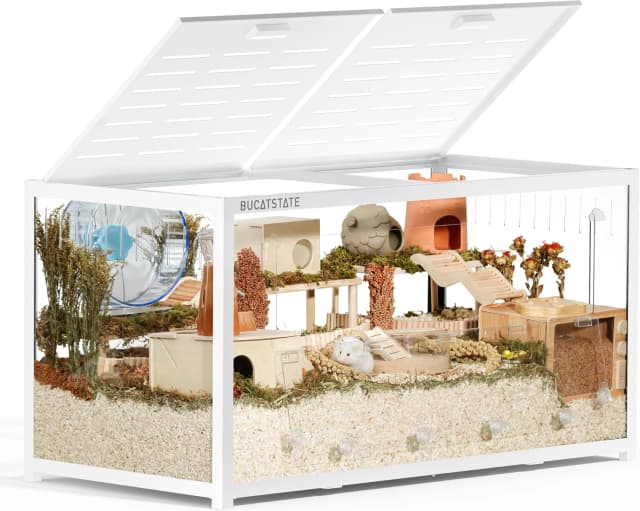
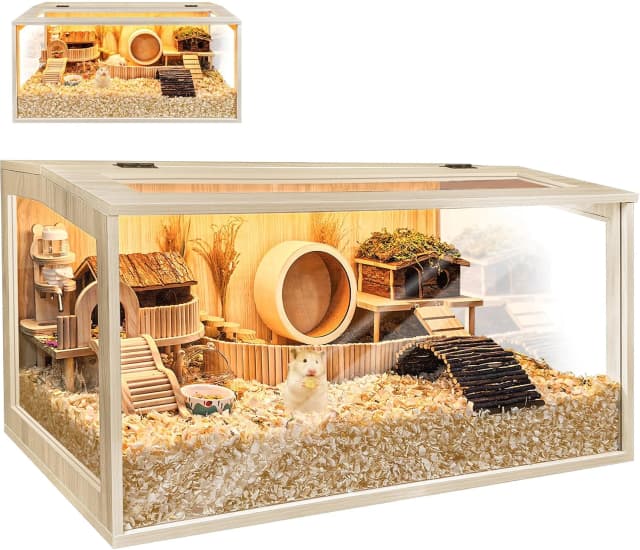
Choosing small pet hamster habitats
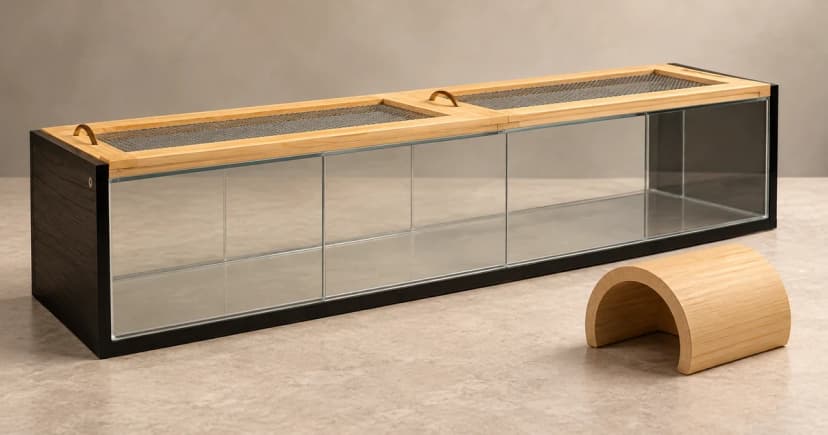
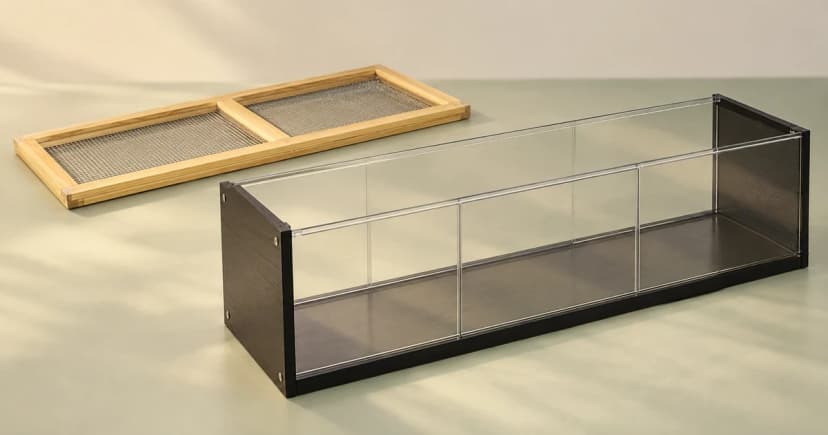
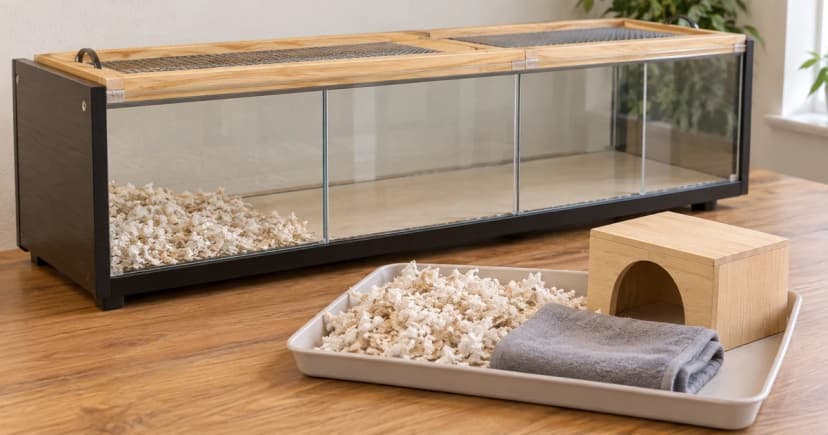
Plan the usable living area using the adult animal's measurements and the space needed for furnishings. Check openings, latches and ventilation, plus clearance for routine access and cleaning. An easy clean hamster cage needs access to the full base without relying on a small top opening.
Useful details to compare include species requirements, usable floor area, mesh spacing, height, and ventilation. Use product-specific measurements and compatibility details to narrow the choice for your setup. A hamster cage and wheel must be assessed together so the wheel's running area and clearance suit the animal.
Match the design to your setup
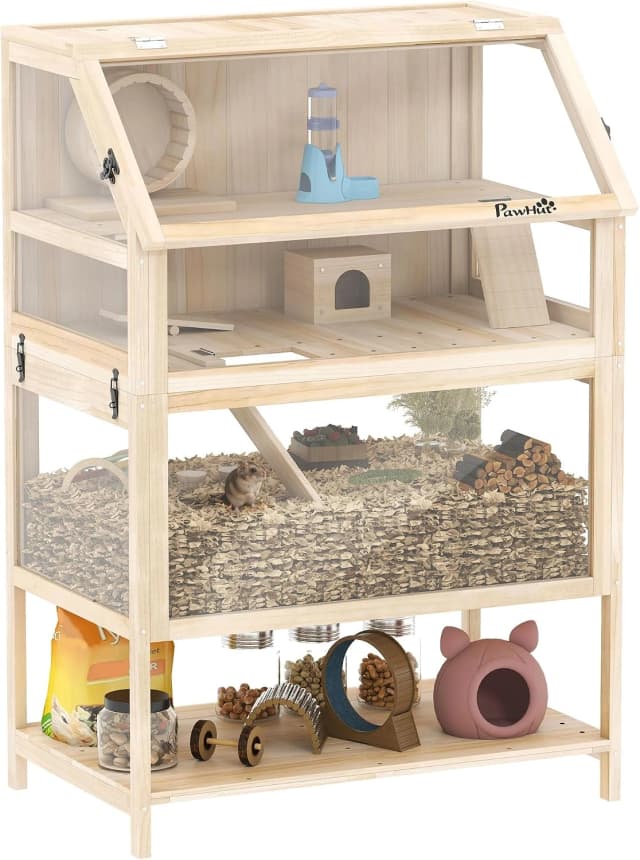
A hamster cage setup needs enough usable space for the animal and its equipment, with access for routine care. Check the enclosure's listed dimensions, intended species and cleaning instructions as one complete arrangement. In a large hamster cage with tubes, check the internal tube diameter and access for retrieval and cleaning.
A plastic bin considered as a hamster enclosure needs appropriate material, ventilation and secure access. Check how its contact surfaces can be cleaned or replaced, and use species-specific habitat guidance rather than assuming a storage container is ready for an animal. An escape proof hamster cage label does not replace checks of door latches, gaps and attachment points.
For a large syrian hamster cage, compare usable dimensions with the space and task the product is intended for. A hamster cage platform adds an elevated surface but should not be counted as extra continuous floor area; confirm species-specific habitat guidance before choosing a Chinese hamster cage or a home for a Syrian hamster.
Compare panel spacing, mounting requirements and materials with the intended species, location and supervision arrangements.
For related equipment, explore small pet cages & habitats and compare how the pieces fit your routine.