Plan containment, digging space and usable routes before your degus arrive.
Check the outer enclosure
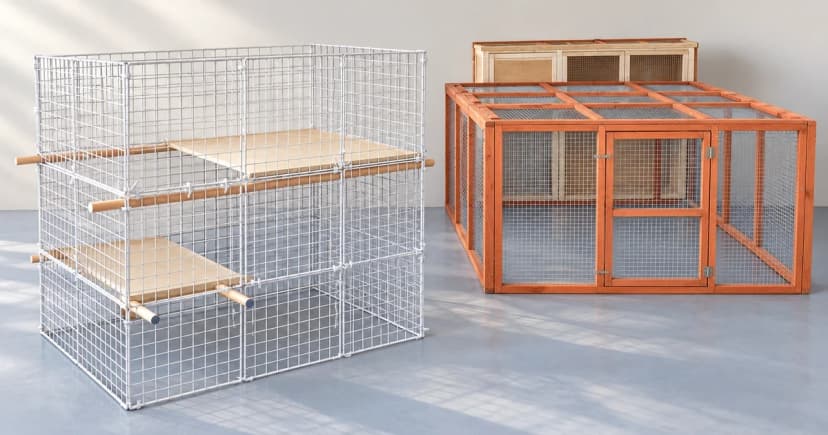
The PDSA degu guide recommends a roomy, metal, multilevel cage and checking that the animals cannot fit through its bar gaps.
The RSPCA housing guide specifies a solid bottom and solid roof, alongside good ventilation.
Those are separate features: an opaque roof does not make a sealed container suitable. Check the actual kit's assembly, openings and fasteners; resolve uncertain gaps with the maker.
Place it indoors, away from draughts, direct sunlight and heat sources. RSPCA recommends keeping the enclosure no higher than 20 C.
Fit the ground and levels
Provide a deep digging layer of suitable dust-free, absorbent bedding, with hay and shredded paper.
Arrange levels, ramps and platforms for climbing. PDSA also recommends a large, solid exercise wheel that permits running with a flat back.
Follow each platform and wheel's own fitting instructions. Check clearances after adding bedding. A deep digging area, a climbing route and wheel access need room together; one accessory should not block another.
Restore access and retreat
The RSPCA behaviour guide calls for accessible food, water, hiding places, companions and toys, with enough resources for every degu. Provide hay-filled nest boxes and choices to withdraw.
Check the approach to each resource after furnishings are in place. For a water bottle, use the separate flow and leak checks.
Plan a removable dust bath: RSPCA recommends access two or three times weekly for about 20 minutes, followed by removal. Keep daytime light and nighttime darkness predictable.
Inspect before arrival
Check the enclosure and its contents for damage that could injure a degu or allow escape; replace damaged items as needed.
Secure the closures, confirm usable ground and climbing routes, and resolve unfinished fittings before move-in. These care guides do not supply assembly instructions for an unidentified cage or an introduction procedure for unfamiliar animals.