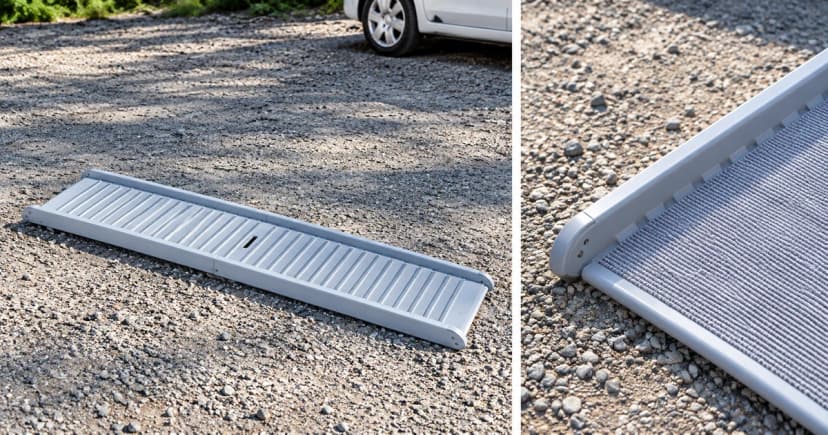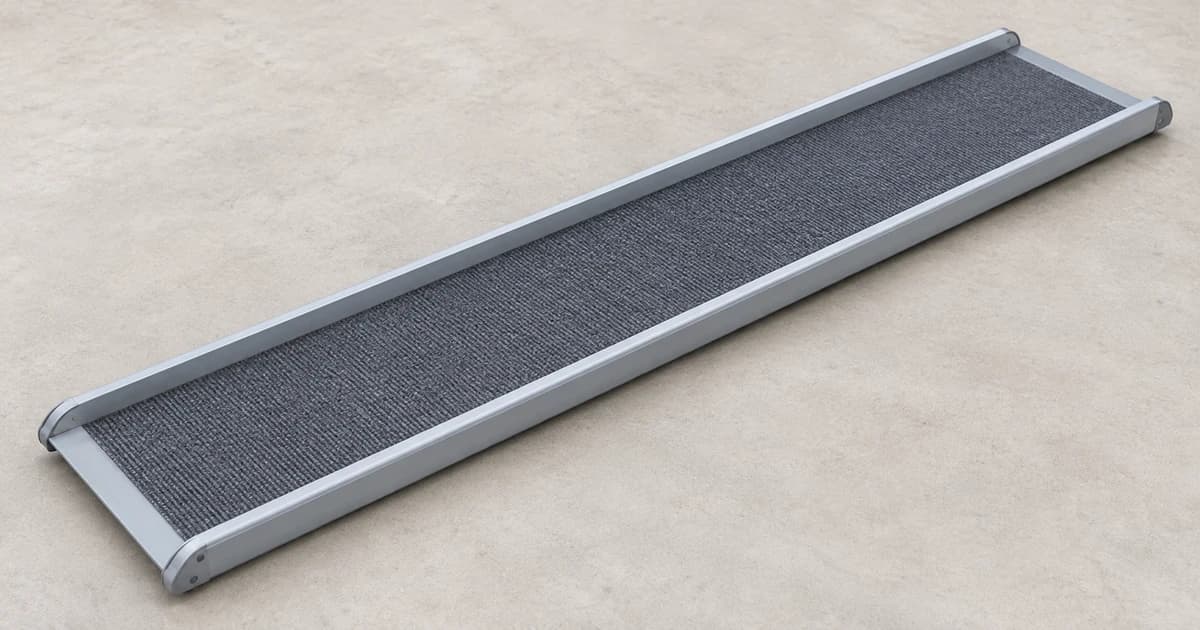
Begin dog ramp training with the ramp flat on the ground, if its instructions permit that introduction. Use rewards to encourage voluntary crossings, and move to an approved raised setup only when your dog is comfortable on the flat ramp. Keep practice short, return to an easier stage when needed and never pull or force the dog up.
Two questions need separate answers: is this ramp suitable and correctly set up, and has your dog learned to use it comfortably? Treats can help with learning. They cannot establish load capacity, secure a ramp to a vehicle or make an unsuitable surface appropriate.
Confirm the equipment before training
Read the instructions for the exact ramp, including its intended use, support requirements, extension or locking procedure and limits. Identify the destination you plan to use before asking the dog to cross. If suitability for the dog or setup is unclear, get appropriate advice before practicing.
The current PetSafe Happy Ride Telescoping Ramp support page provides a specific example. It directs owners to fully extend that ramp and, at a vehicle, place its angled end appropriately while all four rubber feet rest on a stable surface. It also says the ramp is for pets and that people must not get on it with them.
Those are instructions for that named ramp. Other devices may have different feet, supports, hinges or approved positions. Do not choose the more convenient version or shorten a telescoping ramp merely to create a training stage.
Start with comfortable crossings on the ground
PetSafe's ramp acclimation guide starts with the ramp flat on the ground and rewards as the pet crosses. Follow the preparation directions for your own device before using that approach.
Choose a quiet place with room to approach and leave the ramp. Offer a reward your dog actually values and allow voluntary investigation. Keep the first goal manageable: comfortable contact and crossing on the flat surface, rather than immediate access to the car or furniture.
Blue Cross's training guidance emphasizes rewarding the action promptly, using positive methods and keeping early distractions low. Apply those principles to the crossings you are teaching. Choose rewards appropriate to your dog rather than assuming a particular food is suitable for every dog.
If the dog avoids the flat ramp, do not advance just because the treats are ready. Pause and consider what made the task difficult. A dog choosing not to cross is information about the session; it is not permission to pull them onto the equipment.
Move to a permitted raised setup gradually
Once flat crossings are comfortable, check the ramp's instructions for the next setup. The Happy Ride Telescoping Ramp page describes trying it on the vehicle and, if the pet refuses, starting with a lower surface before increasing height as comfort develops.
That does not authorize an improvised stack of boxes, an unsupported end or a new locking position. Use a lower destination only when the ramp can be supported as its instructions require.
Change the challenge in a way you can observe. A comfortable flat crossing followed by hesitation on an incline suggests the new stage needs attention. It does not prove that the dog is stubborn, identify the cause or establish a universal slope that will solve the problem.
| What happens | Useful next decision |
|---|---|
| The dog crosses comfortably on the flat ramp. | Consider the next permitted setup, with equipment support checked again. |
| The dog approaches but will not cross the flat ramp. | Keep the task easy, pause and reassess rather than raising it. |
| The dog crosses flat but refuses the raised ramp. | Return to flat practice or an approved more gradual setup. |
| The ramp shifts or its support is uncertain. | Stop and resolve the equipment setup before another crossing. |
| The dog previously crossed but now struggles or appears uncomfortable. | Pause and seek individual advice instead of pushing through the change. |
Keep practice short and voluntary
Blue Cross recommends short sessions and pausing when a task becomes difficult. Several manageable opportunities can be more useful than extending one session until the dog finally crosses. There is no fixed number of attempts that guarantees acceptance.
PetSafe's named ramp guidance explicitly rejects forcing or pulling the pet up. Reward a voluntary attempt promptly and allow a break. If you need help, choose a trainer who uses reward-based methods and can assess both the task and the dog's response.
Check the actual destination rather than assuming success in one place transfers automatically. Walking up comfortably also does not establish that the dog will descend comfortably. Use the relevant instructions and individual training advice for that task instead of treating a single upward crossing as complete readiness.
Maintain the distinction between learning and suitability
For equipment research, the pet ramps category identifies this type of mobility aid. Assess the exact device's instructions and your dog's needs; this training guide does not recommend a particular ramp or certify a product from its photograph.
Keep the sequence grounded in what happens: confirm the equipment, build comfortable flat crossings, try a permitted raised setup and step back when the dog hesitates. If ordinary walking or the proposed activity is uncomfortable for the dog, ask your veterinarian whether the practice is appropriate. Training is a gradual introduction to equipment, rather than a substitute for an individual mobility assessment.