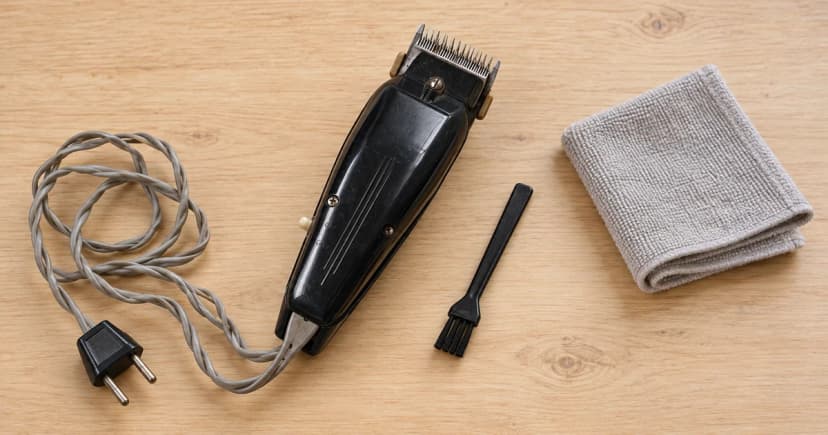
To identify a replacement charger or power cord for pet clippers, begin with the complete clipper model and the manufacturer's documentation for its market. Find an approved part or repair route for that exact unit before ordering. A familiar brand, similar plug or general clipper category does not supply the missing confirmation.
A lost charging item and a damaged fixed power cord can lead to different next steps. Keep the equipment out of use while that question is unresolved.
Record the equipment identity before searching for a part
Copy the complete model designation from the visible label or original documents, including any suffix. Note where the equipment was bought and where it will be used. If you still have the original power item, record its visible part number and markings without opening it.
Keep the clipper's identity separate from the charger or cord's identity. A blade number, guard length or kit description may identify another component without identifying the power item.
| Record | Information to keep | If it is missing |
|---|---|---|
| Clipper identity | Maker and complete model designation | |
| Market and intended location | Purchase market and country of intended use | |
| Power-item identity | Original part number and visible markings, if available | Do not choose by connector appearance alone |
| Documentation | Keep the replacement decision unresolved | |
| Next route | Approved spare part or named repair service |
Read labels that are already accessible; do not remove covers or screws to search for an internal number. If the available information does not establish what you own, that is a documentation problem to resolve with the maker, not a reason for a powered trial.
Use the exact model's spare-parts route
Wahl UK's charger-identification guidance directs owners to search for the model number and inspect the spares and accessories section of that product's page. It provides a useful example of a model-specific lookup, rather than a brand-wide charger recommendation.
Check that the page actually names your unit. Keep the relevant part identification or written confirmation with your equipment record. A page for a similar kit, another regional model or an unidentified charger leaves the question open.
This lookup does not establish that a part is currently available or offered in every country.
Keep regional power information attached to its source
Wahl's US Home Pet voltage FAQ says most corded clippers designed or sold by Wahl Home Products are intended for the US market at 110–120 volts and 60 Hz. It also describes a variety of cordless products that can be used overseas and directs owners to customer service for more information. That does not identify every cordless model as universal voltage.
The separate Wahl UK travel FAQ discusses its mains-powered clippers in a 220–240-volt, 50-Hz European context. It points to the product's data label and gives a 100–240-volt, 50/60-Hz marking as an example. Those statements belong to that regional guidance; they are not specifications for every US-market Wahl unit.
Do not combine the two regional examples into a universal specification. This guide does not select a travel adapter, transformer, converter or substitute charging cable.
A fixed cord may require a service-center repair
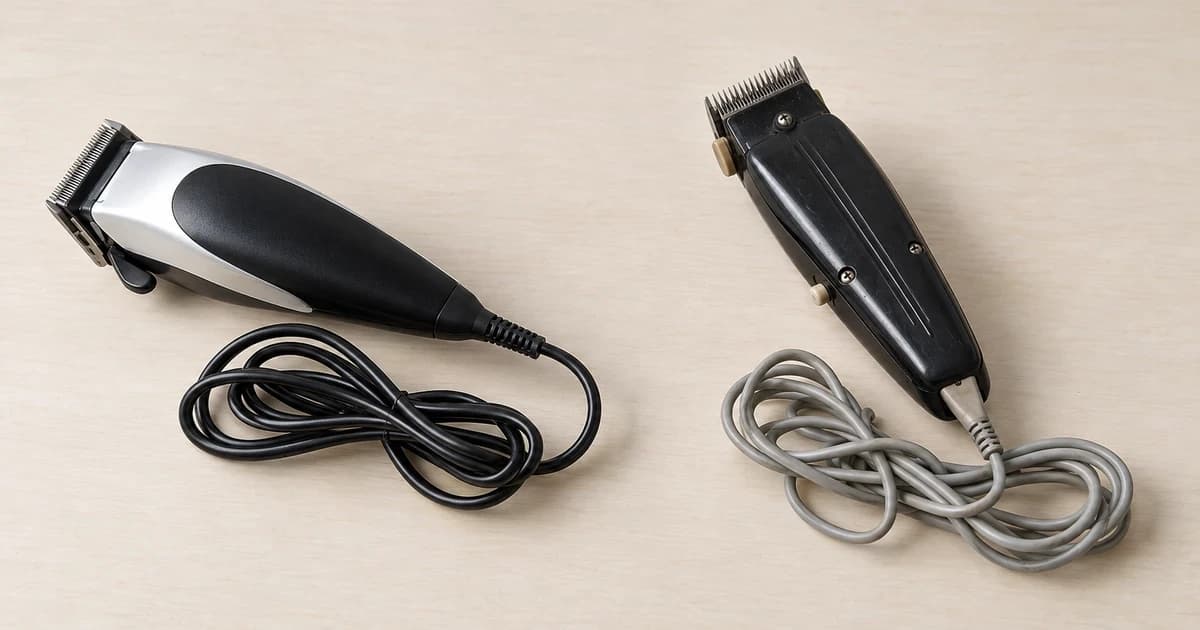
Wahl's Animal corded-clipper FAQ recommends a Master Service Center when the power cord is not working on its named models, and discourages replacing the cord at home. Its list includes KM10, KM5 and Deluxe U-Clip, among other specifically identified units.
Keep that advice tied to the named equipment. It does not establish the service route for every clipper brand, but it does show why a cord problem is not automatically a loose-part shopping task.
Do not open the housing, splice a cable or try another power item to see whether the clipper starts. A connector that can be inserted is not the documented approval this identification process is looking for.
Send a question that can receive a specific answer
Give support the complete model, purchase market, intended country of use, original power-item markings if available, and photographs of the visible labels. Ask: “Which approved replacement part or repair service applies to this exact unit in this market?” Include any conflicting product-page or manual information instead of choosing the broader claim.
Leave unknown information explicit. If identity or approval remains unclear, pause the replacement decision.
Our clippers and trimmers category organizes equipment browsing; the clipper accessories category covers other components. Neither category establishes power compatibility or current stock. Guard-comb matching and blade cleaning and oiling are separate equipment tasks.