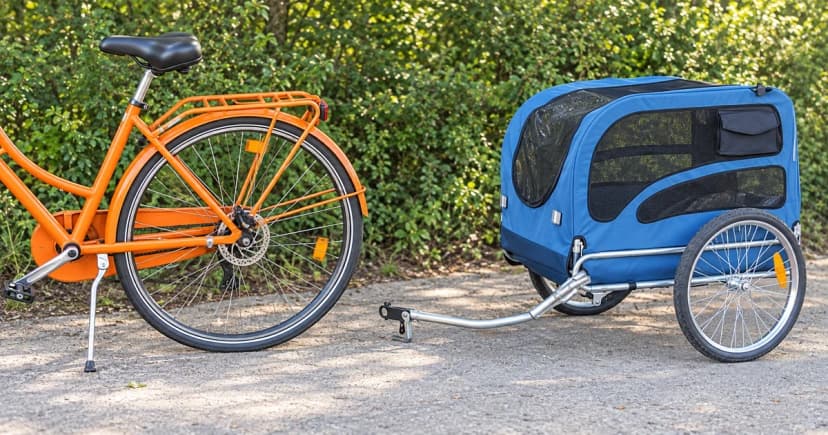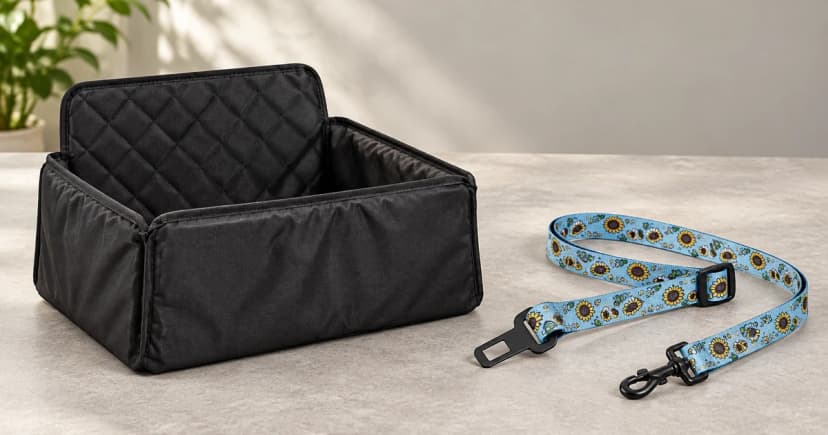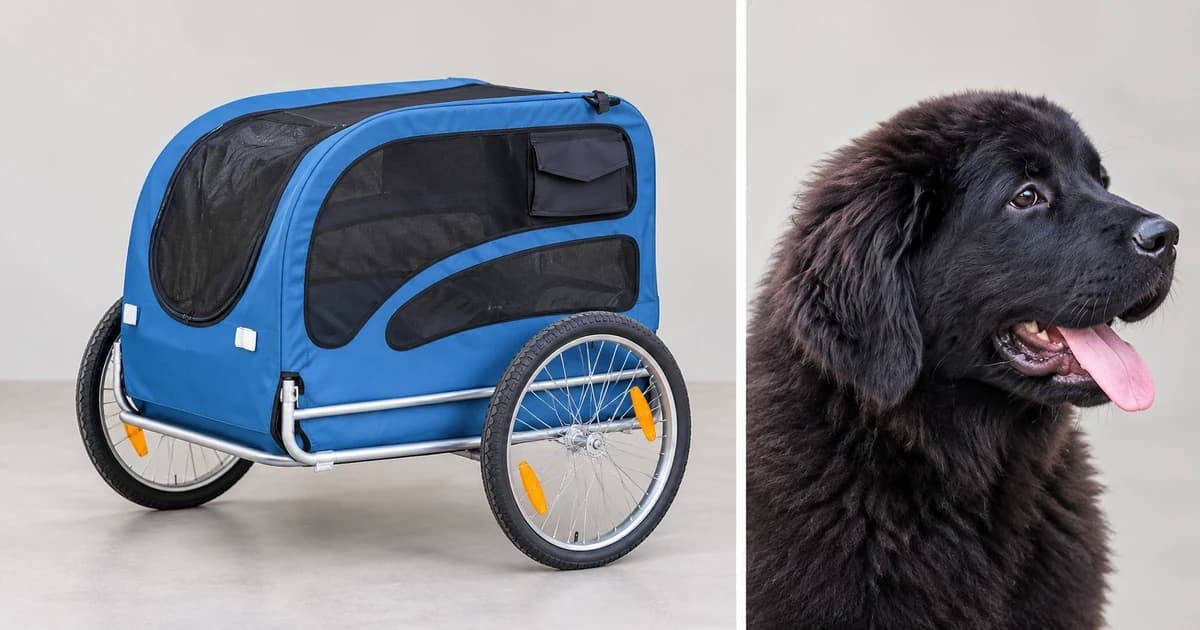
Learning how to get a dog used to a bike trailer begins indoors or in a quiet yard with the trailer secured in the exact stationary training configuration described in that model's manual. When you introduce a dog to a bike trailer, progress through one change at a time—approaching the frame, stepping inside with panels open, accepting a closed mesh cover, and experiencing gentle hand-pushed rolling—because a dog sitting calmly inside an open cabin has not yet accepted a zipped door or moving wheels.
1. Set up the model-specific stationary base first
Before inviting your dog near the cabin, check the trailer's current manual to see how the cabin must be stabilized on the floor, which entry flaps stay open, and which parts must be reinstalled before rolling. Mechanical attachment to your bicycle is a separate check covered in our dog-trailer hitch compatibility guide.
Published manuals show why you should never copy one brand's indoor setup onto another trailer:
- Croozer Dog familiarisation setup: Croozer describes removing the wheels and placing its dedicated cardboard block underneath so the cabin sits level indoors as an open passage (including an optional front-crossbar adjustment that must be reinstalled strictly per the manual before outdoor use). For the first outdoor move, Croozer specifies hitching the empty trailer to the bike first, loading the dog, closing the door, and pushing the bike by hand in a quiet area while watching your dog.
- Thule Bexey L indoor training mode: Thule describes removing both the wheels and the hitch arm so the rigid plastic base rests directly on the floor for stationary indoor familiarisation.
2. Follow the stage-by-stage familiarisation progression
In Maria Schultz's 2020 training account hosted by Burley, her two dogs reacted very differently to the same trailer: Kona settled as the trailer rolled, while Riley jumped out as soon as movement began, highlighting why cover closures and rolling must be introduced separately at home. Advance to the next stage in the flow below only when your dog voluntarily accepts the current step without restraint or coaxing:
| Familiarisation stage | Equipment configuration | Voluntary dog response required before advancing | Action if your dog hesitates, freezes, or exits |
|---|---|---|---|
| Stage 1: Stationary approach & sniffing | Trailer stabilized on its model-approved indoor base; all permitted entry and front/rear panels tied fully open. | Dog walks up to the exterior frame and sniffs the floor mat or entrance at their own pace. | Stop calling or luring; place rewards further outside the frame and let your dog disengage freely. |
| Stage 2: Voluntary cabin entry & settling | Stationary base with panels open and familiar bedding inside; no leashes tied inside to hold the dog in place. | Dog steps all the way into the cabin, lies or sits comfortably, and steps back out calmly when choosing to leave. | Never push your dog inside or block the exit; return to rewarding brief two-paw step-ins and voluntary exits. |
| Stage 3: Mesh cover and zipper changes (stationary) | Trailer remains completely stationary while you lower one mesh panel partway, then fully, and practise the zipper sound briefly. | Dog stays relaxed inside while the mesh screen is lowered, closed briefly, and reopened before the dog asks to leave. | Reopen the panel immediately if your dog stands anxiously or paws at the mesh; practise brief half-second lowers while stationary. |
| Stage 4: Reinstalled wheels & hand-pushed rolling | All wheels, crossbars, and hitch parts reinstalled per the manual; cabin doors closed as required for motion; handler pushes by hand in a quiet area. | Dog remains settled as the trailer rolls a few feet at walking pace while you watch their posture closely. | Halt immediately if your dog scrambles or vocalizes; return to stationary closed-panel practice rather than continuing down the path. |
| Stage 5: Separate riding readiness decision | Completed mechanical hitch check + consistent calm response during hand-pushed movement. | Dog enters willingly, accepts full closure, and settles during walking-speed rolling without distress. | Postpone cycling and keep sessions at the last comfortable stage; consult a reward-based trainer if motion remains stressful. |
3. Log each change separately before deciding to ride
Instead of counting a fixed number of days, record exactly which equipment setup you used, which single element changed (entry, cover position, or rolling), and how your dog responded. When comparing dog bike trailers, verify whether a model offers a flat-floor indoor mode and read its closure rules before assuming all trailers train the same way.