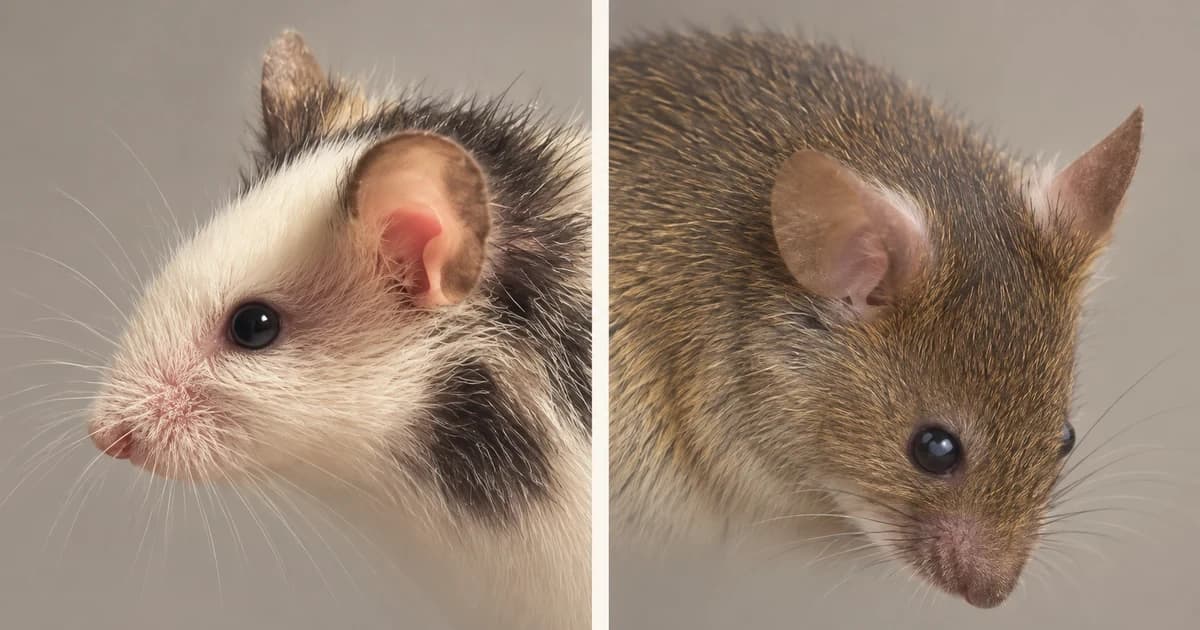
Knowing how to keep pet mice entertained means offering four distinct types of activity during their natural dusk, dawn, and nighttime active hours—searching for scattered portions of their normal food ration, investigating multi-exit cardboard tubes, digging in deep bedding with climbing routes, and using a properly structured wheel—while observing every individual mouse in the group to confirm that new additions do not trigger guarding or block access to retreats.
Offer activity without disturbing daytime rest
As the RSPCA mouse behaviour guide notes, mice are primarily active at dusk, dawn, and overnight. Leave their daytime sleep undisturbed and arrange enrichment changes so they are ready for evening exploration.
Keep overhead cover and multiple retreats in place at all times: the RSPCA mouse environment guide emphasizes that mice feel safest when they can move close to hiding places. See our mouse-cage setup guide for planning the permanent enclosure layout.
Give them different jobs and trace equipment checks to each source
For searching, PDSA's mice care guide recommends scattering food around the cage floor and bedding rather than relying solely on a bowl. Use your mice's normal daily ration rather than adding extra meals or unfamiliar sugary treats.
For investigation, cardboard tubes allow mice to climb, chew, manipulate, and hide (RSPCA environment guide). Choose tubes and shelters with multiple exits and enough width for a mouse to turn around comfortably.
For digging and climbing, provide bedding deep enough for mice to burrow into darkness while still letting you conduct daily visual checks (RSPCA behaviour guide), paired with secure shelves, ropes, or branches for vertical movement.
A running wheel is an optional addition rather than the sole form of exercise. Combine the structural requirements from both UK welfare sources before placing a wheel in the cage: the RSPCA environment guide specifies a solid running surface and axle-free design, while PDSA specifies enough diameter for mice to run without bending their backs or tails and no gaps or crossbars that could trap limbs or tails.
| Activity Type | Equipment / Setup Requirement & Source | Individual & Group Observation Check |
|---|---|---|
| Searching (Foraging) | Scatter the normal daily food allowance across clean bedding (PDSA mice guide). | Confirm smaller or lower-ranking mice can forage freely without being chased away from scattered food zones. |
| Investigating & chewing | Cardboard tubes and boxes with multiple exits and room to turn around (RSPCA environment guide). | Monitor new shelters for territorial guarding between cage-mates; replace damp or flattened tubes promptly. |
| Digging & climbing | Bedding deep enough to burrow into darkness plus shelves and climbing routes (RSPCA behaviour guide). | Verify that added climbing items do not block access to water bottles, main nest boxes, or ground cover. |
| Optional wheel running | Solid, axle-free structure (RSPCA environment guide); large enough to run with an unbent back and zero trapping gaps (PDSA mice guide). | Watch that the wheel spins smoothly without pinching tails and that one mouse using it does not block others from passing. |
Observe every mouse in the group
When you introduce a new shelter, tube, or wheel, watch how the entire group responds (RSPCA environment guide) and confirm that every individual can still reach food, water, and familiar retreats (RSPCA behaviour guide). Seeing one bold mouse use an accessory does not prove the addition suits the whole group.
Compare activity levels and posture against what is normal for each of your mice. If a mouse hides constantly, loses weight, or changes behaviour, consult a veterinarian rather than assuming they need a more complex toy.
Change or finish the offer
Keep adjustments small and deliberate: reposition an accessory that narrows a pathway, swap out an ignored tube during the next routine clean, and never lift or push a mouse into a tunnel or onto a wheel.
Check the fitting instructions for any shelf, rope, or wheel before installation, and remove soiled cardboard regularly. Our mouse-cage cleaning guide covers how to clean the enclosure while preserving familiar scent markings.