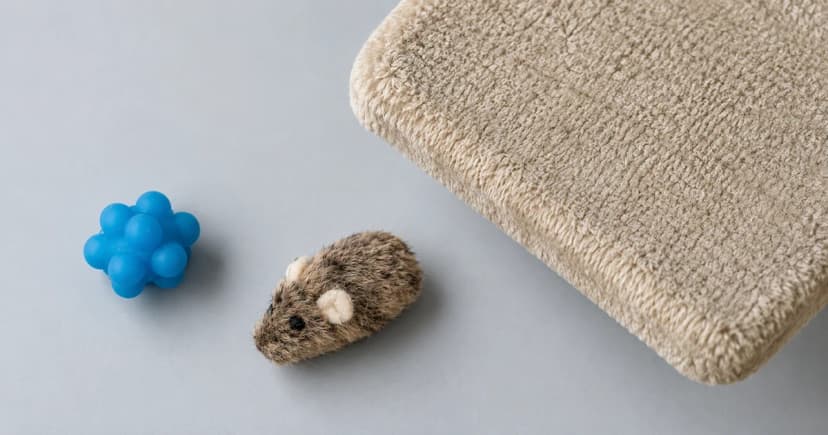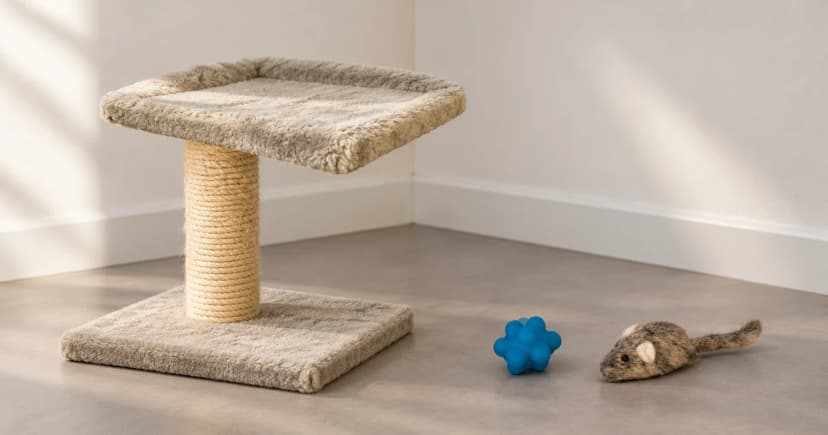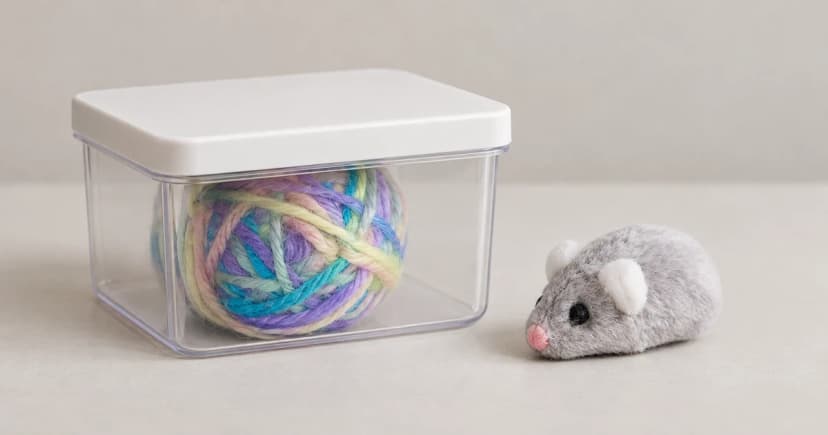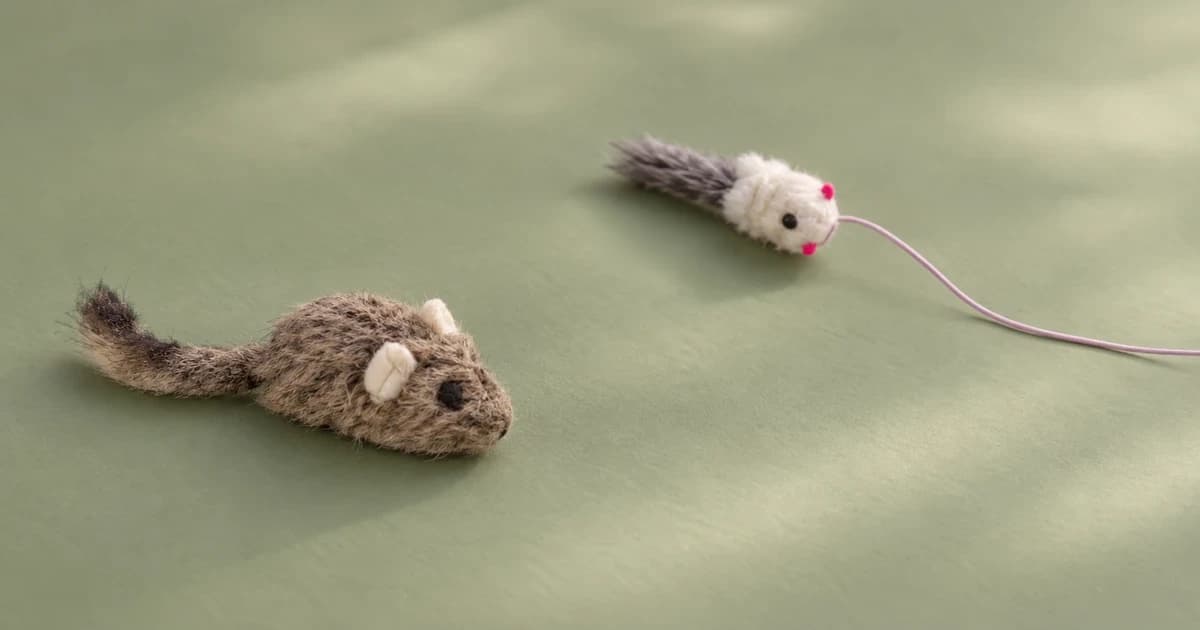
To play with a cat, move a wand or floor toy away from and across your cat's line of sight like prey they can stalk, pause so they can crouch and plan a pounce, allow genuine physical catches, keep your hands and feet completely separate from the target, and put string or rod toys safely out of reach as soon as supervised play ends. A cat quietly watching a lure from behind a cushion is already participating before making a single leap.
Notice which movement pattern sparks interest in your individual cat: a quiet mouse-like slide along the skirting board, a lure disappearing behind the edge of a box, or a brief upward flutter. Battersea's feline behaviour team recommends matching movement to your cat's preferred hunting style and letting the cat catch the toy regularly so the hunting sequence feels complete.
Prepare a simple, supervised setup
Pick a clear floor space where your cat has traction and room to approach, ambush, or walk away. Inspect the toy before each session and discard anything with loose eyes, frayed elastic, or detached feathers. Always supervise string and fishing-rod wands and store them in a closed drawer or cupboard immediately afterward.
A long wand keeps a safe gap between your hands and your cat's claws during interactive play, while small mice or balls let a cat bat and pounce solo. You can compare options in Pawlivy's cat toys category by the hunting motion you want to offer, checking each item's construction and care instructions.
Make the target move like prey without crowding the cat
- Invite investigation from a respectful distance: Set or draw the lure across the floor where your cat can spot it, letting them watch and crouch rather than dangling or waving the toy into their face.
- Slide away like prey: Draw the lure smoothly along the floor away from the cat or let it slip just behind the corner of a sofa or cardboard box—prey tries to escape, not charge toward a cat's nose.
- Build in quiet pauses: Let the lure stop and quiver briefly beside cover. Stillness gives a stalking cat the moment they need to adjust their hind legs and pounce.
- Allow a satisfying physical catch: Let your cat trap and hold the lure in their paws rather than snatching it out of reach on every jump. Keep the wand line slack while they hold the catch—never pull the cord to lift or drag your cat.
- Offer another round only if your cat stays interested: Start a gentle new slide if your cat releases the lure and watches for more, or end the session calmly as soon as they lie down, groom, or walk away.
| Play Phase | How the Lure Moves | What NOT to Do | Cat Response & Exit Rule |
|---|---|---|---|
| 1. Low slide away from the cat | Trail the plush mouse or feather lure lightly across the floor moving away from or diagonally past the cat toward cover. | Do not wave, bounce, or thrust the toy toward the cat's face or body. | Watching with focused eyes, ear swivels, or a low crouch counts as active engagement; stop if the cat backs away. |
| 2. Brief pause at the edge of cover | Let the lure pause just at the edge of a rug, box, or chair leg with a tiny twitch, then wait. | Do not whip the wand non-stop at high speed when the cat is trying to stalk. | Give the cat unhurried time to stalk, wiggle their hindquarters, or choose to just watch from cover. |
| 3. Reachable catch & slack line | Let the cat pounce on and hold the lure at the end of the chase; immediately slacken the wand cord. | Never yank the toy out of reach every time, and never pull the string to lift or drag the cat. | Let the cat release the catch on their own terms; put rod and string toys away in a closed cupboard when finished. |
Cats Protection's play guidance explains how short hunting sequences mimic natural stalking and stresses letting cats catch rod toys periodically so play does not end in frustration.
Change one part of the game at a time
If your cat watches intently without pouncing, try slowing the slide or pausing longer behind cover before switching toys. PDSA's cat exercise advice emphasizes short bursts of hunting-style play tailored to individual preferences rather than a rigid daily minute quota; consult your veterinarian if you have questions about your cat's weight, mobility, or energy level.
Keep hands separate and make stopping easy
Always use a toy as the prey target—never wriggle bare fingers, toes, or sleeves for a cat to ambush. If your cat redirects toward your hands or ankles, stop moving immediately, let the excitement settle, and switch to a longer wand on future sessions. Never reach in to stroke an over-aroused cat mid-game.
If an adult cat suddenly becomes rough or uncharacteristically aggressive during play, Cats Protection advises scheduling a veterinary check to rule out underlying pain or illness before consulting a qualified behaviourist.