Knowing how to set up a chinchilla cage means completing the full vertical layout, fall protection, temperature check, and hiding spaces before your chinchillas ever arrive. Because chinchillas are agile jumpers with dense fur that overheats easily, a safe enclosure combines generous height and width, staggered solid ledges that limit any uninterrupted vertical drop to 60 cm (about 24 inches) or less, multiple wooden nest boxes, and a cool, draft-free indoor room away from direct sun (PDSA; RSPCA housing guide).
Source-attributed chinchilla cage specifications
Rather than blending different welfare guidelines into an unattributed number, use this side-by-side table to plan your room and interior layout:
| Setup dimension or rule | Attributed welfare guidance | How to apply it to your enclosure |
|---|---|---|
| Minimum cage size | PDSA prefers a large indoor enclosure or dedicated chinchilla-safe room, stating a minimum cage size of 2 m high × 2 m wide × 1 m deep (approx. 6.5 ft × 6.5 ft × 3.3 ft). | Measure usable interior space rather than outer frame wheels or roof overhangs before buying accessories. |
| Room temperature & placement | PDSA: 10–15 °C (50–59 °F). RSPCA: 10–18 °C (50–64 °F), quiet, dry, well-ventilated, and free from drafts or direct sunlight. | Keep both ranges visible with a room thermometer near the cage; never place the cage beside radiators, sunny windows, or damp garages. |
| Maximum uninterrupted fall height | Both PDSA and RSPCA: no uninterrupted drop greater than 60 cm (approx. 24 in) anywhere inside the cage. | Overlap wooden shelves, wide ledges, and chinchilla-safe branches across the vertical span so there is no open shaft from top to bottom. |
| Flooring surfaces | RSPCA: notes mesh flooring alongside solid alternatives. PDSA: calls for solid standing and resting surfaces. | Ensure ample solid wooden or metal/lined resting platforms and floor coverage so feet are not forced onto bare wire continuously. |
| Nest boxes & retreats | PDSA: provide one nest box per chinchilla, plus one large shared box and one spare. | Mount or position boxes at different levels so bonded companions can either sleep together or retreat separately without blocking each other. |
| Hay & nesting material | PDSA: supply clean, dry, dust-free hay. RSPCA: never use cotton-wool-style nesting material that separates into thin, tangling strands. | Keep hay racks and floor hay clean and dry, and exclude fluffy cotton or synthetic fiber bedding that can wrap around limbs or be swallowed. |
Plan the multi-level layout from bottom to top
Once your enclosure is positioned in a cool, draft-free room, fit the interior levels, retreats, and resource stations in three stages:
1. Stagger platforms to eliminate drops over 60 cm
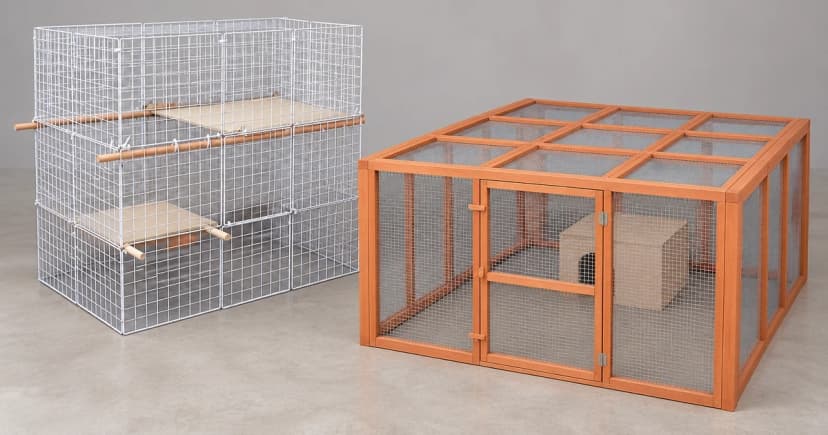
A tall 2-meter enclosure is only safe when its vertical height is broken into overlapping zones. Arrange wide, solid shelves and chinchilla-safe branches in a stepped zig-zag pattern so that from any perch, the distance to the platform directly below is 60 cm or less. Check both the climbing route up and the landing path down, and bolt every ledge tightly according to its hardware instructions so boards cannot tip or unhook mid-jump.
2. Position individual and shared nest boxes for daytime sleep
Because chinchillas are crepuscular and nocturnal, the RSPCA behaviour guide stresses undisturbed daytime sleep. Following PDSA's formula (for a pair: two individual boxes, one large shared box, and one spare), place retreats in the quieter upper and middle sections of the cage, away from household doorways, and verify that each box has an easy entry and exit route.
3. Fit hay, water, gnawing blocks, and dust-bath access
Install hay holders, food bowls, gnawing wood, and water bottles so that a dominant chinchilla cannot guard the only feeding or drinking station. After mounting water bottles to the cage bars, run through our flow and leak checks so a jammed ball valve or dripping spout does not soak the substrate before move-in. Leave a clear, level floor zone where you can place their chinchilla dust bath for scheduled bathing sessions.
Pre-arrival readiness checklist and ongoing care
- Room & climate verified: Quiet, draft-free indoor spot out of direct sun; room thermometer reads within the PDSA (10–15 °C) / RSPCA (10–18 °C) guidance.
- Fall protection checked: Every gap between upper perches and the surface below measures 60 cm or less, with solid standing areas throughout.
- Retreats & safe materials in place: Individual, shared, and spare wooden nest boxes secured; clean dust-free hay loaded; zero cotton-wool bedding used.
- Water, food & door latches tested: Water bottle flow verified, hay and pellets accessible, and all cage doors latched per the cage manual.
Once your chinchillas settle into their new home, keep the shelves and substrate dry without stripping away every familiar scent marker at once—follow our step-by-step guide on how to clean a chinchilla cage for ongoing daily and periodic maintenance.