Knowing how to clean a chinchilla cage safely comes down to three connected rules: schedule cage work during your chinchillas' active evening hours while housing them in a secure temporary carrier close to the ground, match daily, weekly, and monthly tasks to each cage component's material permissions (while retaining a handful of clean, dry used bedding for familiar scent), and wait until every washed tray, shelf, and accessory is 100% dry before your chinchillas return.
Keep dust-bath upkeep separate from whole-cage scrubbing: sieving or replacing used bathing dust and washing the empty bath container are two distinct jobs.
Three-Tier Chinchilla Cage Cleaning Checklist (PDSA & RSPCA Scope)
Based on PDSA's chinchilla housing guide and the RSPCA chinchilla environment guide, use this three-tier checklist as your baseline schedule—always cleaning wet or soiled areas immediately rather than waiting for a weekly or monthly date:
| Routine Tier & Timing | Documented Tasks (PDSA / RSPCA Attribution) | Material & Return Condition to Verify |
|---|---|---|
| Daily checks (during active evening hours per PDSA) | Remove wet bedding and uneaten fresh food; clean food dishes and water containers; remove or sieve the dust bath after use (per RSPCA). | Dry washed bowls completely; if a water bottle was moved, check nozzle delivery before refitting. |
| Weekly maintenance (PDSA schedule, or sooner if soiled) | Replace cage bedding while retaining a handful of clean, dry used bedding to preserve familiar scent; brush or wipe dust and droppings off wooden or metal platforms. | Keep the clean retained bedding separate from soiled litter and cleaning sprays; never soak untreated wooden ledges. |
| Monthly full strip & scrub (PDSA schedule) | Move chinchillas to secure temporary housing; strip the enclosure and scrub permitted cage surfaces with an unscented pet-safe cleaner. | Check cleaner label for dilution, surface compatibility, and rinsing rules; keep chinchillas out until the entire home is completely dry. |
Step 1: Prepare Quiet Temporary Housing Close to the Ground
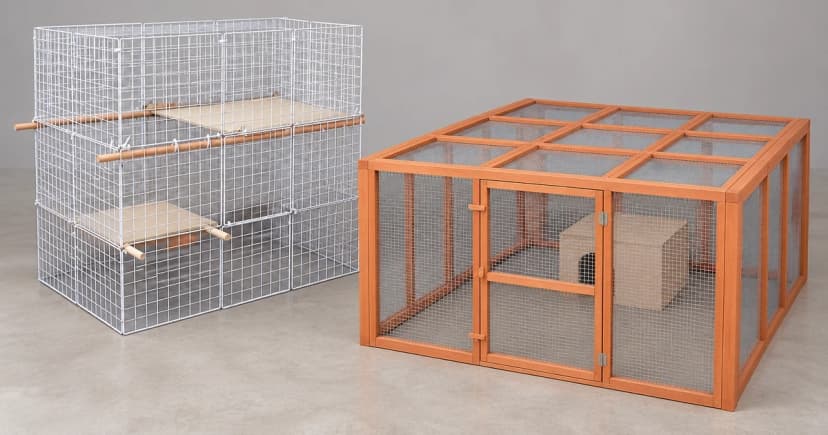
Because chinchillas are easily startled during daytime sleep, PDSA advises cleaning in the evening when they are naturally awake, and the RSPCA chinchilla behaviour guide emphasizes calm, gentle handling close to the floor. Set up a ventilated, secure holding enclosure with familiar cover before opening the main cage doors.
Step 2: Match Cage Base, Trays, Platforms, and Dust Baths to Their Own Care Rules
Inspect the cage base, pull-out metal or plastic pan, wooden jumping ledges, hideouts, and dishes as separate materials. Confirm your unscented pet-safe cleaner's label directions (permitted surfaces, dilution, contact time, and water rinsing) before applying it, and set aside a clean, dry handful of old bedding before stripping the tray.
For the dust bath, the RSPCA housing guide advises removing the bath or sieving the dust clean after each session so it does not collect droppings inside the cage. Care of the bath container itself (checking whether a plastic, ceramic, or metal bathhouse can be wiped or washed and dried completely) is separate from sifting or replacing the volcanic dust—see our dedicated guide to chinchilla dust-bath preparation and cleanup for bath timing, sand care, and container setup.
Step 3: Dry 100% Before Returning Your Chinchillas
Damp fur and humid bedding pose serious health risks for chinchillas, which is why PDSA explicitly requires the entire enclosure and all accessories to be completely dry before the animals return. After rinsing and drying every washed surface, spread fresh dry bedding mixed with the reserved clean handful, refit dry shelves and hideouts, and verify water delivery using our bottle flow and leak guide so a dripping spout cannot wet the clean floor.
Once your chinchillas are back inside with full access to hay, water, and hiding places, observe their normal evening activity and consult an exotic veterinarian if you notice signs of stress or behavior changes.