

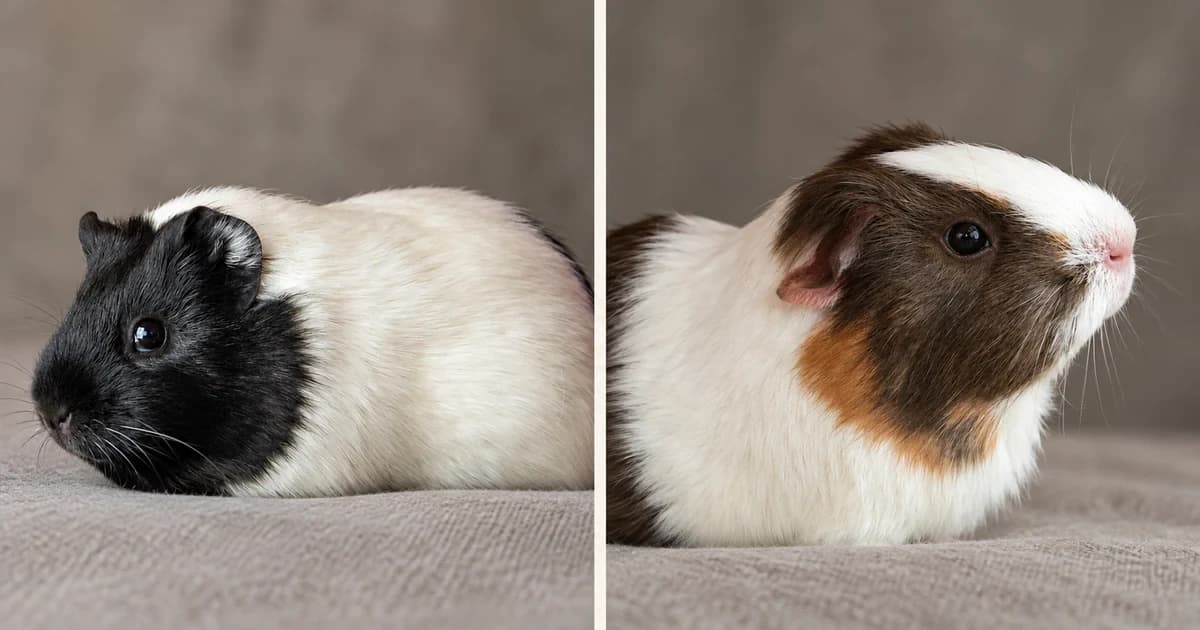
To set up a guinea pig enclosure before your pets arrive, plan the complete living and exercise arrangement together: verify that the indoor housing and exercise run meet minimum space conditions for your compatible group, line a solid floor with soft dust-free bedding and hay, provide at least one more hiding refuge than the number of guinea pigs, and place multiple hay and water stations within easy reach.
Plan the occupied space and keep main-area dimensions tied to exercise access
Blue Cross's guinea-pig care guide gives two different minimum indoor floor dimensions depending on whether your guinea pigs also have a separate exercise run. Never quote the smaller main-enclosure size (`5 ft × 2 ft`) on its own without the required `6 ft × 4 ft` exercise run:
| Housing Arrangement | Minimum Dimensions & Required Condition (Blue Cross) | Usable-Space & Group Check |
|---|---|---|
| Option A: Indoor main home + separate exercise run | At least 5 ft × 2 ft main indoor enclosure ONLY when paired with a separate exercise run of at least 6 ft × 4 ft. | Do not treat a 5 ft × 2 ft cage as the whole setup; verify the actual usable interior floor space for your compatible group after hides and bowls are placed. |
| Option B: Permanent indoor housing without a separate run | At least 6 ft × 4 ft of continuous indoor living space when no separate exercise run is provided. | Scale space upward for larger groups, and check internal floor measurements rather than external frame dimensions. |
Plan the enclosure for a compatible guinea-pig group with plenty of room to move and pass one another—and remember that rabbits are not safe cage companions for guinea pigs. If you are bonding unfamiliar guinea pigs, use our separate guinea-pig introduction guide rather than placing strangers straight into a finished enclosure.
Choose the site and prepare a solid, soft floor
The RSPCA's guinea-pig environment guidance calls for quiet, dry, well-ventilated indoor housing away from draughts, direct radiators or sun, and household predators. Any outdoor run or hutch requires shade, wind protection, weatherproofing, and secure predator-proof mesh.
Always use a solid cage floor—never exposed wire mesh, which injures guinea pig feet. Top the base with an absorbent layer and soft, dust-free hay for burrowing and foraging, avoiding coarse straw (which can injure eyes) and ”fluffy” cotton-like bedding that separates into thin strands. If you use a multi-layer fleece liner, follow its model-specific first-use preparation instructions and confirm that any required absorbent layer underneath is in place.
Make retreats, hay, and water accessible to every guinea pig
Following the RSPCA's guidance, provide covered hiding places that outnumber your guinea pigs by at least one (for example, at least three hides for a pair), choosing two-exit tunnels or wide hides with clear pathways between them. An open exercise floor without overhead cover leaves prey animals feeling exposed.
PDSA emphasizes constant access to fresh hay and clean drinking water. Spread hay and water stations across more than one spot so a dominant guinea pig cannot block a companion from eating or drinking, and run through our flow and leak check on every mounted water bottle before arrival.
Check the complete arrangement before collection
Before bringing your guinea pigs home, check every panel connector, door latch, ramp gradient, and bottle bracket against the equipment's assembly instructions so the entire living and exercise layout is secure and ready.