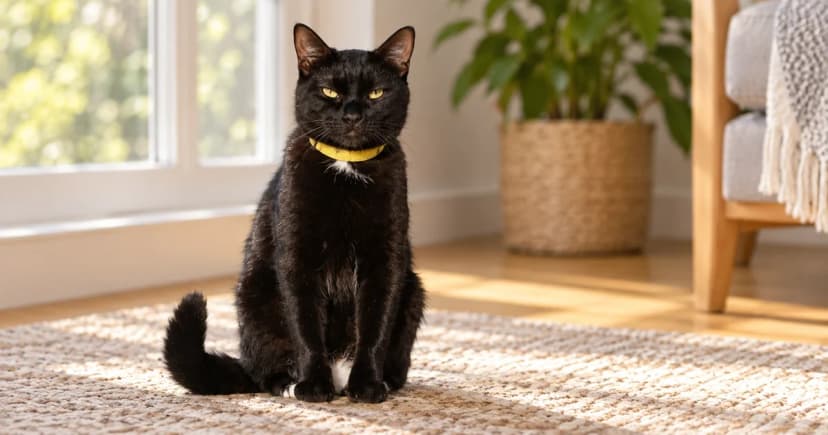
A cat collar can provide visible identification, but wearing one also introduces risks that a microchip does not. Whether to use a collar should depend on the job you need it to do, the individual cat and the equipment you can document. A collar is an option to assess, not a requirement established by a pet photograph or a product category.
Begin with identification that remains useful if a collar disappears. Then decide whether visible contact information adds enough value for your cat to justify trying suitable equipment and monitoring it.
Understand why welfare guidance does not give one universal answer
Cats Protection's collar advice emphasizes microchipping for identification and describes hazards from collars catching on objects or a cat's paw. It gives equipment advice for people who choose to use a collar rather than saying every cat needs one.
RSPCA Australia's guidance places more emphasis on visible identification: it recommends a breakaway collar with identification and says cats kept at home should ideally wear one in case they escape. It also identifies catching and fit hazards and recommends microchipping.
These sources prioritize the decision differently. Neither supports assuming a collar is harmless or treating visible identification as a substitute for a microchip. Discuss the individual tradeoff with your veterinarian when equipment tolerance or injury is a concern.
Define what somebody finding your cat could actually do
Blue Cross explains that collar identification can signal that a cat has a home and let a finder read contact details. Those benefits depend on the collar remaining attached and the information remaining readable and current.
Write down the information route you expect to work. Do you want a finder to see that your cat belongs to someone, read a phone number, or have the cat scanned? These are different actions. Looking owned is not the same as supplying a working contact route.
| Identification route | Question to resolve |
|---|---|
| Visible collar information | Can a finder read current contact details if the collar is still present? |
| Registered microchip | Are the registered contact details current, including after a move? |
| Both routes | Is each maintained independently rather than assuming one covers the other? |
Blue Cross specifically warns that outdated microchip records can prevent reunion. Updating the record remains an action you can take even while you are deciding about a collar. None of these routes guarantees that a missing cat will be recovered.
Assess the individual cat before adding equipment
A cat who repeatedly struggles with equipment, develops rubbing or tries to catch a paw or jaw in the band needs attention to that problem. Do not assume that a different color or a tighter adjustment resolves it. Blue Cross describes skin irritation and entanglement injuries; those are reasons to monitor the animal rather than rely on the collar's appearance.
Remove troublesome equipment and seek veterinary advice for injury or persistent discomfort. The question is whether this cat can use an appropriate setup, not whether cats in general can tolerate a familiar-looking band.
Keep the proposed setup simple
If you decide to try a collar, welfare guidance favors a cat-specific quick-release design and cautions against elasticated or non-breakaway alternatives. Establish the actual model's instructions and intended release mechanism. Our breakaway collar guide explains the separate construction and fit questions.
Assess accessories separately. Blue Cross advises keeping additions small and light and checking that they do not interfere with release or natural movement. Cats Protection warns that tags, bells and other additions can snag. Adding more equipment does not automatically improve identification.
When exploring breakaway cat collars, collect the missing model information before buying. This category does not authenticate a release threshold, individual fit or safe accessory combination.
Make a decision you can revisit
Record the intended benefit, the actual equipment and the observations that would make you stop. A collar chosen for visible identification can still become unsuitable as its condition, fit or your cat's response changes. If it comes off, keep the separate identification record maintained while you investigate the equipment.
A useful decision leaves you with a maintained contact route and a clear plan for observing the individual cat. It should not depend on reassurance from a collar label or a promise that every animal will benefit from the same setup.