Knowing how to teach a cat to go to a mat—often called station training—means teaching two distinct behaviors in sequence: arrival (looking at, walking to, and placing all four paws onto a flat mat) and waiting (remaining on the mat for a brief pause until you give a release cue). Because stationing is built on voluntary choice, a cat standing on a mat is always free to step off and has not granted permission for restraint, claw clipping, or forced handling.
1. Prepare a calm room and a pre-charged marker word
The Feline Veterinary Medical Association (FVMA) reinforcement toolkit recommends short, one-cat-at-a-time sessions in a quiet room using a food or play reward your cat genuinely values—and postponing training whenever a cat is unwell, in pain, hiding, crouching, growling, or hissing. Following Battersea's cat-training guidance, make sure your chosen marker word (or quiet click) is already paired with an immediate treat before placing the mat down; a brand-new word means nothing until it consistently predicts food.
2. Progress from mat arrival to brief waiting step by step
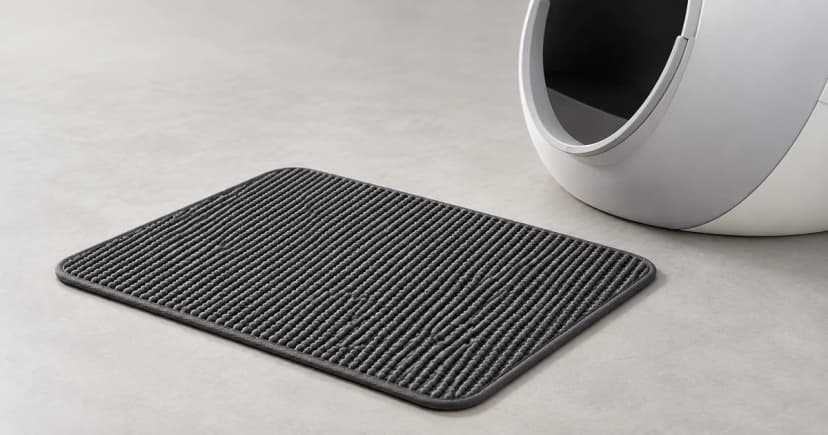
Based on the Humane Society Silicon Valley (HSSV) station exercise, place a flat, non-slip mat on the floor and advance through the four stages below—keeping arrival separate from waiting:
| Observable action by your cat | How and when to mark and reward | Next single change (or how to simplify if your cat leaves) |
|---|---|---|
| Stage 1: Looking at or approaching the mat Cat glances at the newly placed mat or takes a step toward its edge. |
Mark the exact moment your cat looks at or steps toward the mat and deliver a treat right near the mat edge. | Wait for your cat to touch the mat with one or two front paws on the next repetition; if they ignore the mat, toss a single reset treat a foot away so they can walk back toward it. |
| Stage 2: Arrival (All four paws on the mat) Cat steps onto the mat with two paws, then places all four paws inside the mat boundary. |
Mark as the fourth paw lands on the mat and deliver the treat on or right above the mat surface. | Repeat until your cat walks straight onto the mat with all four paws reliably; introduce your verbal station cue right before your cat steps onto the mat. |
| Stage 3: Brief waiting on the mat Cat arrives with four paws on the mat and remains there for a one- to two-second pause before moving. |
Pause briefly after arrival before marking and delivering the reward on the mat, gradually mixing in slightly longer pauses. | If your cat steps off before you mark, reset without scolding and shorten the pause so you mark while all four paws are still on the mat. |
| Stage 4: Release cue and small distance / distraction Cat waits on the mat while you take one small step back or introduce a mild distraction, then leaves after the release word. |
Reward on the mat during the wait, then say a consistent release word (such as "all done") and toss a final treat slightly off the mat to finish. | Change only distance or distraction—never both at once—and end the session after a few short successes before frustration sets in. |
3. Keep mat stationing distinct from postures and carriers
Stepping onto a flat mat teaches a location target rather than a specific body posture or an enclosed box. If you want your cat to fold its hindquarters on cue, use our separate voluntary sit guide; if your goal is preparing for travel or veterinary visits inside an enclosed box with a door, follow our step-by-step Carrier practice guide.