Teach a dog to drop a toy through a voluntary exchange, then connect that release to a cue. Taking an object from the dog's mouth does not show that the dog has learned what the word means.
This guide follows Battersea's written two-toy progression. It concerns an ordinary play session with a willing dog, rather than treating resource guarding or retrieving something dangerous.
Start with a familiar game
This method builds release into a game the dog already enjoys. If pickup and returning are still unfamiliar, work on our fetch foundations separately. Our gentle tug-play guide addresses that alternative game's movement and pauses.
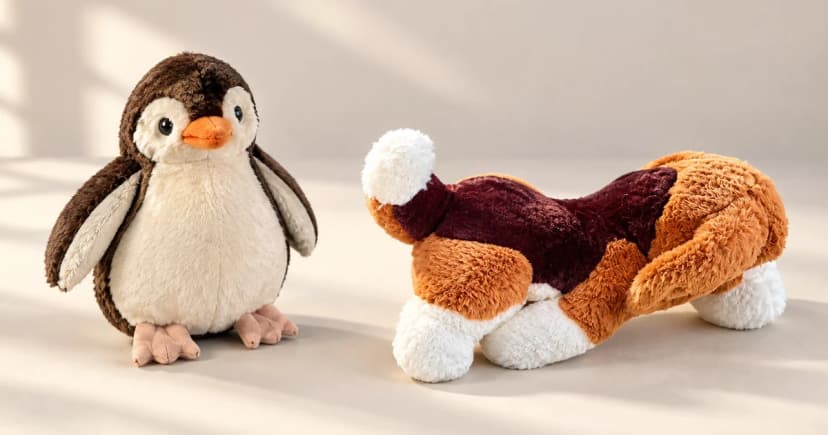
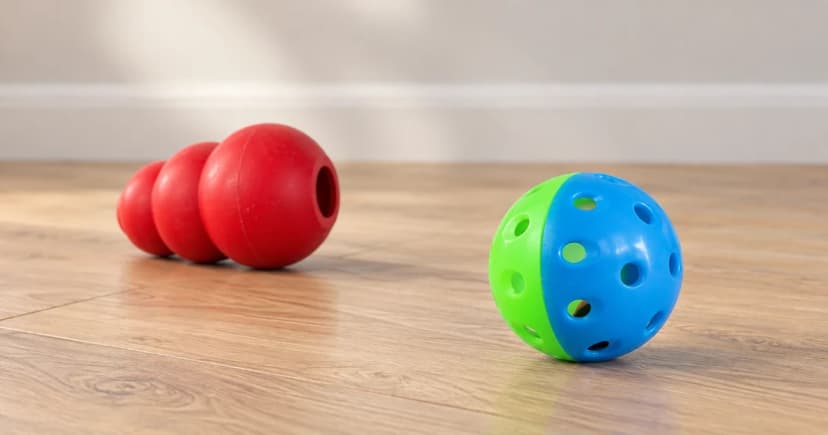
Choose equipment for the individual dog, rather than treating the two objects in an illustration as a recommended pair. Different toys can look equally interesting to a person without being equally rewarding to that dog.
Follow one two-toy progression
Battersea's toy-based method uses identical toys or two the dog values similarly. It can accompany an established retrieve or, with suitable toys, tug.
- Offer the exchange. During the familiar game, show the second toy and make playing with it appealing. Wait for the dog to release the first voluntarily.
- Reward the release. Mark that moment with a word such as “yes,” then immediately play using the second toy. It must be rewarding too.
- Exchange back. While the dog plays with the second toy, collect the first and repeat in the other direction.
- Add the cue after consistent exchanges. Say “drop” as the dog lets go. When that word reliably prompts immediate release, progress to asking without displaying the second toy. Keep rewarding the response.
Do not chase the dog or pull the toy from its mouth to complete an attempt.
Make the successful action clear
Battersea's training guidance emphasizes finding what motivates the individual dog and rewarding the desired action promptly. Motivation can change with the situation. A marker word can identify the moment; a physical clicker is not required.
Here, distinguish the release cue from the marker: one asks for the action, while the other identifies the action that earned a reward. Do not make a delayed reward the dog's only information about which moment mattered.
Stop when the situation calls for space
Not having learned the cue is different from showing signs of worry around an item. Dogs Trust's resource-guarding guidance describes possible signs including a tense or frozen posture, blocking access, growling or snapping. A single observation is not a diagnosis.
If guarding is a concern, stop approaching, give space and seek qualified behaviour support rather than continuing this exercise, chasing, cornering or punishing the dog. Arrange veterinary advice, particularly for a new behaviour change. Suspected swallowing or possession of a harmful item calls for professional advice, not an attempt to practise this lesson or reach into the mouth.
Keep a small learning record
Note the game and toys used, what happened before release, when you marked it, and the response you observed. Record uncertainty instead of calling an offered toy or spoken word a successful response. There is no completion deadline here.
Use the dog toy category to compare equipment types, then check the actual item's intended use and condition. Neither a photograph nor a product category demonstrates individual suitability, equal reward value or successful training.