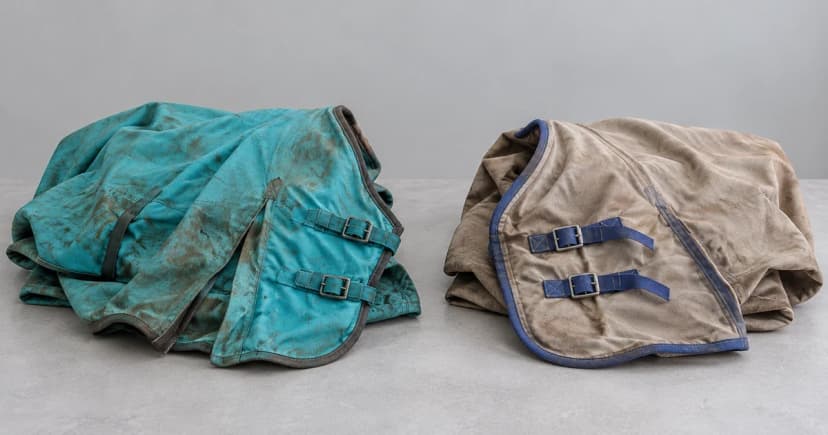
To wash a horse blanket, start with its care label and identify the complete item you are treating. Remove accessible dirt and hair, use the permitted washing and rinsing method, and finish the specified drying process before folding it for storage. A clean-looking outer panel does not establish that the lining, seams or straps are ready to pack.
This guide compares named care instructions and a written folding example. It does not provide one detergent, machine setting or waterproofing treatment for every blanket.
Make a care and condition record first
With the blanket off the horse, find the maker, model and care label. Identify detachable pieces and check whether their directions differ. Keep the label available while choosing between hand washing, a suitable machine or a professional blanket service.
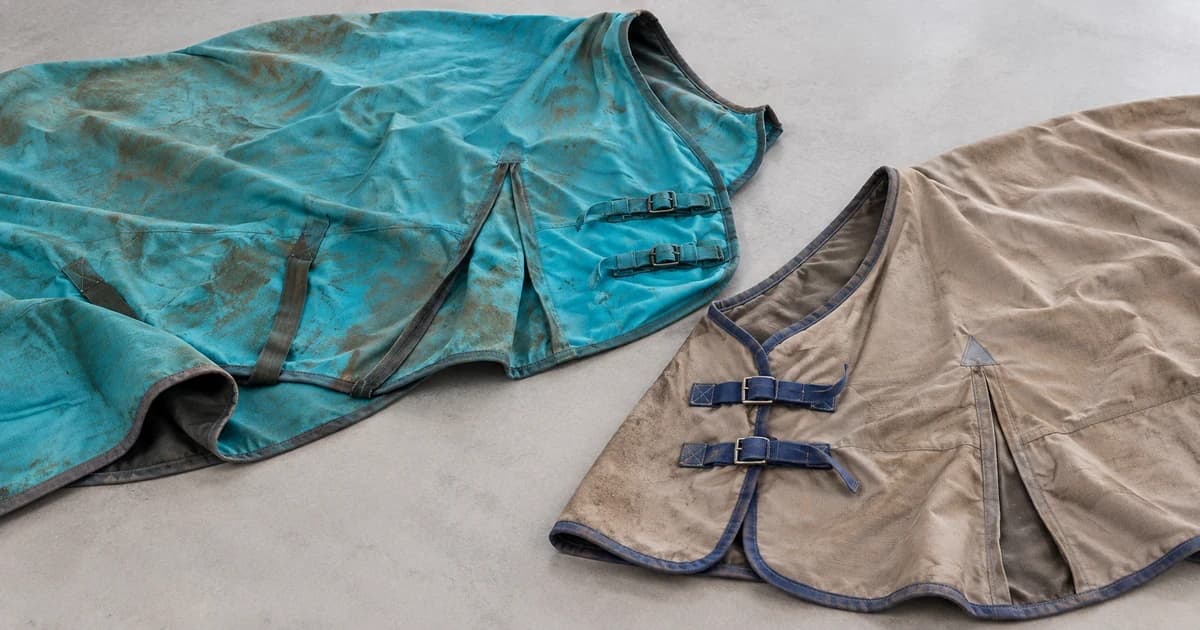
Horseware's washing and storage article calls for checking the outer fabric, stitching, lining, buckles and straps. It also describes professional washing and repair services as an option.
Record a tear, missing part or unclear fastening rather than treating washing as its repair. This guide does not supply glue, patching or buckle-repair instructions.
Remove loose material before choosing the wash route
For its blanket-care workflow, Horseware describes brushing dirt or mud from the exterior and straps and removing hair from the lining and seams. Its machine route uses a cool wash with enough machine capacity for the blanket. Its alternative hosing route uses gentle pressure, excluding a power washer.
The article specifies a blanket-formulated natural or non-biological wash, thorough removal of soap by rinsing, and natural drip drying without a tumble dryer.
Match those instructions to the actual item and label. Do not add a stiffer cleaning tool, stronger mixture or higher pressure simply because a mark remains. If the blanket cannot move adequately in the permitted machine, choose an appropriate service instead of forcing it into that drum.
Keep WeatherBeeta's machine and temperature conditions together
The care column in WeatherBeeta's blanket leaflet first addresses excess dirt and mud, using a hose or stiff brush. It then permits hand washing or a gentle machine cycle in a front-loading machine only.
The leaflet prints a cool-wash maximum of 85°F/30°C and specifies mild soap, thorough rinsing and line drying, never machine drying. Keep that printed temperature pair and the machine restriction within these WeatherBeeta instructions; they do not establish a universal limit or a precise conversion rule for other labels.
Compare the actual label with the proposed wash route before starting. A machine-wash permission does not remove its loader, capacity or cycle conditions. If the care information conflicts or leaves a material unidentified, resolve that question before selecting a treatment.
Finish drying before folding
Complete the maker's drying instructions with the whole item accessible. Check the lining, seams, folded edges and straps before packing; do not use the appearance of the upper face as your completion record. This guide supplies no universal drying timer or accelerated-heat method.
Keep waterproofing decisions separate. Washing, a dry appearance or a folded blanket does not demonstrate restored waterproofing.
Fold and identify the stored item
SmartPak's written folding instructions provide one packing example: lay the blanket on a flat surface, fold along the spine and tuck the belly straps into the center. Fold the back toward the middle, then the front toward the middle, and finally bring the bottom up to the top.
Use that example only after the actual blanket is dry and when its design and instructions permit. Do not force an unfamiliar hood, detachable part or fastening into a fold that does not suit it.
Horseware recommends a cool, dry storage location, prefers a breathable bag and suggests labeling the storage with the horse's name and blanket type.
Keep the care label, wash method, actual drying completion and any unresolved condition with that record. Storage preparation does not establish sanitation, fabric strength, a guaranteed service life or a successful waterproofing treatment.