A cat tunnel can be a place to duck out of view, pause between games or move through during play. Those possibilities help explain the appeal, but they do not tell you what your own cat wants. Some cats use a tunnel often; others investigate it once or prefer a different resting or play space.
The useful question is what happens when your cat has a choice. Watch the approach, time inside and way out. Keep a quiet retreat available as well as opportunities to play, and pay attention if hiding changes from your cat's usual pattern.
Cover and play are different uses
Cats Protection explains that hiding can be ordinary behavior, including finding a place to sleep or using cover while playing. A fabric tunnel can offer visual cover, although its suitability depends on the particular design and where it sits. A cat resting inside is not necessarily waiting for you to start a game.
During a game, a tunnel may become part of the route: a place to approach, disappear and emerge. Cats Protection's play guidance describes stalking, chasing and pouncing as parts of play. That supports offering an opportunity to play; it does not establish that a tunnel produces more exercise or that every cat enjoys one.
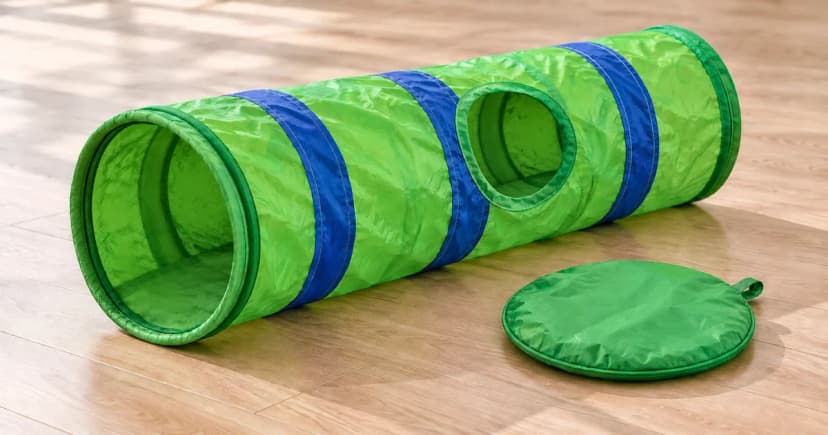
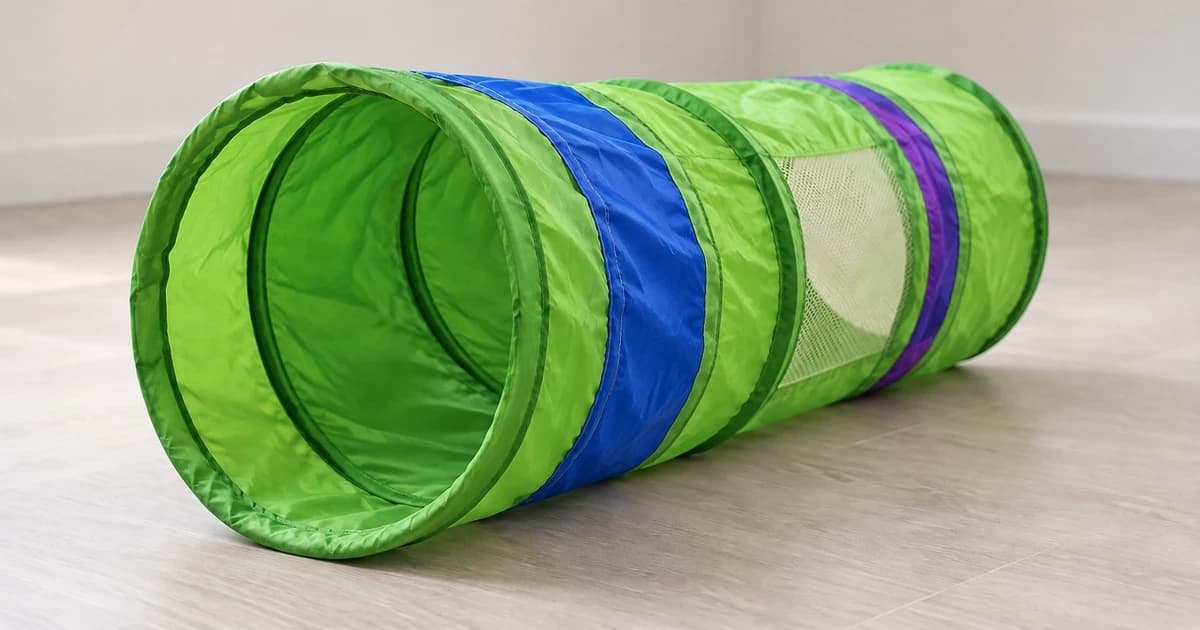
Tunnels also differ. For example, Catit's Vesper range describes a tunnel with openings and an attached toy. Treat those as features of that design, rather than a checklist every tunnel must match. An opening, texture or attached part that one cat uses may receive no interest from another.
Read the pattern before deciding what it means
Use a few ordinary observations rather than one dramatic moment. The following table offers practical responses, not a way to diagnose emotion or illness.
| What you observe | What to check next | A useful response |
|---|---|---|
| Your cat enters voluntarily and settles quietly. | Whether the location stays quiet and the exit remains available. | Let the cat rest. Offer a game later, outside that resting moment. |
| Your cat runs through during a toy game, then leaves. | Whether the play route stays clear and the toy remains supervised. | Keep the route open and let the cat choose whether to repeat it. |
| Your cat sniffs the tunnel and walks away. | Whether another resting spot or toy is preferred. | Accept non-use; do not place the cat inside to create a response. |
| Another pet waits at the entrance or blocks the route. | Access to other resting and play spaces. | Change the arrangement and provide separate options. |
| Your cat starts hiding much more, including outside play. | How this differs from the cat's normal behavior. | Contact your veterinarian rather than assuming the new tunnel explains it. |
Give the cat a choice of space and exit
The Feline Veterinary Medical Association's September 2025 environmental guidance recommends protected retreat spaces, ways to leave if threatened and separated key resources. In a household with several cats, assess whether each cat can reach resting, feeding and other resources without being challenged.
A low fabric tunnel is one possible feature of that environment. It does not replace every other retreat or elevated resting option. Place it where it does not obstruct an established route, and check how your cat uses the actual openings. A photo showing two ends cannot tell you whether furniture or another pet blocks one end in your home.
If you want to compare locations, change one thing at a time. Try a quieter position, then watch the next voluntary approach. Moving the tunnel, adding a toy and changing the play routine simultaneously makes it harder to tell which change mattered. There is no need to set a deadline for the cat to approve it.
Keep games separate from quiet retreat
For a cat that chooses tunnel play, use a suitable interactive toy outside an opening and allow an occasional catch. Keep your hands out of the role of prey. Supervise toys that could tangle or be swallowed, and check for loose parts or damage before the next session.
Do not poke through an opening to interrupt a resting cat or pull a cat out for a demonstration. Cats Protection advises leaving a hiding cat undisturbed. If a cat repeatedly leaves when play starts, pause the game and allow a choice of another activity. Repetition alone does not turn an unwanted game into enrichment.
Inspect the tunnel according to its own instructions. Loose attachments, a distorted rim or exposed frame need attention before further use. For the separate equipment task, see how to set up, inspect and store a collapsible cat tunnel.
Record three details if the preference is unclear
Write down the location, the cat's voluntary action and what happened next. A note such as "quiet room, entered after sniffing, rested and left through the same opening" is more useful than "loves tunnels." Repeat the observation during another normal opportunity, without pushing the cat into a performance.
If the pattern remains neutral, offer another type of play or resting space. Our guide to choosing toys for a cat can help you consider alternatives. If a tunnel fits the pattern you observe, compare the actual layout and care instructions in cat play tunnels. Choose around the individual cat's behavior, available space and the specific equipment, rather than a promise that every cat should like the same thing.