An aquarium filter needs several kinds of attention, and they do not share one deadline. Check that the equipment is operating, remove trapped debris from the components the manufacturer permits you to clean, and replace consumable media according to its own instructions. A monthly reminder for one mechanical pad does not mean opening the entire filter and replacing everything every month.
The useful answer to “how often?” is a short record for your actual filter: which part needs checking, what condition or interval triggers attention, and what action its instructions allow. This guide helps you build that record from published manufacturer guidance. It is not a water-treatment plan or a report of hands-on filter testing.
Start with the components, rather than the filter name
A canister, cartridge or sponge describes equipment, but it does not tell you the maintenance rule for every material inside it. Aqueon’s filtration overview separates mechanical media that trap particles, chemical media that bind dissolved substances, and biological filtration. A single unit may combine these roles. Write down the actual installed components instead of treating “filter cleaning” as one operation.
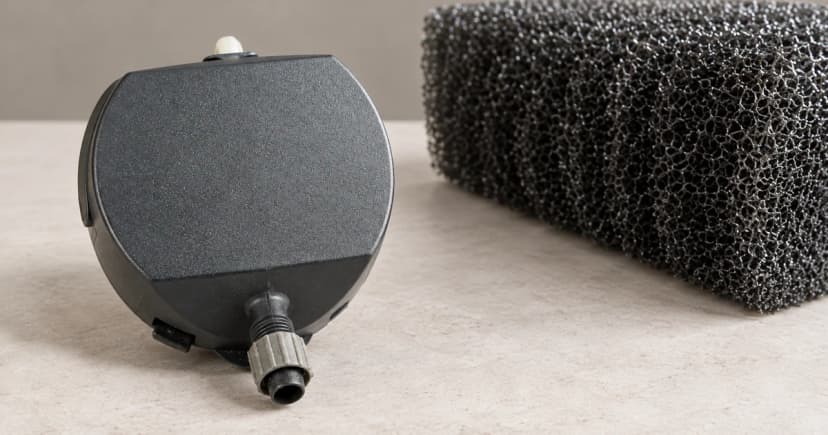
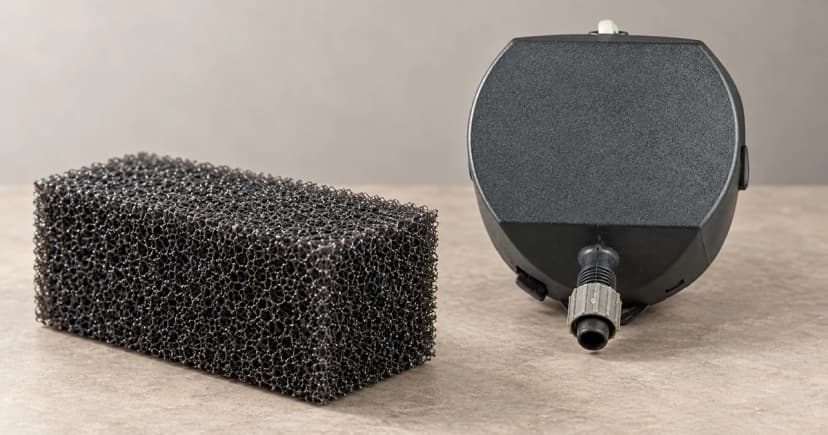
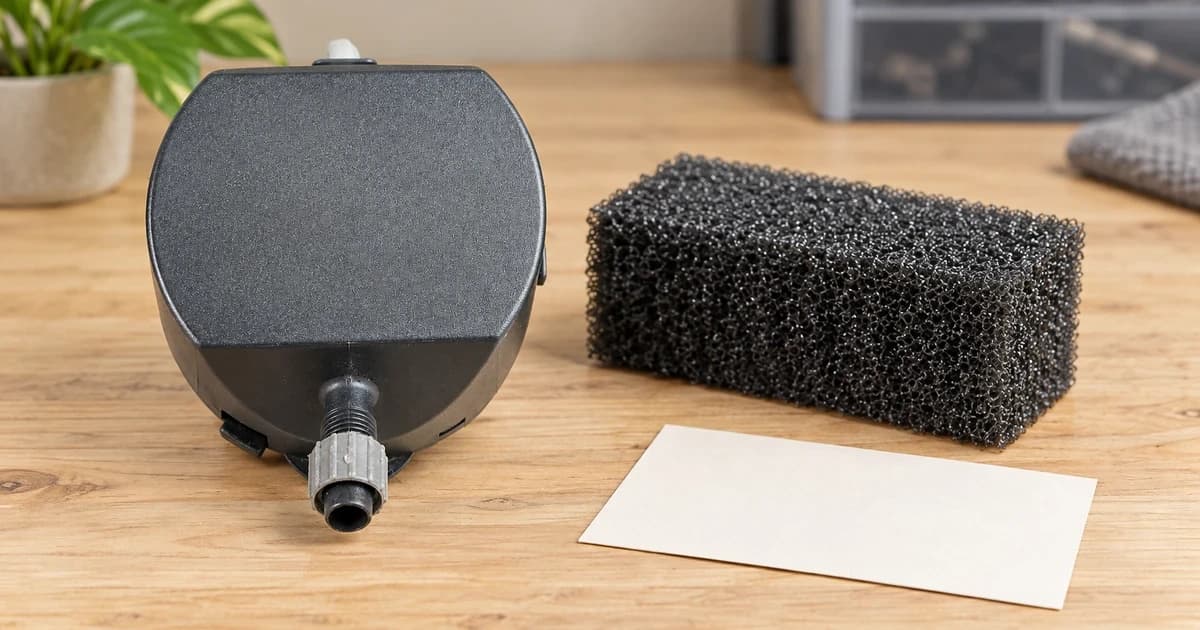
For example, a foam block can have both mechanical and biological roles. Its porous appearance does not tell you whether to rinse it, replace it, or use a particular kind of water. Similarly, a disposable cartridge and a reusable pad are not interchangeable maintenance tasks. The replacement component’s label matters as much as the outer filter model.
| Part or task | Question to answer | What a reminder should say |
|---|---|---|
| Equipment operation | What normal operation and warnings does this model describe? | Check the specified operation; record a change or warning. |
| Mechanical pad, floss or sponge | Is it reusable, and what cleaning method or replacement trigger applies? | Inspect or service this named component using its instructions. |
| Chemical medium or cartridge | What replacement interval and conditions does this particular medium specify? | Check or replace the named medium, rather than wash all media. |
| Biological medium or a dual-purpose sponge | What handling and maintenance restrictions does its maker give? | Follow the component-specific handling rule; do not borrow a chemical-media interval. |
This table organizes questions; it does not assign intervals. When browsing aquarium filtration equipment, keep the model name, installed media and supplied instructions together.
What the published timing examples actually cover
In Fluval’s maintenance article, checking filter operation is a daily observation, while rinsing accessible mechanical media is described as an at-least-monthly task for its filters. Those are different actions. Neither statement tells you to replace every medium or dismantle every pump daily or monthly.
Aqueon gives a conditional four-to-six-week replacement example for chemical absorbing media, depending on the filter, water and fish load. This is not a four-to-six-week washing rule for a canister, nor a replacement rule for every sponge. If you use a different chemical medium, its own current instructions need to supply the applicable interval.
The Hikari Bacto-Surge sponge-filter page illustrates another reason to read the whole care section. It gives a six-month sponge replacement recommendation in its directions, but later also describes replacement as dependent on aquarium load and fish type. That combination does not establish one mandatory deadline for all sponge filters.
Do not average these examples into a new interval. They concern different components and different products. The published numbers are useful only when the equipment, material and task match.
Make a maintenance record you can use
Create one entry for each serviceable component. A simple notebook is enough; the important part is separating the action from the reminder. Leave an unanswered field blank rather than filling it with a guessed interval.
- Identify it: record the filter model, component name and replacement part number where available. “Black sponge” is less useful than the actual maker’s component description.
- Record the instruction: save the manual or component label and its relevant cleaning or replacement guidance. Note whether the instruction gives an interval, a condition, or both.
- Name the action: distinguish an external operation check, an authorized rinse and a replacement. Include any model-specific shutdown, access and restart directions from the manual.
- Log what you actually did: record the date, component and action after the work. A future reminder is not evidence that the work happened.
- Set the next check: use the applicable instruction and the previous observation. If the source says “regularly” without a number, keep that uncertainty visible and obtain a specific answer for the product.
A useful blank entry might read: “Component: ___; instruction and source: ___; attention trigger: ___; permitted action: ___; last observation or service: ___; next check: ___.” The blanks are a worksheet for your equipment, not a claim that a maintenance test has been carried out.
Keep observations concrete. Record an equipment warning or a visible change in the normal operation described by its manual, rather than diagnosing its cause from a glance. A reminder calendar cannot identify an electrical or mechanical fault.
Choose the rinse method from the actual media instructions
Cleaning liquid is another component-specific choice. Hikari’s Bacto-Surge directions specify rinsing its sponge block with water taken from the aquarium and exclude tap or hot faucet water. Its reinstallation directions also describe submerging and gently squeezing the sponge to release trapped air. Keep those details attached to Bacto-Surge; they are not permission to squeeze, immerse or rinse every cartridge, motor or chemical medium.
Before buying a replacement from mechanical filter media or biological filter media, verify its intended role and care requirements. Similar-looking pieces may have different replacement and handling instructions. Do not add detergent, a disinfectant or another cleaning treatment merely because a material looks washable.
Also separate a media-care instruction from access to the surrounding equipment. A sponge-rinsing paragraph does not explain how to open an unidentified canister, remove a pump or restart that model. Use the filter manual for those operations. If either the component or the access procedure remains unidentified, resolve it before proceeding.
Review the record when something changes
Installing another filter, changing a cartridge type or replacing a reusable pad with a different medium can make an old reminder inaccurate. Update the component entry when the equipment changes. Preserve the earlier service dates, but attach the new instruction to the new component.
A useful schedule therefore contains more than dates: it tells you what to observe, which part to service and which instructions to follow. That is more informative than a universal weekly teardown or monthly replacement rule. It also leaves unanswered product questions visible instead of turning them into confident advice.
Research basis: the linked manufacturer guidance supports the named component examples. Our editorial policy explains how researched equipment guidance differs from hands-on testing.