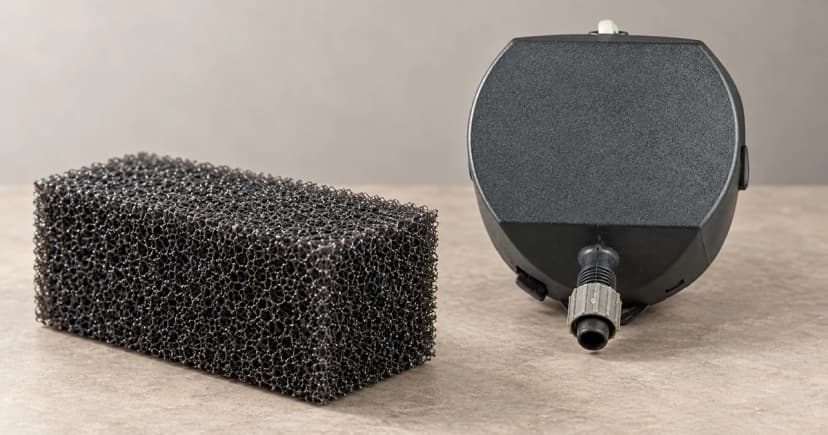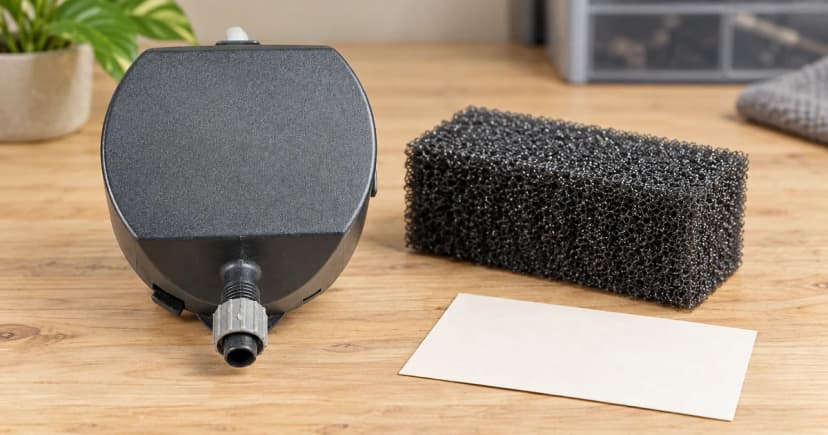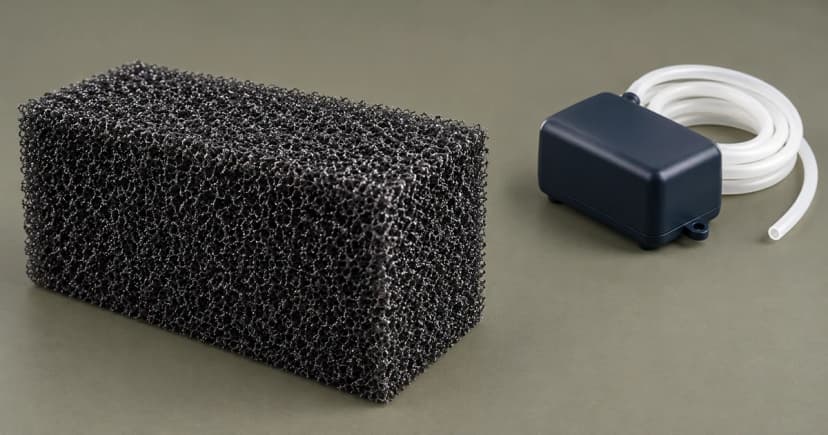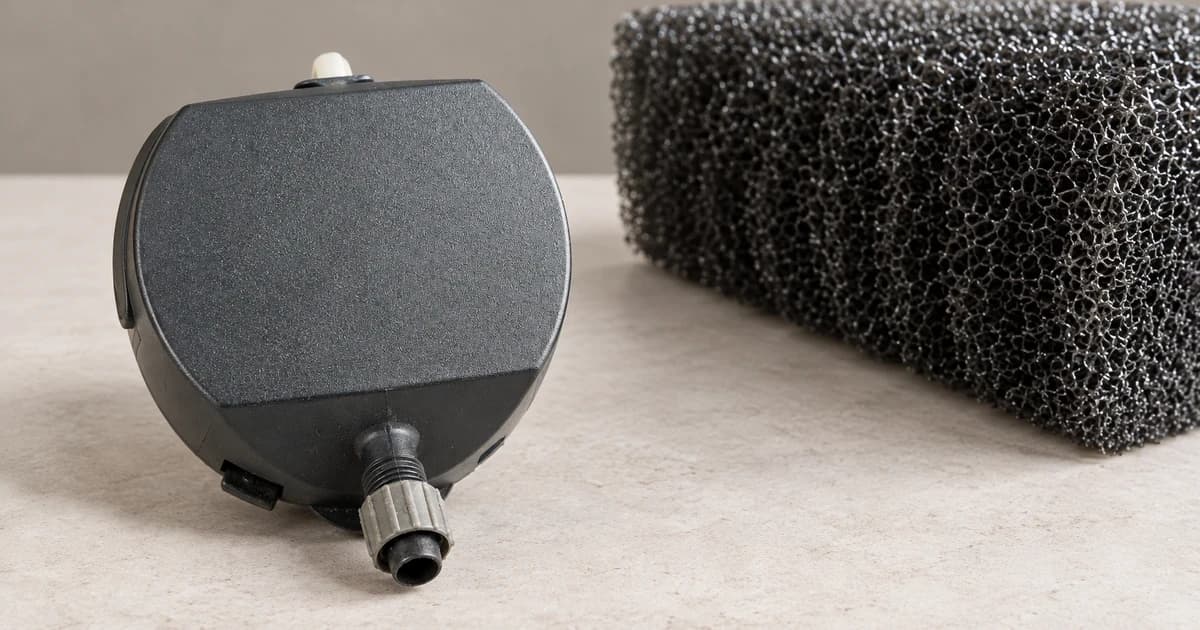
The best saltwater aquarium filter is the one that supplies the filtration role your planned system actually needs, with space to reach its components. A media filter with a surface inlet and a package containing a separate DOC skimmer are different purchases. Compare their documented contents before choosing a location or treating a tank-volume label as the answer.
Start with a system inventory
Write down the equipment you already have, then identify the missing purchase: a housing for filter media, an additional intake route, or a separately specified skimmer package. Keep that list beside the tank measurements. A useful comparison should show what each product includes and what still needs confirmation, rather than assume three devices with similar ratings perform the same complete job.
For the best marine aquarium filter for your arrangement, compare three questions: where the equipment sits, which components are actually listed, and how you will reach them later. The examples below are manufacturer documentation, not a tested ranking or a claim that any one unit completes a marine system.
Compare three documented equipment arrangements
Seachem Tidal 75: a hanging media basket with two intake routes
Seachem’s Tidal 75 page identifies a saltwater-compatible impeller, a removable media basket, a surface inlet and a telescoping underwater intake. A dial adjusts their intake balance. Its listed package includes foam and Matrix bio-media.
This is a candidate when you want an accessible hanging media basket and can accommodate its clearances. The maker lists 3½ inches of wall clearance and 1¾ inches of internal tank clearance; those are separate measurements. Leave room to lift the basket as well as fit the housing.
The surface inlet called a skimmer does not establish that a separate DOC-skimmer module is included. Check the exact bundle too: the text describes an optional heater clip while the contents list a heater holder. Confirm the regional electrical version before ordering.
EHEIM classic 250: an external media container and hose route
EHEIM’s item 2213010 page explicitly lists seawater use. It describes an external canister accepting pads or loose media, with a spray bar, inlet pipe, hose and installation accessories. The classic 250 description also lists a basket with coarse, fine and activated-carbon pads.
Compare this arrangement when you want the media container outside the display and have a suitable hose route and service location. The page gives a 160 mm body diameter and 3 L filter volume; measure the available space without substituting the package dimensions for the device.
Verify the purchased media bundle and each medium’s marine suitability separately. This page identifies a EUR plug and 50 Hz specifications, so its published pump figures do not establish a US 60 Hz version’s output.
TUNZE Reefpack 250: a documented multi-component architecture
The documented package separates a DOC Skimmer 9004 from a mechanical/chemical Filter 3162 and includes a 13 L refill-water storage tank. This makes the purchasing distinction visible: the separate skimmer, media-filter housing and storage container have different listed roles.
The page specifies a Magnet Holder for glass up to 12 mm and dimensions of 110 × 180 × 305 mm. Do not assume those dimensions include the separate reservoir or the clearance needed for access. A refill reservoir also does not establish that an automatic water-level controller is supplied. Compare the complete contents of any current alternative, not just its family name.
Make a purchase sheet before choosing
- List the missing roles. Record what your existing equipment supplies and the component you are considering adding. Keep a surface-water intake distinct from a separately listed DOC-skimmer unit.
- Draw the space and access route. Mark the rim, glass thickness, wall gap, cabinet space and hose path where relevant. Include space to remove the basket or reach the container, not merely store the equipment.
- Request the exact regional bundle. Obtain the model number, electrical version, included media, mounting parts and current instructions. Record unresolved dimensions or accessory requirements as questions for the maker.
- Plan component access. Identify which items must be reached for their prescribed care. Use the specific instructions and keep a filter-maintenance record, rather than inventing one cleaning interval for the whole system.
Browse aquarium filtration equipment once that sheet is complete. Compare the actual hanging-filter, canister-filter or protein-skimmer category against the role you identified. Choose from confirmed components and practical access, with the remaining system requirements settled before purchase.