An automatic litter box needs a decision about the particular cat, model and operating mode. The category name cannot establish that every cat can use every machine. Find the matching instructions, check the restrictions for every cat with access, and keep a usable alternative when a requirement is unresolved.
The examples below show why a body-weight threshold and an age restriction are different checks. They are manufacturer instructions, not Pawlivy safety tests or evidence that one design protects every cat.
Identify the machine and all the cats that can reach it
Write down the brand, exact model and the instructions you are using. “ScoopFree” or “Litter-Robot” alone can cover different products. Check the model label against the document rather than choosing instructions because a photograph looks familiar.
Next, list every cat that can enter the room. A machine intended for an adult cat may also be accessible to a smaller kitten. Record the age or body weight the relevant instructions require; leave an uncertain value unresolved rather than estimating eligibility from appearance.
Separate three questions: can the cat enter and leave, does the maker permit this cat to use this mode, and is the equipment set up and maintained as directed? Passing one check does not answer the others.
Keep these two model restrictions separate
Litter-Robot 4: Whisker's model-specific FAQ describes laser and weight detection and says its SmartScale does not recognize kittens weighing less than 3 lb. Those kittens must not use it in automatic mode. The FAQ describes a separate supervised approach involving the unit being off or unplugged between cycles.
That alternative has its own sequence; it is not permission to leave automatic operation enabled or a procedure to copy to another machine. This guide does not turn the FAQ into a cycling tutorial. If you need that alternative, consult the complete matching instructions and clarify any uncertainty with Whisker.
PetSafe ScoopFree SmartSpin: PetSafe's SmartSpin acclimation article says to leave the litter box unplugged if the cat is younger than six months, until the cat reaches six months. It also begins introduction with the unit unplugged and recognizes that adjustment varies between cats.
This is an age instruction for SmartSpin. Reaching another maker's weight threshold does not cancel it, and this page does not establish the rules for every product carrying the ScoopFree name.
These examples demonstrate different conditions, not competing universal minimums. Use the requirements for the actual machine; do not average them or select whichever lets you enable automation sooner.
Check access and keep another usable toilet available
Cats Protection's toileting guidance emphasizes individual tray suitability, room to turn, and low sides for cats with mobility difficulties. It suggests offering different tray types when preference is uncertain. These are welfare and access considerations, not certification of an automatic mechanism.
Its advice also treats a sudden change in toileting as a reason to consult a veterinarian first. Do not assume that avoiding a new machine proves stubbornness, a failed sensor or a particular medical condition.
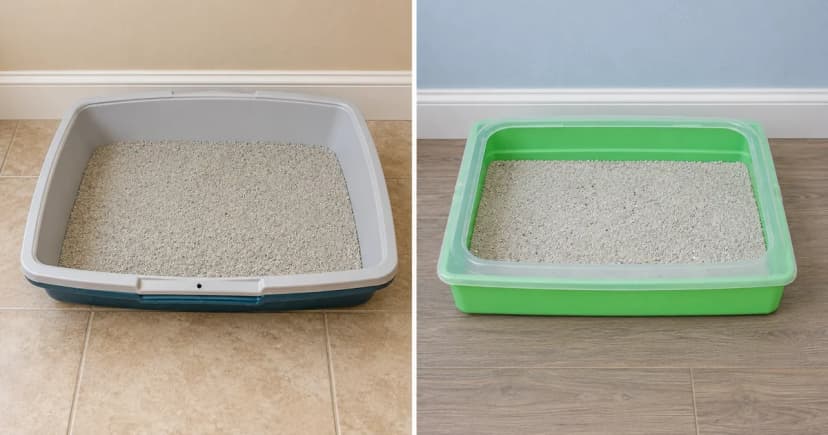
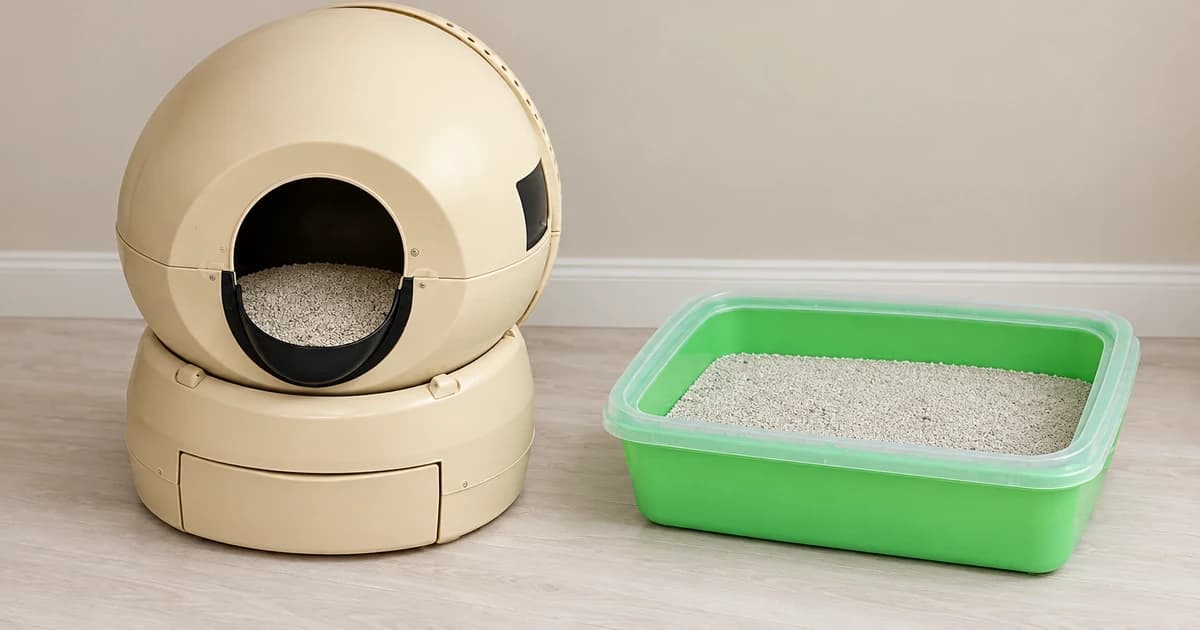
Keep an ordinary, accessible open litter pan usable while a powered option is being assessed. A familiar alternative should remain clean and reachable. The objective is dependable toilet access, not making the old option unpleasant to encourage a switch.
For actual entrance and interior measurements, use the separate litter-box size guide. A large-looking outer shell does not supply those measurements.
A useful message includes the exact model and the specific uncertainty:
- Which age, body-weight or other restrictions apply to every cat that can access this unit?
- What installation conditions and maintenance checks does this model require?
- If a cat does not qualify, is any alternative mode permitted, and where are its complete instructions?
- What should you do if the equipment behaves unexpectedly or reports a fault?
Record the answer and its document reference. A seller's general “pet safe” description, an attractive enclosure or a sensor name does not resolve a missing model instruction. Leave the automatic-mode decision pending when the answer remains unclear.
Record the decision without treating it as a guarantee
Update it when a new cat gains access or you change equipment. A cat entering once is an observation, not proof that the machine's protective functions have been tested.
Automation also leaves a separate maintenance task. Follow the model's care directions and use our litter-box cleaning guide to distinguish waste removal from washing permitted components. The self-cleaning equipment category is a place to compare documented designs, not a safety endorsement. Our editorial policy explains how source-based guidance differss from product testing.