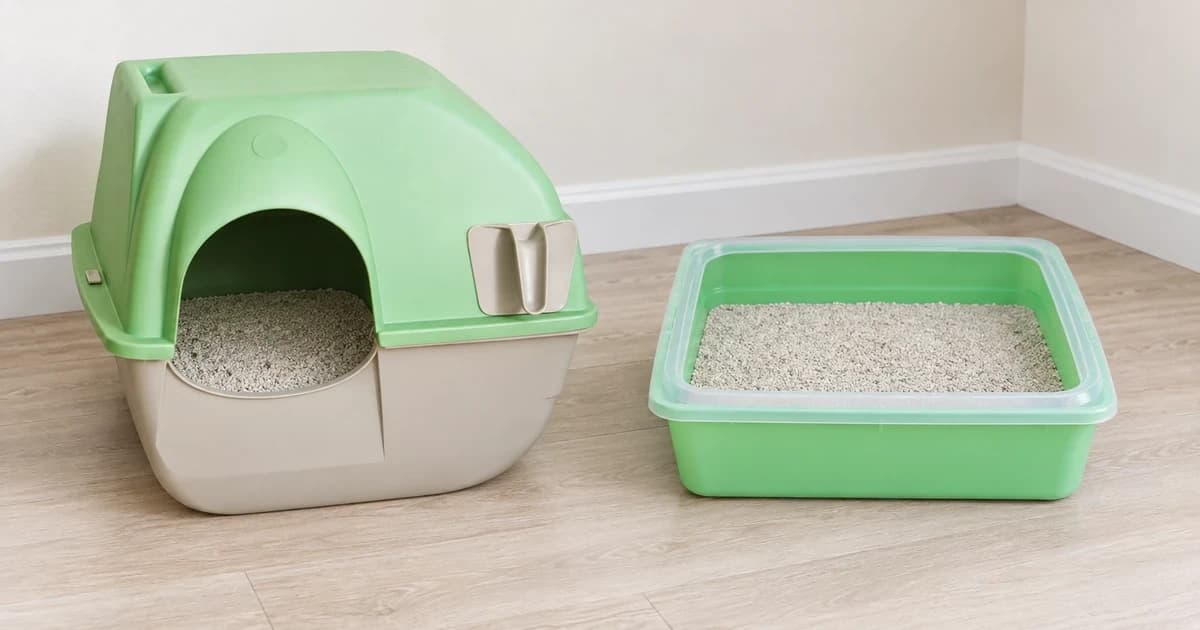
When asking are covered litter boxes bad for cats, the honest answer is that a hood suits some individual cats while others prefer an open pan. A plastic cover by itself does not make a litter box universally good or bad. What matters is whether your cat can enter, turn around and exit without feeling cornered, whether a swinging flap gets in the way, and whether the hood hides waste buildup from your daily cleaning checks.
What the covered-versus-open study found (and its exact conditions)
Grigg, Pick and Nibblett's 2013 preference study tested whether healthy cats favored covered or uncovered pans when given both simultaneously. Because the headline finding (“no significant overall difference”) depends heavily on how the experiment was set up, read the study results alongside its conditions in the summary card below:
| Study element | Documented detail in Grigg, Pick & Nibblett (2013) |
|---|---|
| Enrolled vs. analyzed cats | 28 indoor cats with no recent history of elimination disorders enrolled; 1 excluded for owner non-compliance, leaving 27 cats analyzed. |
| Individual preference breakdown (27 cats) | 19 cats showed no statistically significant preference, 4 cats preferred the covered box, and 4 cats preferred the uncovered box (19 + 4 + 4 = 27; no significant group-wide difference). |
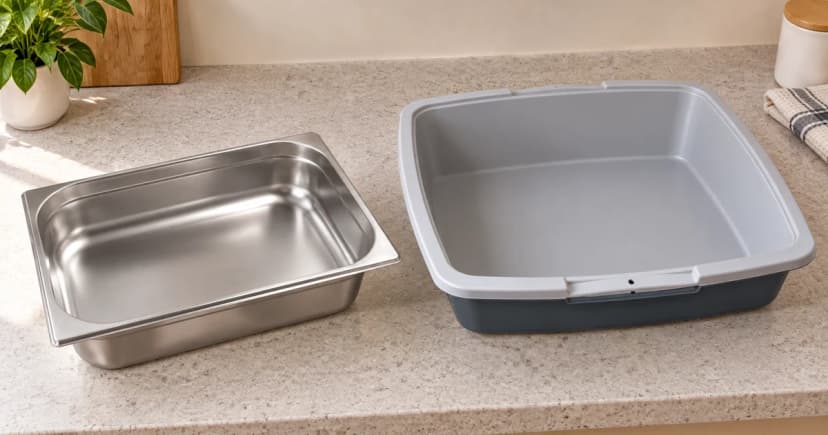
| Experimental setup & 14-day conditions | 14-day trial; each cat had exclusive single-cat access (cats in multi-cat homes were separated); researchers used oversized boxes built from matching large storage tubs filled with the same litter and scooped daily. |
| What the study cannot settle | Does not represent cramped commercial hoods, unscooped pans, shared multi-cat hallways where one cat guards the doorway, or cats with active house-soiling; measured box visits rather than respiratory exposure or universal comfort. |
Because eight of the 27 analyzed cats still had a clear individual preference (four for covered, four for open), the study supports observing your own cat's choice under clean, spacious conditions rather than assuming every cat accepts any hooded tray.
Privacy for a cat and concealment for an owner are different
A hood keeps litter clumps out of human sight, which appeals to people in small apartments, but visual concealment is not the same as a safe toilet route for a cat. The AAFP and ISFM feline house-soiling handout advises against placing boxes where a cat can be trapped inside a dead end or blocked by another pet.
Look at the whole approach path: an open pan tucked inside a tight closet or behind a noisy appliance can still feel like a trap, while a hooded box with a wide opening in a quiet room offers a different experience. In multi-cat households, swapping a lid alone will not solve a bottleneck if another cat controls the hallway.
Treat the swinging flap as a separate feature
Cats Protection's toileting guidance notes that while some shy cats appreciate a hooded tray, the swinging plastic door flap should be removed. A fixed roof and a moving door present two different physical hurdles.
When comparing covered litter boxes, check whether the front flap detaches cleanly and use our litter-box size guide to verify interior standing height and turning length. For senior cats or cats with stiff joints, Cats Protection recommends low entry sides so stepping in remains effortless.
A hood must not hide your daily cleaning checks
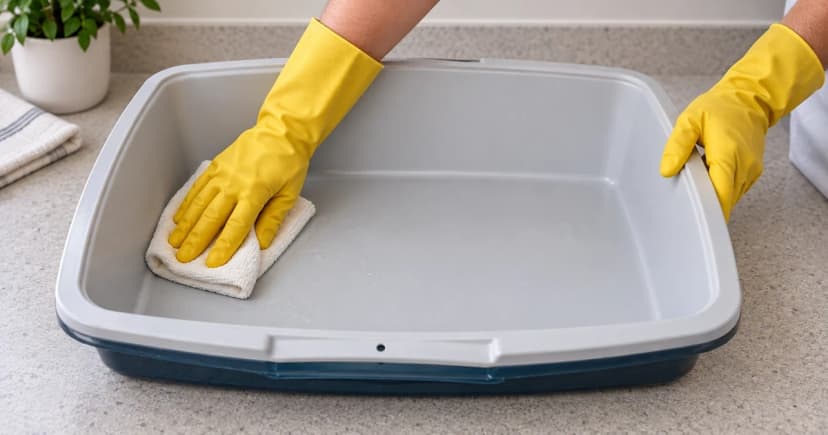
Cats Protection cautions that enclosed trays trap odors inside and must be kept scrupulously clean. Because a solid hood blocks your casual view as you walk past, lift or hinge back the cover every day to check the entire litter bed, and follow our litter-box washing guide for routine pan care.
Offer an individual choice and seek vet care for sudden changes
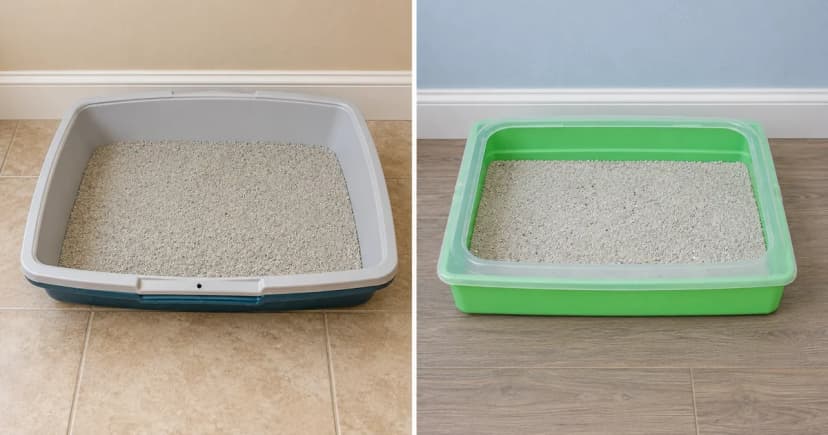
If you want to learn what your cat prefers at home, set a clean covered box (with the flap removed) and a clean open litter box using the same familiar litter and track which tray receives comfortable, repeated use, whether the entry route stays clear, and whether waste is scooped daily.
If your cat suddenly starts urinating or defecating outside the box, contact your veterinarian promptly. Both the AAFP/ISFM handout and Cats Protection emphasize ruling out medical causes first rather than punishing the cat or treating new house-soiling as a lid experiment.