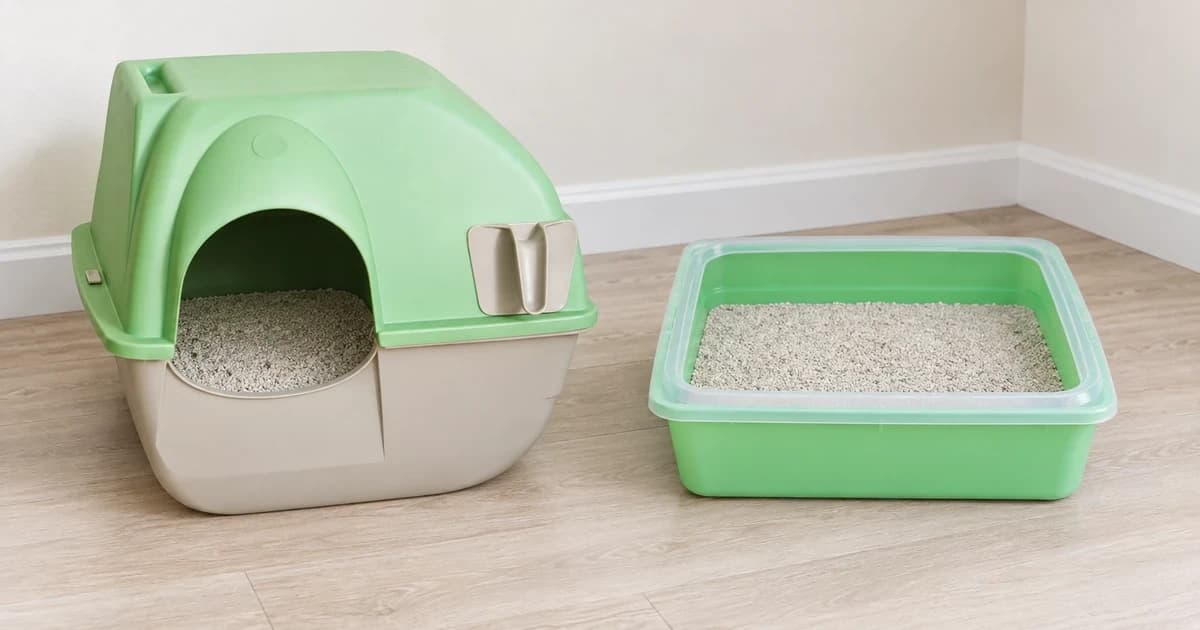
A covered litter box can suit some cats, while others prefer an open pan. The cover alone does not establish whether a box is a good choice. Look at your cat's use, access and ability to leave, and whether the hood makes it harder for you to notice waste and keep the box clean.
The useful question is whether this particular arrangement works for this cat. Research on covered and open boxes supports individual choice, but its results need to be read alongside the conditions in which the boxes were used.
What the covered-versus-open study found
Grigg, Pick and Nibblett's original study enrolled 28 cats with no recent history of elimination disorders. One was excluded for owner non-compliance, leaving 27 in the analysis.
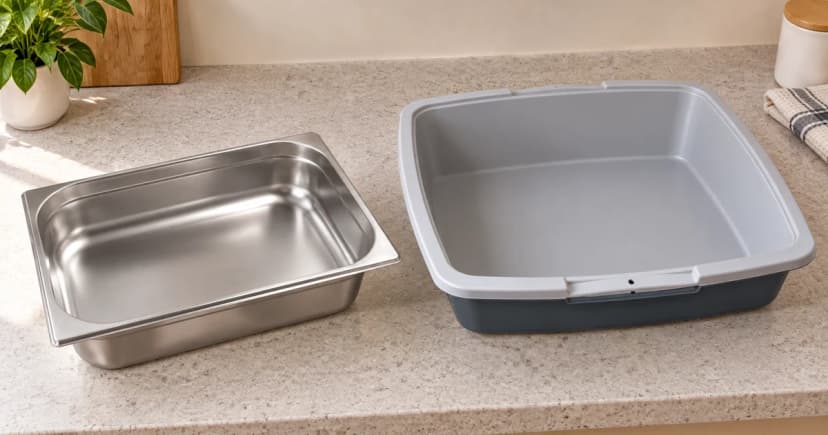
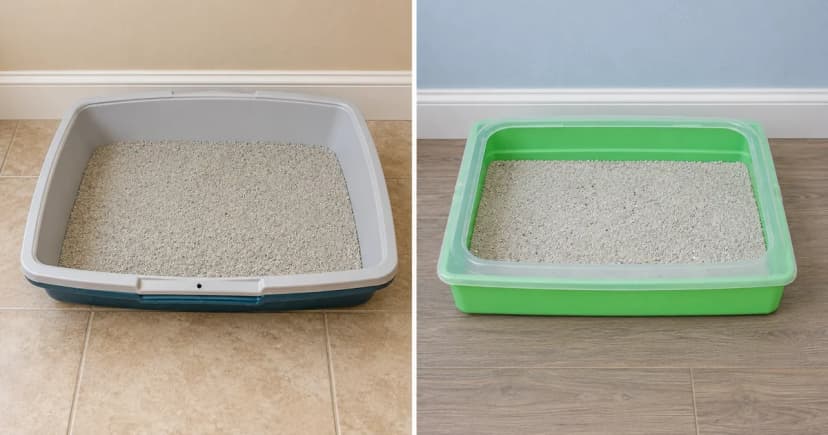
Each cat had exclusive access to a covered and an uncovered box for 14 days. The researchers used large boxes made from matching storage tubs, the same litter and daily scooping. Cats from multi-cat homes were separated from the other cats during the study.
Overall use did not significantly differ between the styles. Nineteen cats showed no significant preference; four preferred covered and four preferred uncovered boxes. That result supports offering a choice rather than claiming all cats want the same design.
These large custom boxes do not represent every commercial model. The small sample excluded cats with recent elimination problems and did not test shared access. The study measured use, rather than universal comfort or health safety.
Privacy for a cat and concealment for an owner are different
A hood can hide waste from view. That may appeal to an owner, but it does not tell us how the cat experiences the box. A quiet toilet area is useful only when the cat can reach and leave it without being cornered.
The AAFP and ISFM's house-soiling handout advises avoiding places where a cat could be trapped or another cat could block access. This applies to the whole arrangement, including the room and approach, rather than just the label on the box.
For example, an open pan placed inside a narrow cupboard still has an enclosing doorway. A covered box placed in an accessible area presents a different situation. Evaluate what the cat actually has to pass through; “open” and “covered” are only part of that description.
Do not assume a cat entering the box once proves comfort, or that waiting nearby proves a dislike of the hood. Note repeated ordinary use and the circumstances around it. If another animal controls the approach, changing the lid alone may leave that problem in place.
The flap is another part of the choice
Cats Protection's toileting guidance says some nervous cats may appreciate a hooded tray, but recommends removing the flap. An enclosing hood and a moving door are separate features, so a cat's response to one need not describe the other.
When comparing covered litter boxes, check whether a flap can be removed according to the actual item's instructions. Do not force the cat through it to demonstrate use. For fit and entrance measurements, use the separate litter-box size guide rather than assuming a hood's outside dimensions describe the usable space.
An easy entrance matters for older cats or those with mobility difficulties as well. Cats Protection recommends low sides for cats that have trouble getting in and out. A preference for privacy should not outweigh a practical access problem.
A hood should not hide your cleaning checks
Cats Protection cautions that hooded trays can retain odors and should be kept very clean. Lift or remove the cover as the product allows so you can inspect the entire pan. A tidy-looking exterior cannot show you whether waste remains inside.
The study's daily scooping was one condition of the experiment; it did not establish a universal schedule. Inspect the actual box and maintain it appropriately.
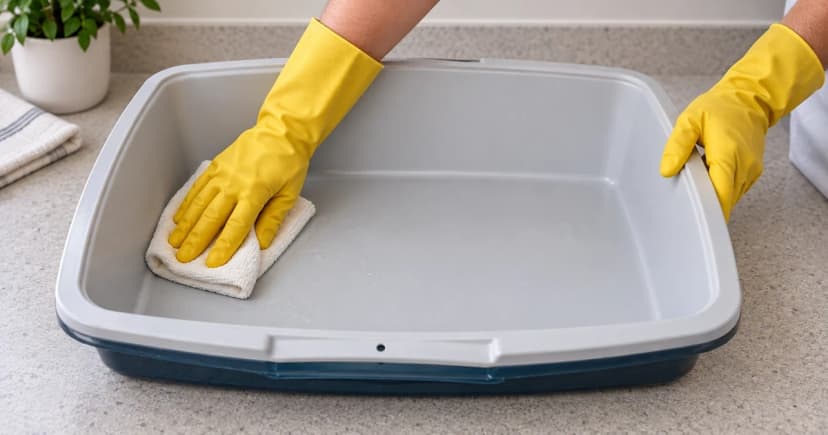
For the cleaning process, use the separate litter-box washing guide. The choice between a hood and an open pan does not remove that maintenance task.
Offer an individual choice without making a diagnosis
If you are unsure which style your cat likes, Cats Protection suggests offering two kinds and seeing which the cat uses. Keep a familiar usable option available. Avoid changing the litter, location and box style all at once and then deciding the cover alone caused the response.
Compare open litter boxes and covered options as actual arrangements, not as a contest every cat must resolve the same way. Useful notes include which box was used, whether the route was available and whether a change coincided with a new difficulty.
If your cat newly urinates or defecates outside the box, contact your veterinarian. The AAFP/ISFM handout and Cats Protection both emphasize medical assessment rather than attributing every toileting change to equipment. Do not punish the cat or keep repeating a setup the cat is struggling to use while treating it as a preference experiment.