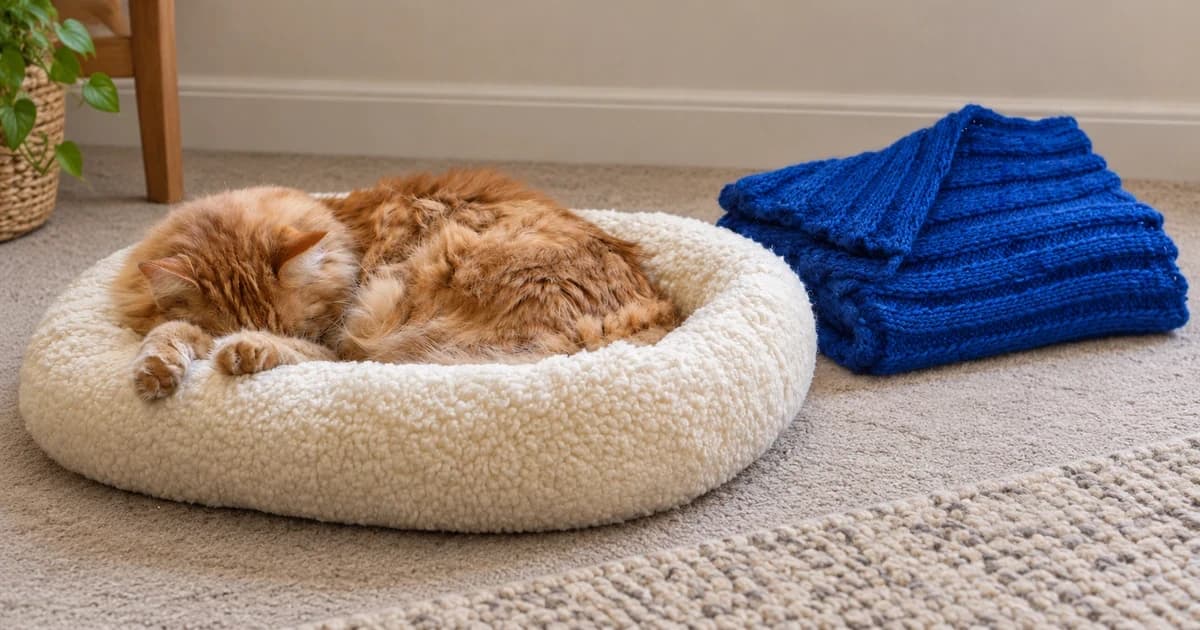
Build a cat bedtime routine around a predictable evening opportunity, putting away equipment that needs supervision and leaving familiar resting choices available. Keep the sequence voluntary. The useful endpoint is a household prepared for bedtime and a simple note about what your cat actually chose.
Start with the arrangements your cat already knows. Your bedtime does not have to become an instruction for the cat to enter one bed or stop all activity. This guide covers the handoff from time together to the period when you will be asleep, rather than a timetable of required play or sleep.
Choose an opportunity while your cat is naturally awake
RSPCA Australia's night-activity guidance suggests providing interaction during the afternoon or earlier evening and keeping those opportunities at consistent times. It specifically describes playing when the cat is naturally awake and interested, and making schedule changes gradually.
Choose a window when you can participate without rushing. If your cat approaches a familiar toy, offer an ordinary interaction with room for pauses. If the cat continues resting or leaves, finish the invitation and retain the other choices. There is no missed activity to make up before bed.
Use the separate cat play guide for toy movement and catches. A bedtime routine does not need a second play lesson, a minimum number of pounces or a longer session each night.
Close the supervised part of the evening
Battersea's Feline Behaviour Team distinguishes interactive play from toys a cat may use independently. Its guidance includes pauses and opportunities to catch a physical target. It also says to put string and fishing-rod toys away when you are absent, along with other toys unsuitable for unsupervised access; if uncertain, do not leave the item out.
Before you withdraw, collect the equipment that required your participation and store it out of access. Check what remains instead of leaving the whole play setup in place. Follow the actual item's instructions for independent use, and set aside an item whose condition or unattended-use permission is unclear.
Keep a short distinction in your plan: put away and left available. A toy being familiar or sold for cats does not, on its own, settle which list it belongs on.
Leave resting choices familiar and accessible
Cats Protection's sleep guidance describes cats choosing comfortable places and sometimes changing their preferred resting spot. It advises allowing sleeping cats to rest undisturbed. Keeping a cat awake during the day to control night activity is specifically discouraged.
Leave the route to an existing resting place usable and avoid turning the evening check into repeated moving, stroking or waking. Keep ordinary food, water and toileting arrangements accessible while you prepare for your own bedtime. This sequence does not change feeding quantities or require confinement.
If you are choosing different equipment, use the separate cat-bed comparison and the actual model's instructions. A new bed is a resource choice; accepting it is the cat's choice.
Make one evening handoff note
A brief record can include:
- The opportunity offered and whether the cat joined, watched, rested or left.
- The supervised equipment stored away and the independent choices left accessible.
- The familiar resting places and ordinary resources available.
- Anything you actually noticed before bed or the following morning.
Keep gaps in observation visible. Finding the cat on a chair in the morning does not establish where it spent the whole night. There is no need to wake the cat, monitor continuously or assign a sleep score to complete the note.
Review the choices without imposing a sleep target
Use the note to identify one practical question, such as whether a resting route was interrupted or an invitation came while the cat was already asleep. Preserve familiar resources while considering a manageable adjustment. For a wider review of daytime choices, use the indoor-cat opportunity plan.
Cats Protection recommends checking with a vet when a cat sleeps or hides more than usual.
RSPCA Australia's night-activity guidance also puts veterinary assessment before assuming a behavioural cause. Discuss a new or concerning change rather than trying to resolve it through a stricter bedtime schedule.
Keep the routine descriptive and flexible. Browse cat beds and resting equipment for ordinary resource decisions, while keeping claims about an individual cat's health or overnight sleep outside the equipment choice.