Checking a wire crate door means matching its actual handle or bolt to the correct instructions and identifying the movement or final position that those instructions describe. A door that looks closed does not tell you whether a particular hook, sliding bolt or handle is in its documented position.
Make this an empty-equipment check. The three examples below explain different mechanisms and, just as usefully, show where a manual leaves a direction unanswered. They are not interchangeable steps for opening or closing every wire crate.
Identify the door hardware you mean
Find the manufacturer, exact model and instructions supplied for the unit. Name the particular door you are checking: a front and side opening can have different arrangements or restrictions. A similar rectangular frame or number of doors is not enough to match a mechanism.
Next, distinguish the part that operates the door from a connection that holds the crate together or retains its pan. Moving the wrong piece can turn a door question into an assembly question. If the frame itself does not match the instructions, resolve that through the wire crate setup guide and the maker's complete manual before treating it as a door problem.
When comparing wire crate listings, look for the model's own instructions. A photograph or a phrase such as “secure lock” does not supply the missing operating direction or prove a match to one of these examples.
MidWest SL54: a specified slide-bolt position
The SL54 instructions identify three U-shaped slide-bolt latches on the front door. Their final assembly instruction says to slide the bolt all the way so that, with the handle down, its reinforcing hook is behind the vertical wire. This is a particular secured-position description. The document does not supply a complete opening sequence; do not present an imagined reverse movement as its instruction.
The useful record here is a labelled end position, rather than a generic statement that the door has shut. If your handle or hook does not match that description, first question the model match instead of bending a wire or adapting another latch's method.
Frisco multi-stage models: lifting and sliding handles
For printed models 247915, 247916 and 247917, Frisco's step 10 describes lifting the lock handles about 90 degrees and sliding to open, or into the lock to close. These handles are distinct from structural panel clips and the pan-locking latch. A separate divider note says the side door will not operate while the divider is hooked to that door's vertical wire. That restriction is not an instruction to force the door. The PDF address contains catalogue number 247914; the printed three-model scope remains the relevant claim.
For a side-door question, include the divider arrangement in your description to the issuer. That makes the question specific without inventing a new divider position or borrowing instructions from another model.
Petmate PET9958: a documented opening action
English instruction A6 in Petmate's PET9958 document describes opening the door by raising the latch mechanism all the way and pushing over. It separately requires the door to be properly secured when an animal is inside, but does not give a separately detailed closing sequence. Its collapsed-frame lock wire, structural panel connections and pan-locking device are different items. The document carries a 2016 copyright; an exact current retail-model match is unconfirmed.
An opening instruction and a closing requirement answer different questions.
Keep a door-specific instruction record
A short record can keep another person's handover or a message to the manufacturer precise. Record what the manual actually says, leaving an unanswered field visibly unanswered.
| Field | What to record |
|---|---|
| Door identity | Exact model and the front, side or other door concerned |
| Instruction location | Document link and the relevant step or drawing |
| Operating direction | Only the opening or closing movement actually supplied |
| Described position | The manual's named bolt, handle, hook or other reference point |
| Unresolved detail | A missing direction, mismatched mechanism or model-specific obstruction |
Resolve a mismatch without adding a new mechanism
A clear description is more helpful than calling every connection a latch.
Do not fill the gap with an added clip or carabiner, force, lubrication, wire bending, repair or a pull-and-shake test. Those are not the documented checks compared here.
This record concerns equipment operation. It does not establish a suitable crate size, a dog's readiness for confinement or tested containment performance.
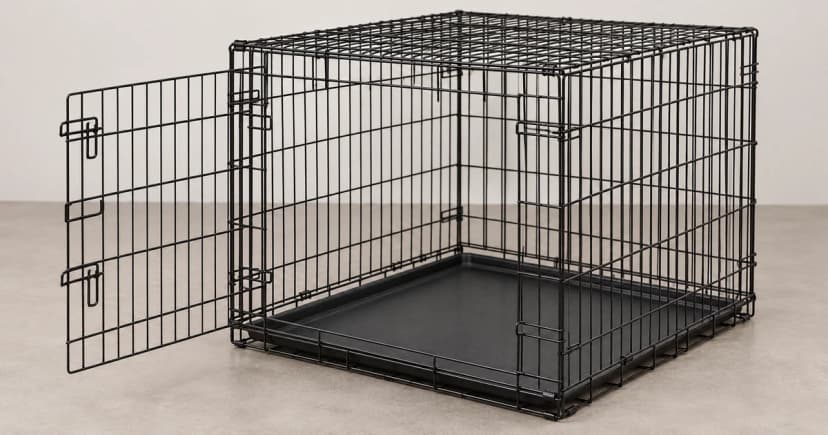
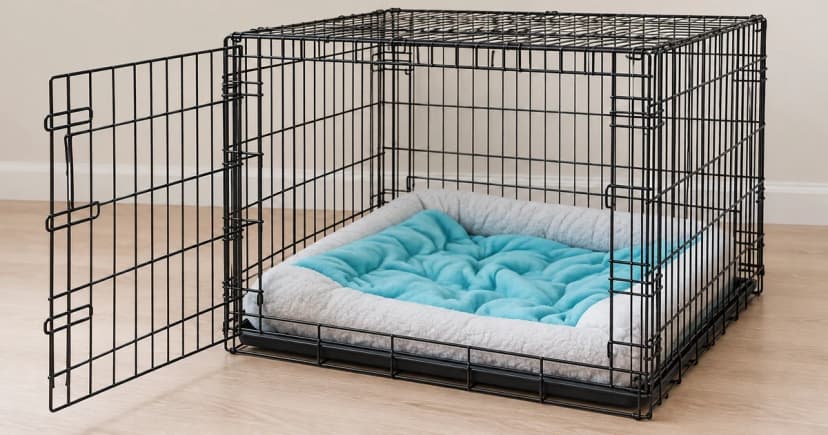
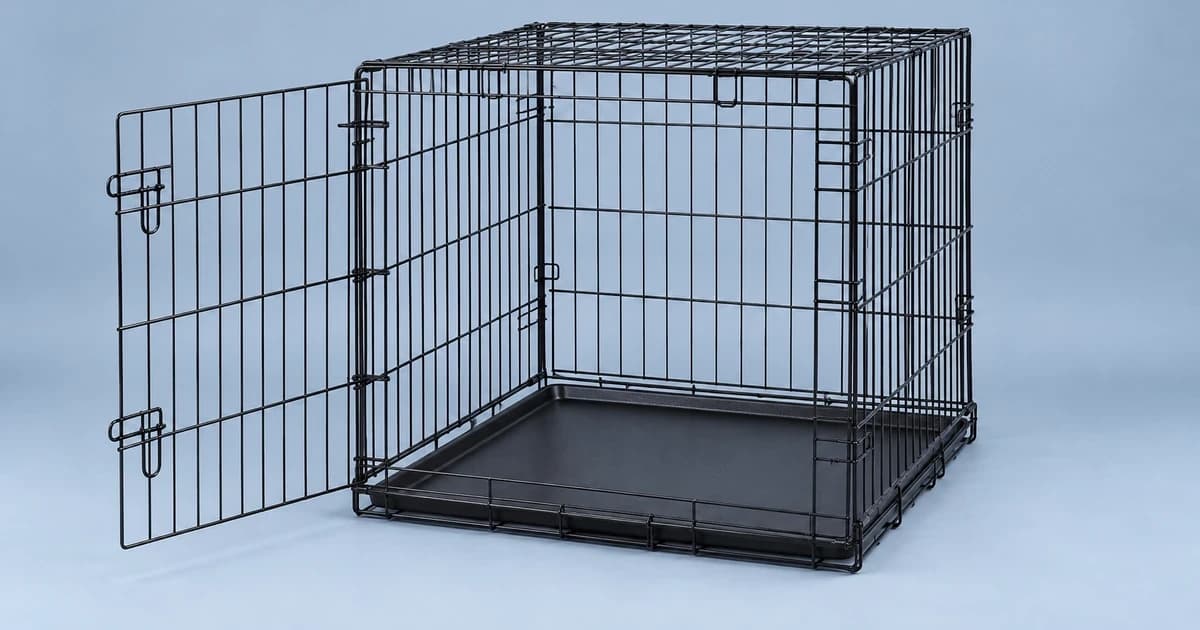
The edited empty-crate photograph reconstructs generic equipment from licensed references; it is not a named model, approved locked position or operating demonstration. See our editorial policy.