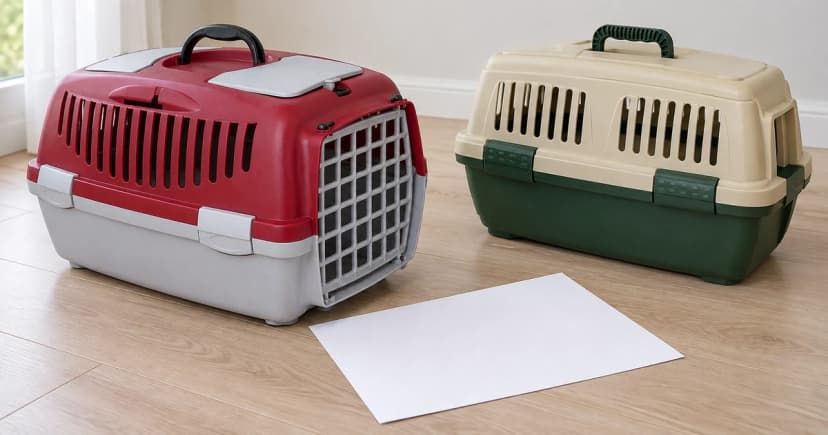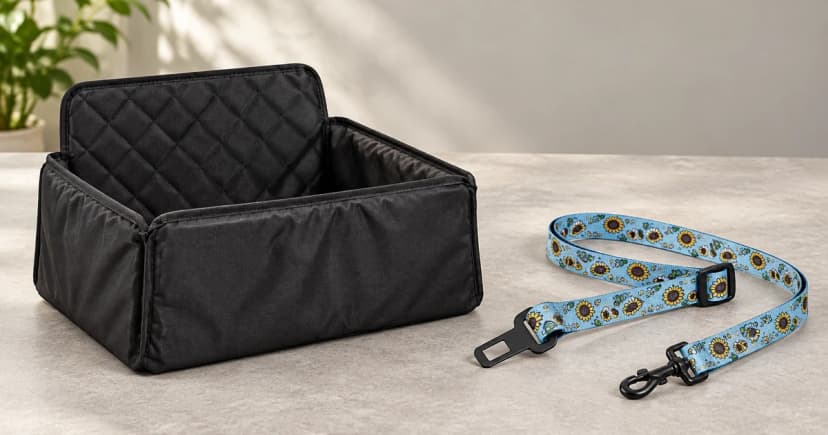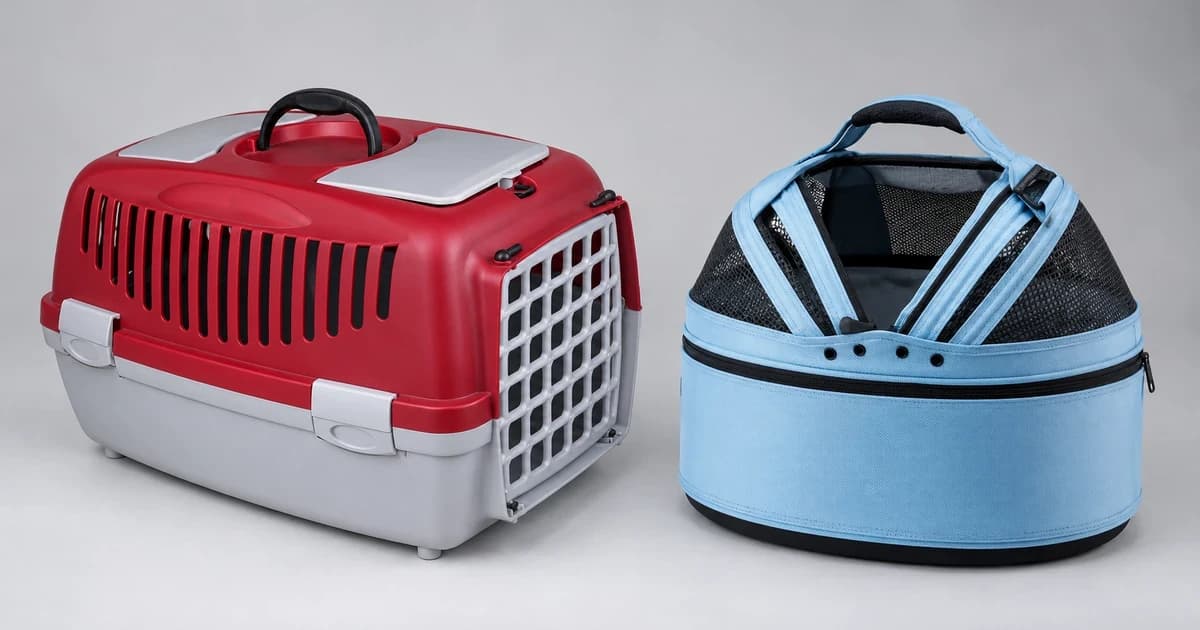
Checking in-cabin pet carrier dimensions requires three separate comparisons for every flight leg in your itinerary: (1) the carrier's published outside dimensions in its normal assembled shape, (2) the usable interior space left for your pet to stand, turn around and lie down with normal bedding installed, and (3) the under-seat clearance permitted by the operating airline for your specific aircraft, cabin and seat. Neither an “airline-approved” hangtag nor passing just one of those three checks settles the other two. (This equipment guide does not cover pet route eligibility or destination import documents; the airline policy examples below were checked on October 15, 2026—always re-verify for your travel dates.)
Start with a record for each operating flight leg
Write down the actual operating carrier, flight number, aircraft type, cabin class and seat assignment for every segment, including regional connections. Identify whether the airline publishes a strict maximum, a general recommendation, or separate dimensions for hard-sided and soft-sided carriers—because “recommended for most aircraft” never guarantees fit under every aisle or bulkhead seat.
Read these three airline dimension examples in their own scope (checked October 15, 2026)
| Primary airline source (checked Oct 15, 2026) | Published carrier dimensions (L × W × H) | Aircraft, carrier-type & stowage conditions to retain |
|---|---|---|
| American Airlines | Soft-sided recommendation: 18 × 11 × 11 in. Hard-sided limit: 19 × 13 × 9 in on American Mainline; 16 × 12 × 8 in on American Eagle. | Non-collapsible carriers must stay within under-seat dimensions for every aircraft on the itinerary (verify with Reservations); soft-sided carriers must fit under the seat without excessive collapse. |
| Delta Air Lines | Recommended soft-sided maximum: 18 × 11 × 11 in (described as fitting most aircraft types). | Actual maximum depends on the specific aircraft's under-seat dimensions; Delta requires a leak-proof soft carrier with ventilation on at least three sides for domestic flights (four sides for international). |
| Southwest Airlines | Southwest-branded carrier: 15 × 10 × 10 in. Other carriers maximum: 18 × 10.5 × 10 in. | Carrier must stow completely under the seat in front of you; Southwest recommends soft-sided carriers and notes under-seat clearance varies by aircraft seat type and location (such as certain aisle seats). |
Separate exterior envelope from usable interior space
Never substitute an interior pad measurement for outside length, and never remove structural support boards or crush a roof down onto your pet to force a tall bag under a low seat rail:
For cats, follow our carrier size and usable interior space guide to measure your cat's standing height and body length at home.
Log each leg before relying on a carrier for your trip
| Record field | Entry needed for each flight leg |
|---|---|
| Flight conditions | Operating airline, travel date, aircraft type, cabin class and seat number (mark any unconfirmed item explicitly). |
| Applicable rule | Official policy URL, check date, hard vs. soft classification, recommendation vs. strict maximum, and aircraft/seat notes. |
| Actual carrier exterior | Exact model/version and outside length × width × height in its normal assembled configuration. |
| Usable interior check | Interior length, width and standing height with stability board and normal liner pad installed. |
| Airline confirmation | Operating carrier's response for your specific aircraft/seat if any dimension or soft-carrier flex question remains open. |
Re-check your table whenever an aircraft swap, seat change or partner connection alters under-seat clearance. Compare documented dimensions across soft-sided dog carriers, hard-sided dog carriers and cat carriers, and see our editorial policy for how we cite official airline documentation.