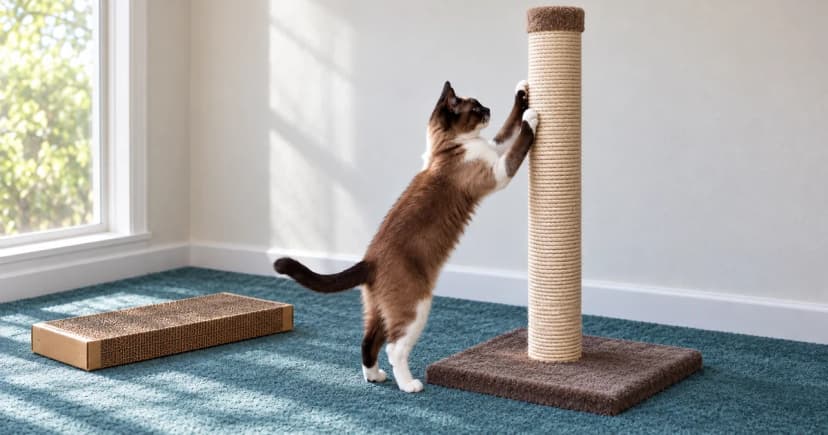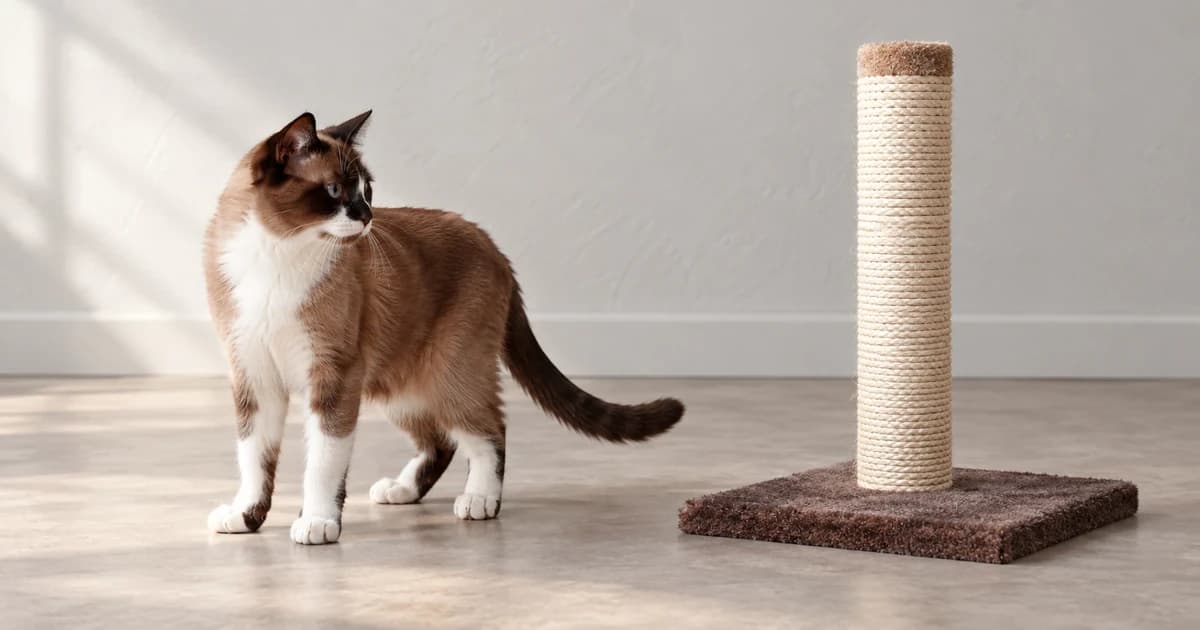
Compare a cat scratching post by its base footprint, height and scratching surface. Total furniture height and the uninterrupted scratching section are different measurements. Plan the floor space for the whole base before choosing a post.
Three standalone post designs
SmartCat Ultimate #3832 uses woven sisal and a two-piece 16-by-16-inch base, supplied with screws and dowels. Its assembly directions identify the recessed side of the base for screw placement.
Tuft & Paw Zip is described as a three-foot post. Its installation guidance states that it does not require anchoring and identifies a screw for tightening. That installation statement applies to this design.
TRIXIE Parla uses a jute-wrapped post with plush polyester covering. The beige and platinum-gray options list a 15.7-by-15.7-inch floor area, 24.4-inch height and 3.5-inch post diameter.
Match the base to the placement
Keep the entire base on its intended surface and follow the assembly and fixing instructions supplied with the post. A photograph of a wide base is not a stability test. Position the post so your cat can approach the scratching section without a shelf or neighboring furniture blocking access.
Compare the scratching covering
Woven sisal, rope and jute are different constructions. Compare the covering named on the selected Pawlivy option rather than treating a similar appearance as the same material. Include the usable scratching section in your choice, alongside the post's total height.
Plan care and replacement
A base, cap and scratching covering are separate components. SmartCat's FAQ identifies replacement top, bottom and base pieces while excluding replacement sisal fabric. Keep replacement and care instructions with the exact post; a removable-looking seam is not an instruction to dismantle a fixed covering.
Browse Pawlivy cat scratching posts. Our scratching-post guide covers placement and introduction. For platforms, dens and climbing levels, see the cat-tree buying guide.