To get a dog used to boots, start with a properly sized model and its own fastening directions, then progress through short stages according to your dog's response rather than a calendar: let your dog investigate the unfastened boots, practice a brief single-boot put-on-and-remove contact, add wearing time and additional paws gradually, and observe indoor movement before any short outing. If your dog tries to remove a boot or shows discomfort, take the boot off and return to an earlier accepted stage. This guide covers ordinary boot familiarization—not recovery footwear, veterinary wound care, certified hot-surface protection, or a guarantee that every dog will accept shoes.
Separate choosing the boot from getting used to it
A dog cannot become comfortable with equipment simply because you keep it on longer. AKC's winter-clothes introduction guide starts with properly sized gear and recommends short, rewarding sessions rather than seeing how long a dog will tolerate wearing it.
Use our paw-measuring and boot-size-chart guide for that separate selection task. Keep the selected model's instructions beside you for opening, positioning and fastening. Familiarization does not confirm the size or replace those instructions.
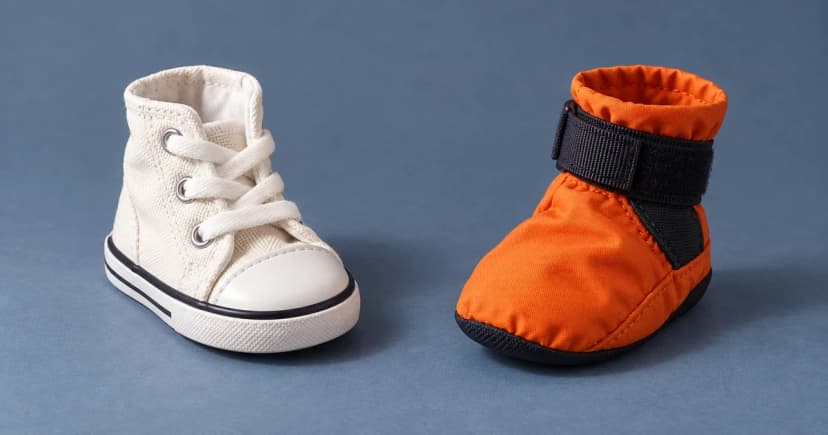
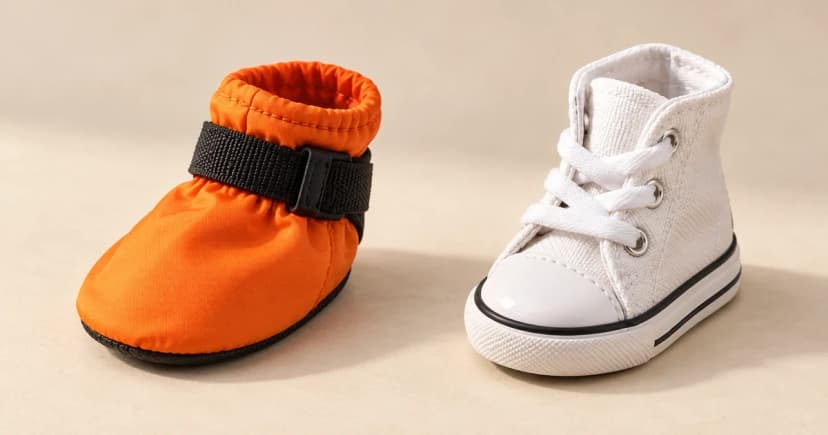
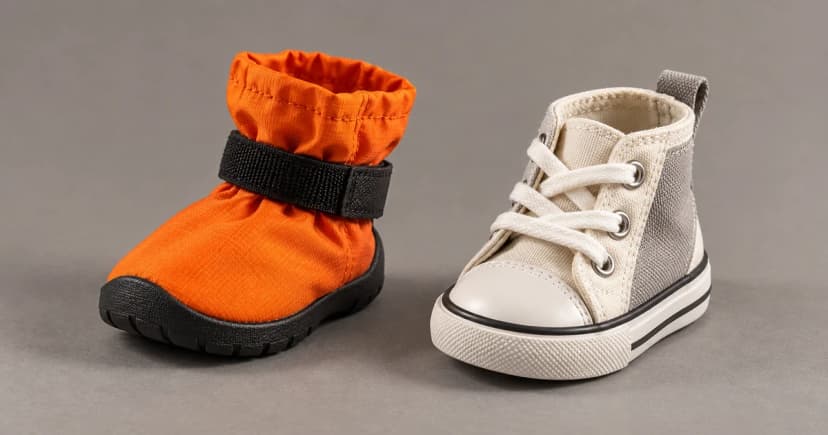
The boots and shoes category includes different structures—from everyday dog boots and dog snow boots to high-cuff dog boots for snow and interconnected suspender designs. Catalog listings do not establish that an unbranded shoe shares a Ruffwear or Kurgo fit. A procedure written for an ankle cord is not automatically suitable for laces, a drawstring or linked straps.
Begin with equipment and paw contact separately
Choose a familiar place with few distractions. AKC recommends practicing where the dog feels relaxed. Put the boots down and let your dog approach and sniff them. Reward interest with praise or a treat your dog enjoys; approaching the equipment does not have to lead immediately to wearing it.
AKC also says to work on comfort with having the feet touched before introducing boots if the dog dislikes paw handling. Treat that as a separate prerequisite when learning how to get a dog used to boots. Do not combine a reluctant paw-handling attempt with putting on all four shoes. If comfortable paw handling is not yet in place, leave the boot-wearing stage for later.
Prepare the actual closure before attempting to put a boot on. In its shoe-introduction article, Kurgo describes loosening the hook-and-loop closure and ankle cord for its named Blaze and Step 'n Strobe shoes. Use that example to understand why opening the cuff fully matters, not as universal instructions for every fastening system.
Practice one brief put-on-and-remove stage
AKC's boots sequence starts with gently putting one boot on, rewarding the dog and immediately removing it. The purpose of this first stage is brief contact with the equipment, not a walk or a test of endurance.
Repeat only as your dog becomes comfortable with that stage. AKC then builds the time spent wearing one boot while providing rewards or play. If the dog tries to take it off, the article advises decreasing the wearing time. Kurgo similarly says to remove a shoe and try again later when the dog is uncomfortable.
Do not turn a brand reference to a few minutes into a minimum your dog must complete. A successful put-on attempt can end with immediate removal, and there is no requirement to reach all four boots during the same practice session.
Add boots and movement as separate changes
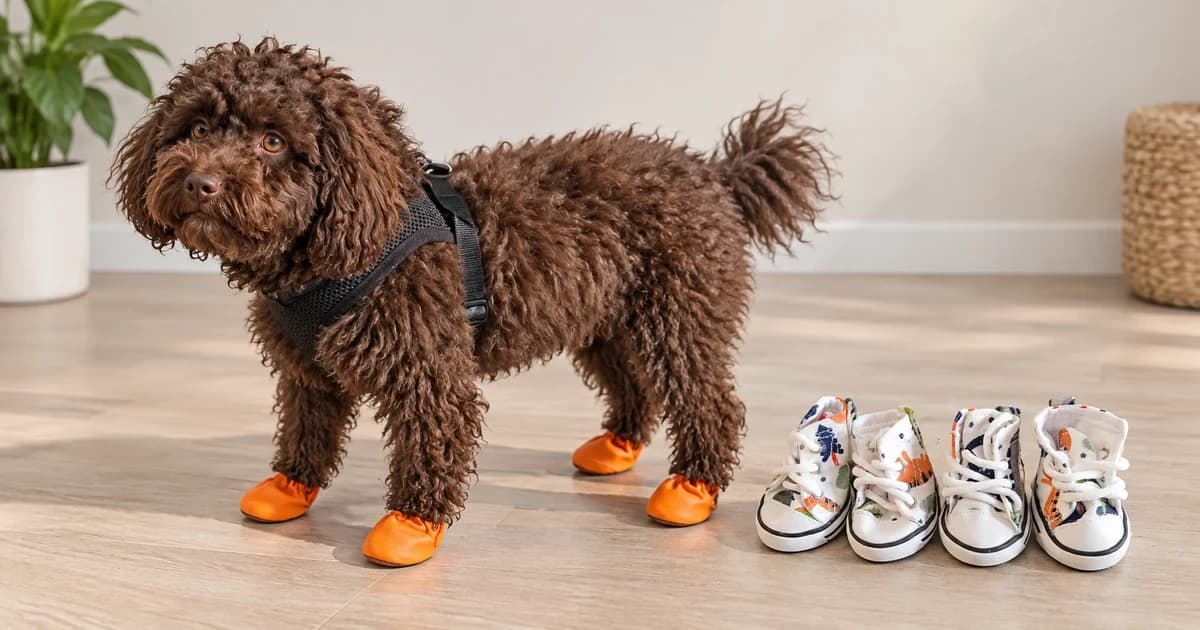
AKC progresses from comfortable wearing of one boot to two, then the third and fourth, continuing rewards throughout. Kurgo also suggests trying two paws at a time when a dog has trouble adjusting. Neither passage establishes a universal pair of paws to choose or a schedule that applies to every design.
Keep an interconnected suspender system separate from this single-boot sequence. Its assembly and adjustment involve linked straps across the body; do not detach, rearrange or apply separate-boot steps unless the manual for that specific system directs it.
Once wearing is comfortable, observe a little indoor movement before planning an outing. Watch the dog and the equipment together: is the dog willing to move, attempting to remove a boot, or wearing a boot that has turned or shifted? A food reward is part of the introduction, not evidence that the dog or fastening is comfortable.
| Stage | What to observe | Reason to pause or go back |
|---|---|---|
| Investigating the boots | Voluntary approach, sniffing or relaxed interest | The dog avoids the equipment; keep this stage separate from wearing |
| Briefly wearing one boot | Response during putting on, reward and immediate removal | Discomfort or attempts to pull the boot off |
| Additional boots | Response as a second, third or fourth boot is added | The previous calm response changes when another boot goes on |
| Indoor movement | Willing steps indoors and whether any boot twists or shifts | Removal attempts or a cuff/fastening position issue |
| A short outing | Response after the environment changes, plus periodic fit checks | Discomfort, rubbing or a boot that has rotated or slipped |
This table is an owner observation aid based on the attributed stages above. It is not a scored training trial or a guarantee of progression.
Check the equipment before extending an outing
Ruffwear's six boot break-in tips recommend starting indoors, trying short adventures and checking for rubbing, strap tension and fit during the break-in period. Its instructions for flexing a sole in your hands, strap positioning and dog socks belong to Ruffwear equipment; do not apply them to every shoe in the catalog.
Ruffwear's separate Boot Irritation FAQ gives a 10–15 minute check interval for its boots during early outings. That is a brand-specific outing recheck, not a target duration for an introductory indoor session. Always remove a boot earlier when your dog's response calls for it.
A shifted boot calls for rechecking the model's fastening sequence and selected size, not simply cinching an unfamiliar strap tighter. Stop the wearing attempt whenever discomfort or rubbing appears. This guide does not teach paw wrapping, wound care or using a sock to treat skin irritation.
Keep a short record instead of a success deadline
Write down the stage attempted, which boots were used, the dog's response, any shifting, when you removed them and what you will try next. For example: “One boot briefly worn indoors; dog tried to remove it; removed it; next attempt returns to brief contact.” That records what happened without labeling the dog difficult or claiming the equipment failed a test.
Keep environment changes separate from wearing-time changes. Comfortable indoor practice can lead to a short outing, as AKC and Kurgo describe, but it does not establish outdoor protection or a universal wear limit. Return to an earlier stage whenever the new response warrants it.
For other cold-weather or outdoor gear, browse dog clothing while keeping each item's fitting rules separate. Our editorial policy explains our source-based approach: this guide brings together attributed brand and welfare guidance without claiming a training experiment, product endorsement or guaranteed acceptance.