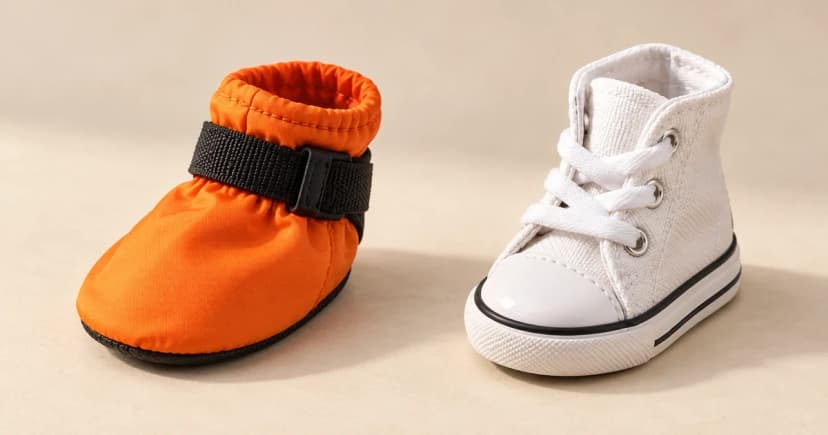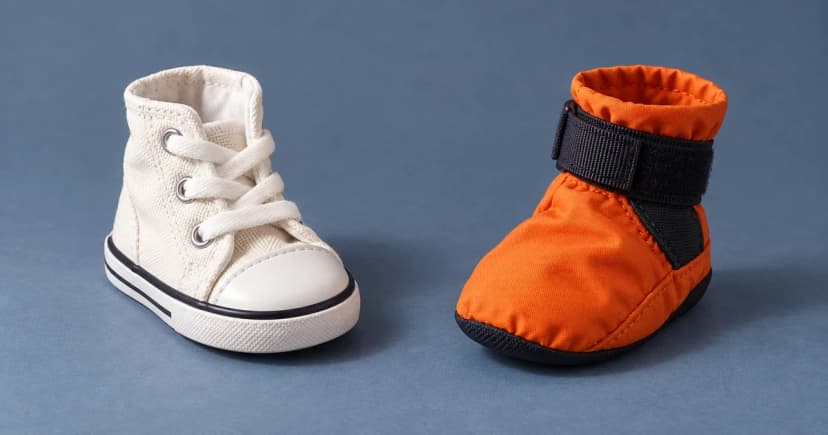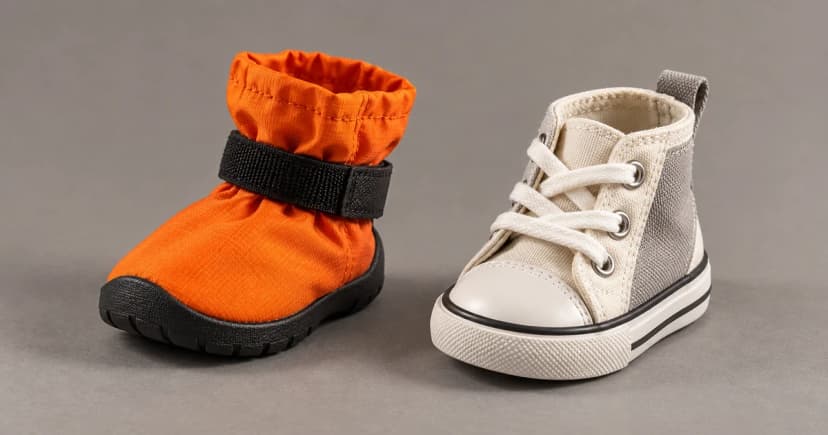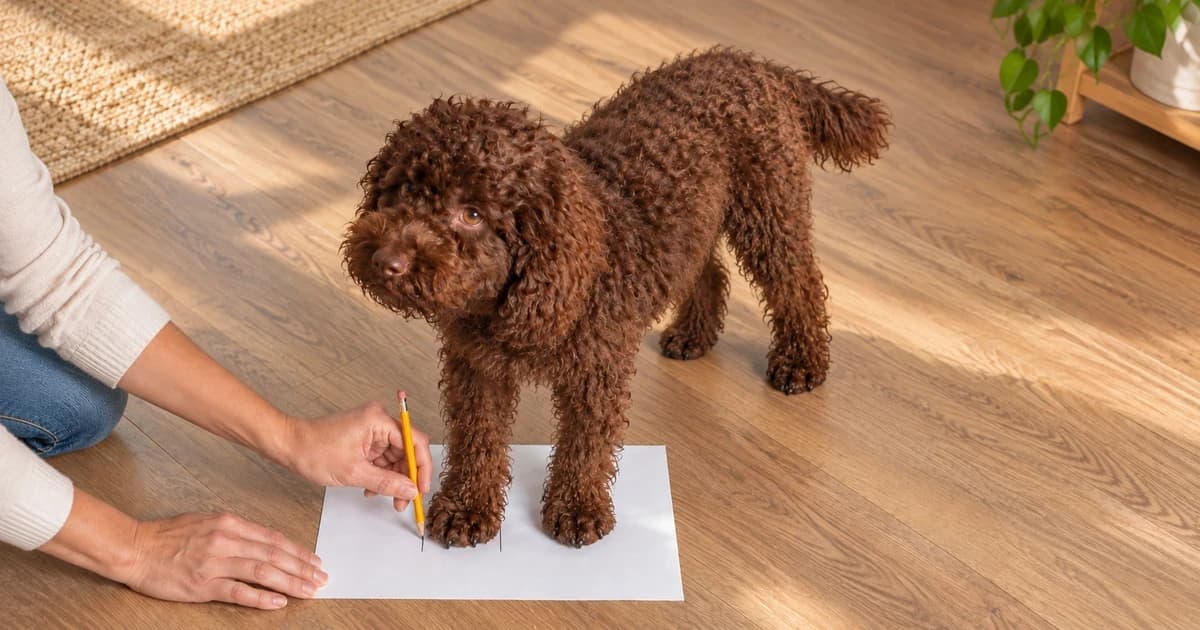
Knowing how to measure dog paws for boots starts with three matched details: your dog standing with weight on the paw, the exact dimension requested by the boot model's chart (either widest paw width or longest toenail-to-heel length), and the unit listed on that chart (inches, millimeters, or centimeters). Measure all four paws separately on paper and apply the specific model's borderline rule rather than a universal size-up habit. Never use coat, chest, or back-length garment sizes to choose dog boots.
Read the model's chart before marking the paper
Before deciding how to measure for dog boots, open the current sizing guide for the exact model you plan to try. Check whether each number describes a weight-bearing paw measurement, an interior boot dimension, or an exterior sole dimension. An outside sole measurement does not show how much room remains inside the boot. If a product chart omits which dimension it measures, verify the measurement basis before comparing those numbers with your dog.
Manufacturer instructions also differ on both endpoints and between-size choices, which is why keeping the borderline rule inside your model record prevents cross-brand mix-ups:
| Named boot model | Requested measurement and endpoints | Unit and multi-paw rule | Borderline / between-size rule |
|---|---|---|---|
| Ruffwear Grip Trex | Widest part of the paw while standing and bearing weight (left-to-right outer pad edges) | Inches or mm; measure all four paws (sold in pairs for separate front and rear sizing) | Choose the smaller size when a paw falls between sizes. |
| Muttluks Original Fleece-Lined & Original All-Weather | Length from longest toenail tip to the rear "heel" mark (pen held straight down the back of the standing leg, excluding fur) | Inches or cm; measure front and rear paws separately | Choose the smallest size that accommodates the entire paw, including toenails. |
| Non-stop dogwear Protector bootie | Widest paw width while standing | Inches or cm; use the width chart rather than a length reading | Choose the smaller size when between two width ranges. |
| Hurtta Weekend Warrior Boots | Widest paw-print width while standing comfortably | Centimeters or inches; measure each paw separately | Select the closest width; note Hurtta adds 0.5 cm qualifiers without defining an exact midpoint tie. |
This table summarizes the named guides from Ruffwear, Muttluks, Non-stop dogwear, and Hurtta. It is not a cross-brand conversion chart or a claim that those models suit every dog.
Compare width and length endpoints on paper
When working out how do you measure for dog boots without getting oversized results, the most common error is marking fur tufts, lifting the paw in the air, or tilting the pen outward. Use this endpoint reference to separate width marks from length marks while your dog stands on a flat, non-slip surface:
| Dimension type | Where to place the first mark | Where to place the second mark | What to exclude from the distance |
|---|---|---|---|
| Standing paw width (e.g., Ruffwear, Non-stop, Hurtta) | Upright pen touching the widest outer edge on the left side of the weight-bearing paw | Upright pen touching the widest outer edge on the right side of the weight-bearing paw | Long feathering or fur extending past the pad, outward pen tilt, and circumference around the leg |
| Standing paw length (e.g., Muttluks Original models) | Tip of the longest front toenail while the paw rests flat under normal weight | "Heel" mark made by holding the pen straight down the back of the lower leg to the paper | Tufts of rear leg fur and unrequested extra allowances for socks unless the model specifies them |
Make a standing paw-width or paw-length record
Prepare blank paper, tape to keep the sheet from sliding, a pen, and a flat ruler. If your dog repeatedly pulls away, pause rather than holding a leg down by force and treating a shifted mark as an accurate reading.
- Label the sheet for all four paws. Write front left, front right, rear left, and rear right using your dog's own left and right sides.
- Load the paw naturally. Place the paper under the paw while your dog stands. Ruffwear's measuring guide shows lifting the opposite paw slightly so the measured paw bears weight—use that technique only if your dog stays relaxed and balanced.
- Mark the exact endpoints. Hold the pen vertically against the widest left and right pad edges for width charts, or at the longest toenail tip and straight down the back of the leg for Muttluks length charts.
- Measure the straight distance on the paper. Step your dog off the sheet, measure between the two marks with a ruler, and write down the exact unit (in, mm, or cm).
- Repeat if the paw shifted. Never combine a left mark from one stance with a right mark after the foot moved.
Keep front, rear, and model notes in a four-paw worksheet
Front paws are often wider than hind paws, which is why brands such as Ruffwear and Hurtta instruct measuring front and rear paws separately. Before ordering dog boots—whether everyday paw protection, dog boots for snow, or insulated dog boots for winter—check whether the package contains two boots or four boots. When a chart contains conflicting notes (such as Muttluks mentioning rear paws often take one size smaller on Snow Mushers and Mud Monsters while also instructing you to measure both front and rear paws), rely on your recorded front and rear measurements rather than guessing a rear size reduction.
Copy this four-paw log to keep your measurements organized before comparing charts:
| Paw position (dog's side) | Weight-bearing stance confirmed? | Measured width (with unit) | Measured length & endpoints (with unit) | Target boot model & candidate size |
|---|---|---|---|---|
| Front left | Yes / Re-mark if shifted | Record mm / cm / in (or not applicable) | Nail tip to heel line (or not applicable) | Model name + chart size |
| Front right | Yes / Re-mark if shifted | Record mm / cm / in (or not applicable) | Nail tip to heel line (or not applicable) | Model name + chart size |
| Rear left | Yes / Re-mark if shifted | Record mm / cm / in (or not applicable) | Nail tip to heel line (or not applicable) | Model name + chart size |
| Rear right | Yes / Re-mark if shifted | Record mm / cm / in (or not applicable) | Nail tip to heel line (or not applicable) | Model name + chart size |
Check the delivered boots indoors and build familiarity
A chart match only selects the starting size to test indoors. Put the boots on in a clean, controlled room, check where the paw sits inside the toe box, and watch for twisting, slipping, or rubbing during short steps. Once the size and strap placement look stable, introduce dog boots gradually with brief, rewarded indoor sessions before heading out on rough ground or winter walks. For Grip Trex specifically, Ruffwear advises rechecking closure tension 15 minutes into an outing and periodically during use.
For coats and sweaters in our dog clothing collection, keep a separate body measurement sheet using our guide to measuring a dog for clothes. This article provides source-based sizing methodology without hands-on boot testing or cross-brand fit guarantees; see our editorial policy for details.