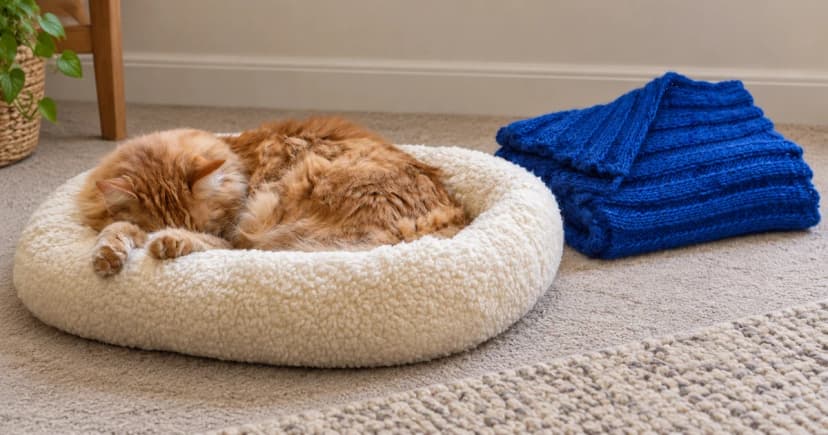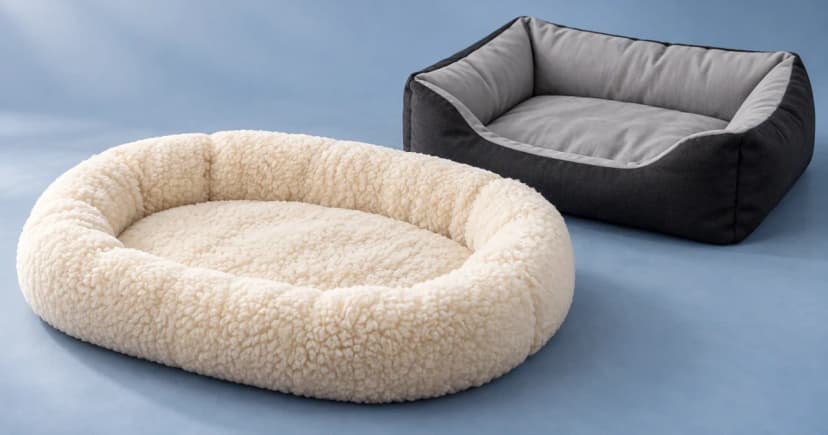
How do self-warming cat beds work? The named designs below use the cat’s own body heat rather than an electrical heating element. Manufacturers describe insulation, reflective material or a combination of layers. That explains the intended mechanism, but the words “self-warming” alone do not tell you the complete construction or establish a universal warming amount for a particular bed.
Read the description for the exact bed, separating the stated heat source, named materials and power requirements. A plush cover or familiar bed shape cannot confirm what is concealed inside.
How does a self-warming cat bed work?
When looking at how does self warming cat bed work without a plug, K&H’s explanation of its self-warming technology describes two layers with different roles: insulation retains body heat, while a metalized reflective layer directs heat back toward the pet. The company says an electrical outlet is unnecessary. In this description, the cat supplies the heat; the bed’s materials help retain or return it:
| Cross-section element (K&H description) | Stated thermal role | Boundary to keep in view |
|---|---|---|
| 1. Resting cat (sole heat source) | Supplies all warmth entering the bed while the cat lies on the surface | No electrical cord or active heater; an empty, unoccupied bed does not generate heat on its own |
| 2. Insulating layer (named by K&H) | Helps retain the body heat transferred from the resting pet | Does not establish a specific degree of temperature rise, warmth duration, or minimum room temperature |
| 3. Metalized reflective layer (named by K&H) | Directs captured body heat back toward the pet without electricity | Describes K&H's stated self-warming design, not a universal layer stack for every unverified bed |
This is a manufacturer’s account of its design, not a temperature measurement from our own testing. It does not establish a universal warming amount, duration or minimum room temperature. Nor does it establish that an unoccupied bed produces heat independently.
The useful distinction is between retaining heat already supplied by the cat and supplying powered heat. Do not transfer instructions or claims from a plugged-in heated bed to a passive bed simply because both appear under a retailer’s “heated beds” heading.
Does every self-warming bed contain Mylar?
Some descriptions name a particular reflective material. Petmate’s Aspen Pet Self-Warming Oval Lounger identifies a Mylar interior, says the construction reflects the pet’s body heat, and specifies that no electricity is required. Those details belong to that named lounger. They are not a material specification for every bed carrying a similar label.
Other wording is less specific about the internal stack. FurHaven’s ThermaNAP Faux Fur Self-Warming Pet Bed Mat describes capturing body heat without electricity and names an insulating polyester-fiber batting core. Its description does not identify Mylar or provide a complete layer-by-layer material list. That omission does not prove that a reflective component is absent.
Compare what each named source explicitly discloses versus what remains unknown before generalizing across brands:
| Named source or model | Explicitly disclosed heat and material terms | What remains unlisted or unverified |
|---|---|---|
| K&H self-warming technology article | Cat's body heat; insulation that retains heat + metalized reflective layer that directs heat back; no electrical outlet needed | Exact material trade names for every model and any measured temperature increase |
| Petmate Aspen Pet Self-Warming Oval Lounger | Cat's body heat; Mylar interior that reflects body heat; no electricity required | Complete layer-by-layer thickness and measured thermal output (Mylar disclosure applies to this lounger, not all passive beds) |
| FurHaven ThermaNAP Faux Fur Self-Warming Mat | Captures body heat without electricity; insulating polyester-fiber batting core | Does not state whether Mylar or a reflective film is present or absent; do not draw an unverified reflective layer into its diagram |
Record the material the manufacturer actually names. Do not turn a limited description into either “all self-warming beds contain foil” or “ordinary polyester filling always provides the same construction.”
What should the product description answer?
| Question | Useful information to find |
|---|---|
| Where does the heat come from? | An explicit body-heat description, rather than an assumed powered heater. |
| What construction is specified? | Named insulating or reflective layers for that exact model; leave unlisted materials unknown. |
| Does it require electricity? | The model’s stated power requirements, checked separately from appearance. |
| What performance is documented? | Any stated test conditions and results; a design explanation alone supplies neither. |
Do not use a product photograph to fill the gap or cut a bed open to check its layers.
What the mechanism does not promise
The three descriptions explain intended construction; they do not provide a shared independent temperature test. Treat an unspecified warming amount as unknown. The label also does not establish medical benefits, suitability for a vulnerable cat, adequate protection in cold outdoor conditions or a guarantee against overheating.
Keep care instructions separate, too. A mechanism description does not authorize washing, machine drying or adding another heat source. Follow the exact bed’s instructions; our cat-bed washing guide explains how to distinguish covers, filling and other components.
When browsing cat beds and resting options, use “self-warming” as a prompt to read the construction details. The clearest answer identifies the heat source and named materials while leaving unsupported temperature and safety claims open.