A weather-app temperature alone cannot establish that a surface is suitable for your dog's paws. If a planned route involves hot pavement, change the exposure rather than looking for a number or a pair of boots that guarantees the walk is acceptable. Consider a cooler time, a different route or skipping that outing.
Keep three questions separate: what the ground is like, whether the overall outing suits the dog in those conditions, and what any footwear is actually documented to do.
Distinguish air temperature from the surface
The American Animal Hospital Association's June 2026 guidance explains that air temperature does not fully describe conditions at ground level. It identifies pavement, sand, metal and artificial turf among surfaces that can become dangerously hot. A different material is not automatically a suitable alternative.
AAHA recommends avoiding hot surfaces, choosing cooler periods and shaded routes, and considering indoor activities during the hottest part of the day. It also identifies limping, reluctance to walk, licking, pad discoloration, blisters and vocal distress as possible injury signs. These observations do not diagnose a burn. Get a dog with suspected paw injury away from the hot surface and contact a veterinarian for advice.
Change the outing before relying on equipment
In PDSA's May 2026 advice, UK veterinary nurse Shauna Walsh recommends earlier or later walks when conditions are cooler, and says skipping a walk during a heatwave may be the safest option, especially for short-faced dogs.
The veterinary charity also highlights greater difficulty managing heat for older dogs, overweight dogs and those with ongoing health problems. Footwear does not resolve that wider outing question. An early or late clock time is an option to reconsider, not a guarantee that conditions have cooled enough for a particular dog.
Make a route decision, not a temperature certificate
Before committing to the outing, keep a short note that distinguishes what you know from what remains uncertain:
- Planned exposure: the particular paved stretch or other surface the dog would encounter.
- Conditions: the forecast, sun or shade and the ground conditions you have actually established, rather than treating an air reading as a surface reading.
- Alternative: a different route, a genuinely cooler opportunity or an indoor plan.
- Unresolved concern: uncertainty about the surface, the dog's comfort or an individual health issue that needs veterinary advice.
This note is a way to explain the decision, not a test that certifies a surface. If the planned exposure remains a concern, choose an alternative instead of treating an uncertain result as permission to proceed. This guide supplies no universal temperature cutoff or timed hand-or-foot test for clearance.
Keep the boot decision separate
AKC's March 2026 hot-pavement article, written by Elaine Waldorf Gewirtz, quotes veterinarian Jerry Klein on heat-related paw injury. It discusses shoes and boots alongside fitting and getting a dog accustomed to wearing them, and recommends cooler times and grassy or shaded areas.
The article is sponsored by AKC Pet Insurance and includes affiliate disclosure. Its general footwear advice is not a measured protection rating for an unspecified boot. Buying footwear does not establish that a hot route is appropriate or that the whole dog can tolerate the conditions. AKC also identifies loss of consciousness among signs requiring immediate veterinary attention.
If footwear is relevant to a separate equipment decision, check the exact maker's stated purpose and limitations. The dog-boot use guide separates intended activities and constructions, while the boot familiarization guide addresses voluntary acceptance. Neither turns possession of boots into evidence that an otherwise unsuitable outing is acceptable.
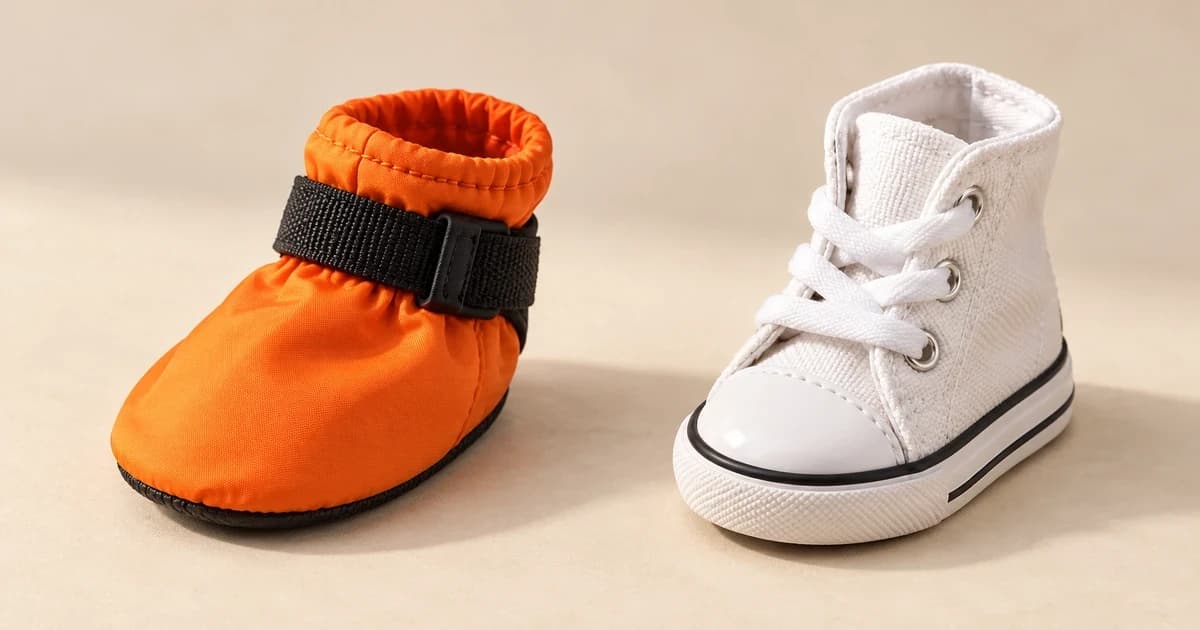
You can browse dog boots and shoes once that equipment question is clear. A listing does not demonstrate a temperature rating, fit or protection result.
For suspected injury, the next step is veterinary advice, rather than trying another boot or a home treatment recipe. Keep the route, exposure and observed changes available to describe to the vet.