Dog boots can be worth considering for a particular surface or weather-related paw-contact problem, but there is no single footwear choice for every dog and outing. Start by naming the situation, then check what the exact boot is designed to do. A boot purchase does not establish that a route is suitable, that the dog will accept the equipment or that a protection claim has been tested.
This guide concerns ordinary footwear selection. It keeps the decision about intended use separate from measuring paws, introducing boots and maintaining them. A clinical question about an injured or uncomfortable paw belongs with your veterinarian, rather than a generic shopping checklist.
Name the reason before choosing a boot
Write a specific reason for looking at footwear: contact with winter road residue, an abrasive surface on a planned route, or a feature needed for a particular activity. “For outdoor use” leaves too much unanswered. It cannot distinguish a breathable shoe from an insulated winter boot.
AKC's boot-selection article emphasizes that different footwear suits different activities and that the purchasing goal matters. Rain-oriented footwear and hiking footwear do not necessarily offer the same features. Use that distinction to compare the actual upper, sole and closure, rather than assuming that every item called a dog boot serves the same purpose. This is a selection principle, not an independent performance test or a reason to require footwear for every walk.
Keep the original reason beside the model you are considering. If the description never addresses that use, a photograph or an appealing style cannot fill the gap.
Use winter context without turning it into a guarantee
RSPCA's winter guidance lists boots among paw-care measures for cold ground and contact with winter road contaminants. Its wider advice also includes avoiding unsafe icy places and considering the individual dog. That gives a relevant situation in which to consider footwear; it does not establish that an unspecified boot is a complete barrier, that a dog is warm enough overall or that an otherwise unsuitable outing becomes appropriate.
Separate the equipment question from the outing question. Do not use possession of boots as the evidence that a particular temperature, walking duration or surface is acceptable.
The same distinction applies when a seller mentions hot surfaces. A product description is information about its stated purpose, not a pavement-temperature test or permission to continue across an unsafe surface. This guide does not supply such a test.
Compare named constructions, not just the word “boot”
Ruffwear's comparison page describes different constructions for different uses. These examples retain the maker's stated scope; they are not tested rankings or matches to Pawlivy stock.
| Named example | Written manufacturer description | Keep this distinction |
|---|---|---|
| Grip Trex | Air-mesh upper and rugged outsole; intended for varied terrain. | A breathable upper is a different feature from winter insulation. |
| Summit Trex | Everyday footwear with a weather-resistant polyester ripstop upper. | The stated upper property does not establish a waterproof complete boot. |
| Polar Trex | Winter-oriented insulation, a gaiter, and a described waterproof, windproof, breathable upper. | Keep the upper description attached to that model, rather than all footwear. |
These statements provide no measured traction, universal temperature range, guaranteed retention or wear-time allowance.
Keep fit and acceptance as separate decisions
Once you have an intended-use candidate, follow its own measurement and fitting instructions. Our guide to measuring paws and comparing boot charts explains why different models request different endpoints. A candidate chosen for its upper or sole still needs that separate size decision.
Likewise, use the boot familiarization guide for investigation, brief wearing and movement. Selecting a model does not tell you how the dog will respond to wearing it. Keep the actual response in your notes rather than treating the purchase as a completed introduction.
Care is a third question. The dog-boot cleaning and drying guide keeps washing permissions tied to exact models. An easy-clean claim does not establish the footwear's intended protection, and an intended-use description does not supply its wash settings.
Keep a short footwear decision record
A useful record links the original reason to the documented feature and the remaining question. It helps explain a choice to a maker or professional without turning an assumption into a result.
| Record | What to keep |
|---|---|
| Situation | The actual surface or contact concern, rather than “all weather.” |
| Candidate | Exact model, current instructions and the maker's stated intended use. |
| Relevant feature | The specific upper, sole or closure description and its source. |
| Unresolved limit | What the description does not establish about that situation. |
| Next action | A maker question, separate sizing or introduction task, or a different outing plan. |
Browse dog boots and shoes with those distinctions in mind. The category contains different structures; it does not identify a listing as one of the named manufacturer examples or verify its performance. Keep other dog clothing decisions separate from footwear.
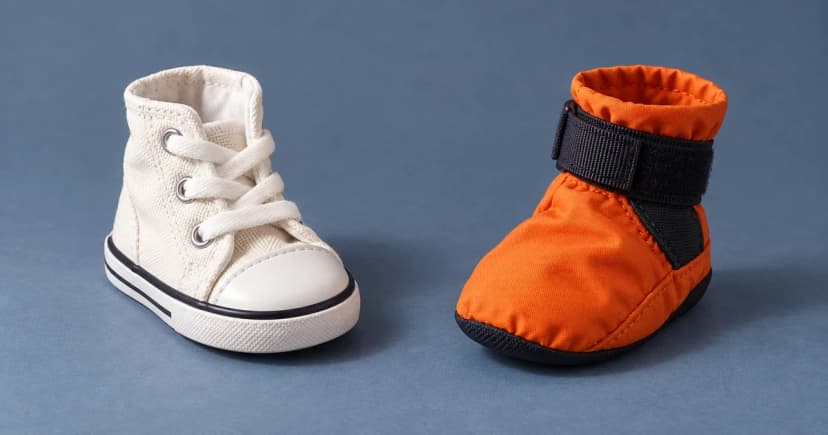
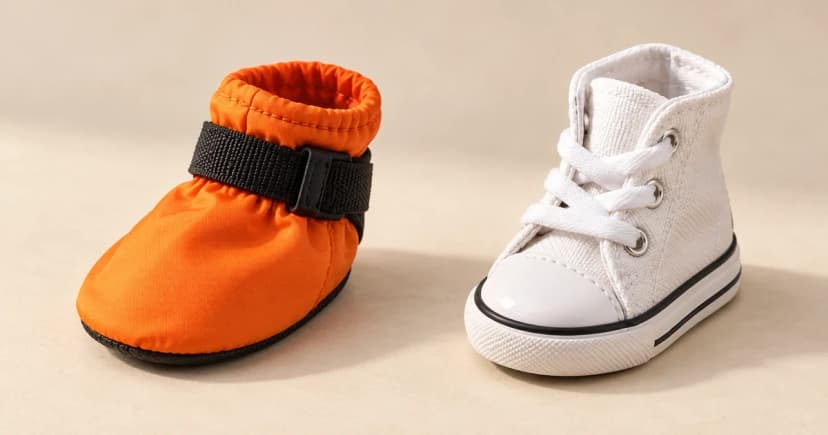
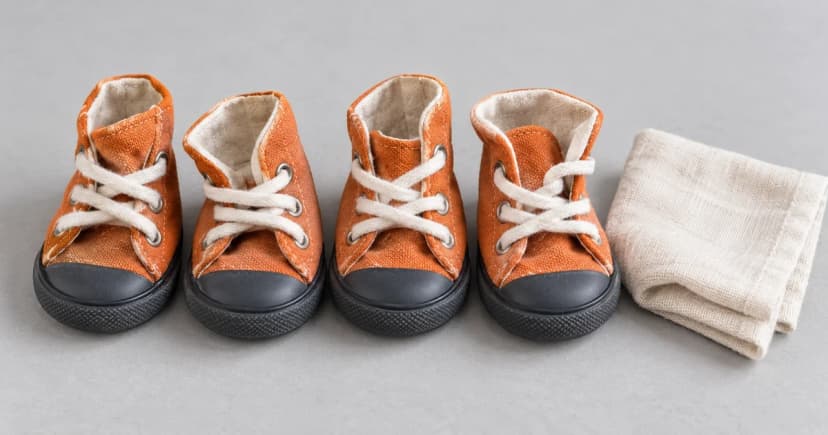
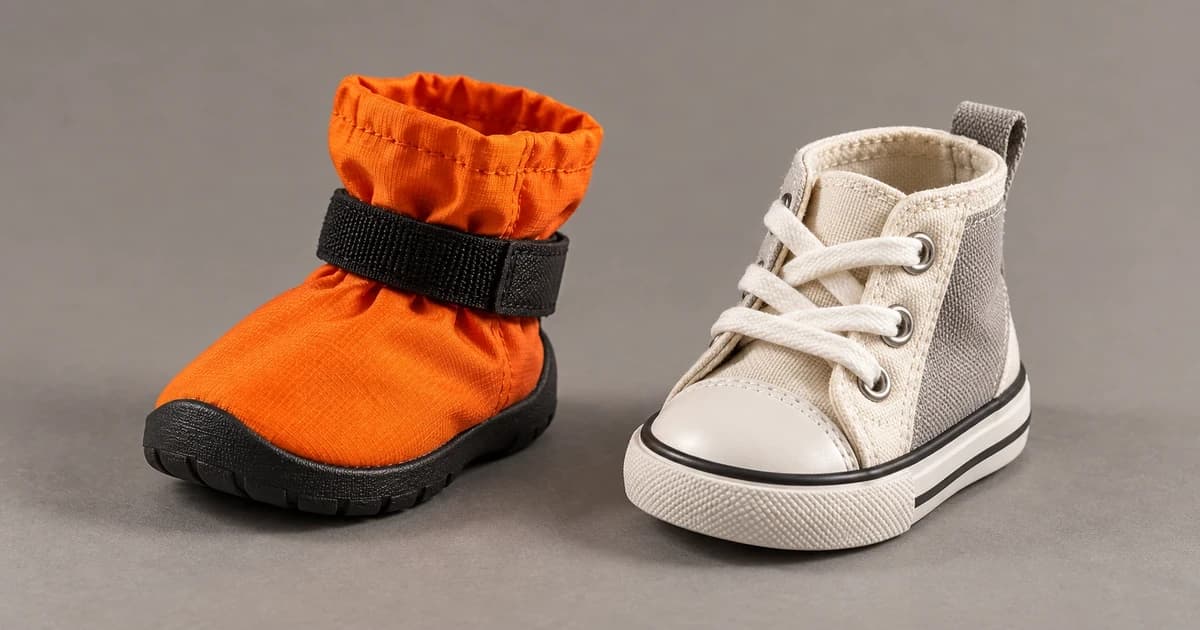
The edited illustration rebuilds two generic detached boot forms from licensed photographs, including hidden surfaces. It establishes no material, fit or weather performance. See our editorial policy for the source-based approach.